
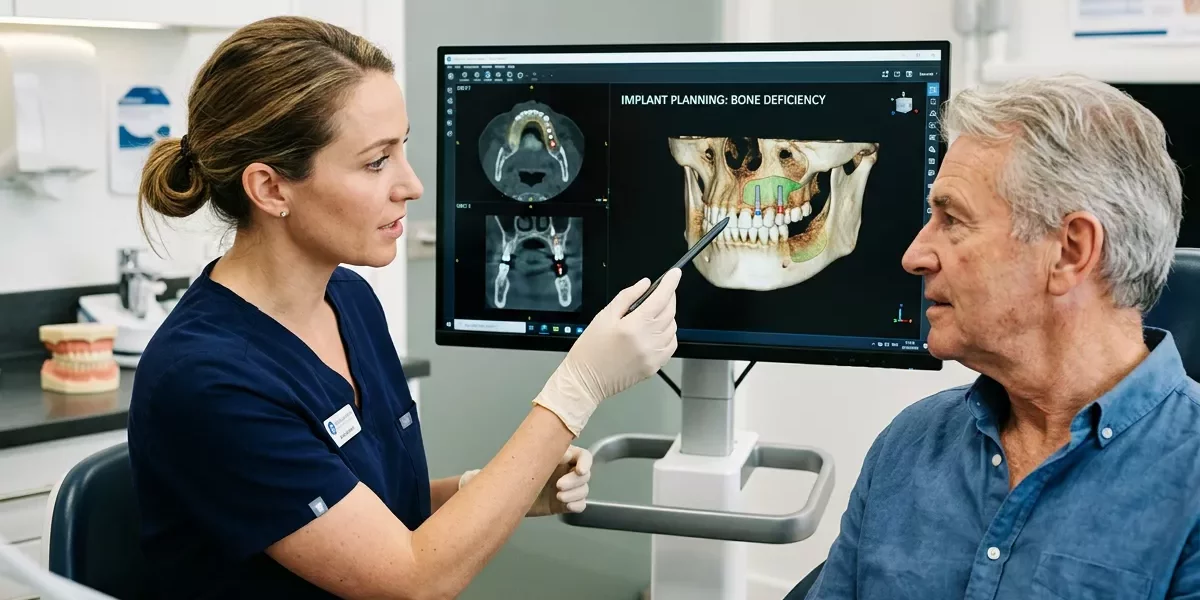
One of the most worrying things a patient can hear during implant planning is this: “You may have bone loss.” That is why dental implants with bone loss are such a highly searched topic. Many people immediately assume that bone loss means implants are no longer possible. In reality, the answer is often more nuanced.
Bone loss does not look the same in every patient. Some people have mild loss in one area. Others have more advanced loss after years of missing teeth, old infections, gum disease, or long-term denture use. The extent, location, and quality of the remaining bone all influence what kind of implant planning may be realistic.
This is exactly why bone-loss cases need more careful explanation. The correct answer is rarely a quick yes or no. The more useful discussion is about how much support remains, what options may still exist, and whether treatment needs to be more staged or more individualized.
At Milim Dental, this type of case is not approached with automatic answers. Bone loss is treated as a planning challenge, not as a marketing phrase. For patients researching implants, that approach can make the difference between confusion and clarity.
Why does bone loss matter so much for implants?
A dental implant depends on the surrounding bone for support. That means the height, width, and quality of the jawbone are all important when deciding whether an implant can be placed safely and predictably. If the bone has reduced over time, the treatment plan may need to change.
However, bone loss is not just about quantity. A patient may have enough height but not enough width. Another patient may have anatomical limits nearby, such as sinus or nerve-related boundaries, that influence the position and type of implant planning. This is why bone-loss cases cannot be evaluated with a simple visual estimate.
The location also matters. Bone loss in the front of the mouth can affect esthetics and soft tissue support. Bone loss in the back may influence bite forces and functional planning more directly. Two patients may both be told they have bone loss, yet need completely different approaches.
This is why proper diagnosis matters so much. The phrase “bone loss” means almost nothing until the actual anatomy is examined carefully.
Does bone loss mean implants are impossible?
No, not necessarily. Bone loss does not automatically mean implants cannot be done. It means the planning becomes more important. Some patients still have usable bone in strategic areas. Others may need the treatment approach to change depending on what is available and what the final goal is.
The mistake many patients make is assuming bone loss creates only one outcome: no implant. In real implant dentistry, there may be multiple pathways depending on the condition of the site. That is why hearing the words “bone loss” should lead to more assessment, not immediate hopelessness.
At the same time, it would also be misleading to say that every bone-loss patient is an easy implant case. Some cases are more complex, some take longer, and some require different thinking from standard implant placement. Honesty matters here.
A good clinic should be able to explain both the possibilities and the limitations. That is part of responsible treatment planning, and it is exactly how Milim Dental approaches these discussions.
What options may be considered in bone-loss cases?
Patients with bone loss may still have several options depending on the anatomy. In some cases, implant placement can be planned by using the available bone more strategically. In others, alternative implant positioning, implant design, or staged planning may be considered based on what the site can safely support.
There are also cases where supportive procedures or more advanced planning may be discussed. These decisions depend on the area involved, the severity of the bone loss, the soft tissue condition, and the final restorative goal. That is why there is no single standard path for every patient with bone loss.
The most important thing is not to reduce the case to one sentence. Patients deserve to know what the real options are, why those options differ, and whether the case should be approached more conservatively or more comprehensively.
At Milim Dental, this explanation is an important part of patient care. When patients understand the logic behind the plan, they usually feel more secure and more realistic about what treatment may involve.
How is treatment planned in these cases?
Treatment planning starts with detailed examination and imaging. In bone-loss cases, three-dimensional imaging is especially valuable because it helps evaluate not only how much bone is present, but where it is present and how it relates to anatomical boundaries. This is one of the most important stages of the entire treatment process.
Once the site has been properly assessed, the treatment plan may become much clearer. Some patients may still be candidates for direct implant placement. Others may need a staged plan or a different strategy. The timeline can vary depending on the condition of the site and whether healing or additional preparation is part of the plan.
Patients often ask how long treatment will take, but in bone-loss cases that answer must be individualized. A simple fixed timeline may sound reassuring, but it is not always accurate. The most useful treatment plan is the one built around the patient’s actual anatomy, not around a generic schedule.
At Milim Dental, this stage is treated as the foundation of implant predictability. The better the diagnosis, the more meaningful the plan becomes.
What are the benefits and limits of implants in bone-loss cases?
When treatment is well planned, dental implants in patients with bone loss may still offer important benefits. Many patients want a more stable chewing experience, a more confident smile, or a better alternative to removable dentures. In selected cases, implant treatment may still help achieve those goals.
But this is also an area where exaggerated promises should be avoided. Not every bone-loss case moves quickly. Not every patient has the same range of options. Some situations are more advanced and require more careful staging, while others are simpler than patients fear. The truth is almost always in the details.
That is why patients usually respond well to realism. A careful explanation feels more trustworthy than a dramatic promise. If the case is suitable, that should be explained clearly. If the case is more limited or more demanding, that should also be explained clearly.
At Milim Dental, the purpose is not to make the case sound easier than it is. The purpose is to make the treatment path understandable and honest.
Why is maintenance even more important afterward?
Once implant treatment is completed in a bone-loss patient, maintenance becomes even more important. Bone and soft tissue health need to be protected carefully, and the patient’s cleaning routine matters a great deal. The implant may be placed successfully, but long-term stability still depends on what happens afterward.
Patients often assume that once a fixed tooth is in place, the difficult part is over. But oral hygiene, bite awareness, and routine follow-up remain essential. This is especially true in more advanced cases, where long-term tissue stability deserves close attention.
That is why aftercare is part of treatment, not an optional extra. The patient needs to understand what to clean, what to watch for, and why regular reviews matter. Even the best implant plan can lose value if maintenance is neglected.
At Milim Dental, this long-term perspective is taken seriously. A result is only truly successful when it stays healthy and functional well after the treatment phase is finished.
Frequently Asked Questions
Can you still get dental implants with bone loss?
Yes, in many cases it may still be possible. Bone loss does not automatically rule out implant treatment. However, the amount, location, and quality of the remaining bone must be evaluated carefully. The final decision depends on diagnosis, imaging, and the overall treatment goal.
Is implant treatment harder when there is bone loss?
Often, yes. Planning may be more complex because the available bone and nearby anatomical limits need to be considered more carefully. But complexity does not always mean impossibility. It simply means the case deserves more detailed evaluation and a more individualized plan.
Does bone loss always make treatment longer?
Not always, but it can. Some patients may still move through treatment relatively directly, while others may require staged planning or more cautious timing. The treatment schedule depends on the specific anatomy and the type of implant strategy being considered. There is no responsible universal timeline.
What should patients expect during evaluation?
Patients should expect a detailed clinical examination and imaging-based assessment, especially when bone loss is suspected. This stage helps determine how much support remains, what the options may be, and whether the case is suitable for direct implant placement or needs a more customized plan. This evaluation is one of the most important parts of treatment.
Why does follow-up matter so much in these cases?
Because long-term implant stability depends on more than placement alone. Gum health, cleaning habits, bite forces, and regular professional reviews all matter. In patients with bone loss, protecting the tissues around the implant is especially important. Good aftercare supports long-term success.
A guide explaining crossbite, its impact, and the importance of timely orthodontic intervention for different ages.
Planning dental implants in Turkey? Get a detailed timeline of your treatment, understand the healing process, the duration between stages, and learn exactly what happens regarding aftercare and follow-up once you fly back home.
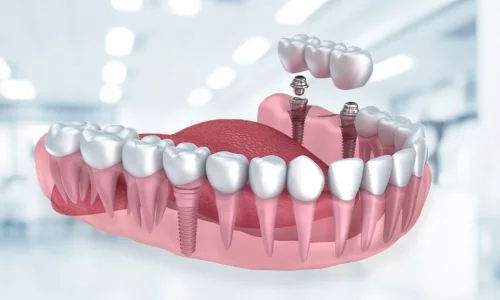
Unhappy with your existing dental implants or the restorations placed on them? Learn the common reasons for implant failure (peri-implantitis, aesthetic issues) and how revision surgery, prosthetics replacement, and careful planning can lead to satisfactory, long-term results.

Milim Dental Hospital isn't just a clinic—it's where confident smiles begin. With a team of world-class specialists, advanced technology, and a patient-first approach, we turn dental care into a premium experience.
We prioritize hygiene, comfort, and tailor-made treatments designed just for you. Don’t just take our word for it—explore real stories from real patients.
Your perfect smile starts here. Join the Milim experience.


Milim Dental Hospital provides comprehensive dental services in a spacious 1,000 m² facility, supported by a wide team of dental professionals including specialists in Oral and Maxillofacial Surgery, Prosthodontics, Orthodontics, Pediatric Dentistry, and Periodontology.