English
Big Sale – Last Days for 20% Off!
395HOUR 30MINUTE 17SECOND
“I Have No Teeth – Is There Still Hope?” A reassuring guide from an Oral & Maxillofacial Surgeon and clinic owner

“I Have No Teeth – Is There Still Hope?” A reassuring guide from an Oral & Maxillofacial Surgeon and clinic owner

8 December Mon, 2025


If you are reading this with no natural teeth left, you are not alone.

Many of our patients arrive feeling:

Request a Free Treatment Plan from Our Expert Doctors

  1. Embarrassed to smile or talk
  2. Afraid to eat in public
  3. Worried it’s “too late” for proper treatment
  4. Confused by hundreds of ads about implants, All-on-4, bone grafts and “miracle” solutions

Some were told:

“Your bone is too thin, implants are not possible.”

“You can only use a removable denture for the rest of your life.”

“You’re too old for advanced implant treatment.”

This article is written specifically for you – the patient with no teeth, looking for real information and real solutions, not just marketing.

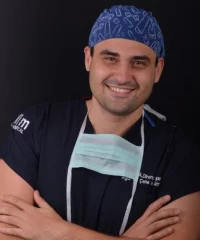
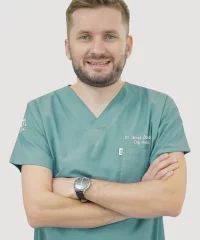
I’m Oral & Maxillofacial Surgeon Dr Ali Direnç Ulaşan, founder and clinical director of Milim Dental, Turkey’s first Health Tourism Authorized boutique dental center, located about a 1-hour drive from Sabiha Gökçen Airport.

Every week, my multidisciplinary team and I treat patients who arrive with:

  1. No teeth in one or both jaws
  2. Severe bone loss
  3. Old, loose dentures
  4. Fear and doubt about whether anything can really be done

My goal here is simple:

to explain, in clear and honest language, how implant-based solutions and, when needed, bone graft procedures can give you back:

  1. Fixed teeth
  2. Confidence to smile
  3. And the ability to chew properly again


1. First truth: Being edentulous (having no teeth) is a medical condition, not a personal failure

Most people who have lost all their teeth carry a quiet shame:

  1. “I should have taken better care of them.”
  2. “It’s my fault I’m like this.”
  3. “The dentist will judge me.”

But in reality, complete tooth loss usually results from a combination of:

  1. Genetic susceptibility
  2. Old fillings and crowns failing over time
  3. Gum disease (periodontitis)
  4. Smoking, medical conditions, or medications
  5. Previous dental work that focused on “patch repairs” instead of long-term planning

So the first message I want you to hear is:

You are not a failure. You are a patient with a solvable condition.

And like any other medical condition, edentulism has different treatment options – from removable dentures to fixed implant solutions, sometimes supported by bone graft procedures when the jawbone is very thin.


2. What happens to the jawbone when you have no teeth?

Once the teeth are lost, the jawbone that used to support them begins to shrink. This is called bone resorption.

  1. The body “notices” that the bone is no longer needed to hold teeth
  2. Over the years, the bone becomes thinner and lower
  3. In the upper jaw, the sinuses may expand downward, further reducing bone height
  4. In the lower jaw, the ridge can become sharp and narrow

This bone loss explains why:

  1. Dentures that once fit well become loose and unstable
  2. The face can look more “collapsed” or older
  3. Some dentists say, “There is not enough bone for implants.”

But modern oral and maxillofacial surgery offers several ways to deal with this:

  1. Using longer and tilted implants in strategic positions
  2. Placing zygomatic implants in the cheekbone in severe upper jaw bone loss
  3. Performing bone graft procedures to rebuild the ridge when necessary
  4. Combining these methods with full-arch bridges (All-on-4 / All-on-X concepts)

So “no bone” rarely means “no solution”.

It simply means you need a specialist and a careful plan.


3. What are your main options if you have no teeth?

In very simple terms, there are three big categories:

3.1. Conventional full denture

  1. A removable acrylic prosthesis resting on the gums
  2. No implant, no surgery
  3. Cheapest option, quickest to make

Limitations:

  1. Moves when talking or eating
  2. Often requires adhesive
  3. Can cause sore spots and accelerate jawbone resorption
  4. Limited chewing power, especially for harder foods

For some patients with medical limitations, a well-made denture may still be the best or only option.

But many edentulous patients want something more stable and closer to natural teeth.


3.2. Implant-retained overdenture (removable, but supported by implants)

  1. Several implants are placed in the jaw (usually 2–4)
  2. A removable denture is made that “snaps” onto these implants
  3. You can take it out to clean, but it is much more stable than a conventional denture

Advantages:

  1. Very big improvement in stability and comfort
  2. More chewing power
  3. Easier speech and less fear of denture slipping

Sometimes, when the bone is thin, bone graft or bone augmentation might be necessary before placing the implants. In other cases, carefully positioned implants can avoid major grafting.


3.3. Fixed full-arch implant bridge (All-on-4 / All-on-X)

  1. A full set of fixed teeth attached to 4–6 implants per jaw
  2. Cannot be removed by you – only by the dentist
  3. Feels and functions much closer to natural teeth

Techniques like All-on-4 and All-on-X use:

  1. Strategically angled implants to use the best remaining bone
  2. Sometimes longer implants or zygomatic implants when bone is very resorbed
  3. In selected cases, they can reduce the need for extensive bone graft procedures

This is often the most life-changing option for patients with no teeth.

Patients frequently tell us:

“I can eat an apple again.”

“I no longer worry that my teeth will fall out when I laugh.”

“I forgot I once had removable dentures.”

Of course, not everyone is automatically a candidate for fixed full-arch implants –

and not every case requires bone graft surgery.

A careful diagnostic process is essential.


4. The role of bone grafts: When are they really necessary?

The term “bone graft” sounds intimidating, but it simply means:

Adding or enhancing bone in areas where natural bone is too thin or too low to safely hold implants.

At Milim Dental, we use bone grafts:

  1. When we want to thicken a narrow ridge
  2. When we need more height under the sinus (sinus lifting)
  3. When old infections or previous extractions destroyed bone in specific areas
  4. Around implants to improve long-term support

Bone graft material can be:

  1. Your own bone (taken from another area of the jaw)
  2. Processed bone grafts from safe, controlled sources
  3. Synthetic graft materials
  4. Often a combination of these, depending on your case

A very important point:

We do not recommend bone graft procedures just to sell a “bigger treatment”.

We recommend them only when they change the long-term stability and safety of your implants.

In some edentulous patients, strategic implant placement with All-on-X concepts allows us to avoid large bone graft surgeries.

In others, a targeted bone graft is what transforms a risky plan into a predictable one.

This is where specialist judgement truly matters.


5. Why it matters that your clinic is surgeon-led and boutique

Today, the internet is full of dramatic offers for implant treatments.

But the structure behind the clinic is critical – especially if you have no teeth and significant bone loss.

At Milim Dental:

  1. Your treatment planning is led by an Oral & Maxillofacial Surgeon (myself, Dr Ali Direnç Ulaşan)
  2. I am not just a visiting doctor – I am the owner and clinical director
  3. We have a multidisciplinary team of prosthodontists, orthodontists, endodontists and periodontists
  4. We are a boutique clinic, which means:
  5. Fewer patients per day
  6. More time per patient
  7. Direct communication with the specialist responsible for your case

Being a Health Tourism Authorized dental center in Turkey also means:

  1. Our facility, protocols and documentation meet regulated standards
  2. We are structured to safely treat international patients who may only visit a few times
  3. We are used to planning complex implant and bone graft treatments with travel schedules in mind

For a patient with no teeth, this structure translates into safety and clarity:

  1. You know who is planning and performing your surgery
  2. You are not just a number in a high-volume “implant factory”
  3. Your case is discussed by a team, not rushed through by sales staff


6. Step-by-step: What happens if you come to us with no teeth?

Every person is unique, but for an edentulous patient the pathway usually looks like this:

Step 1 – Comprehensive assessment

  1. We listen to your story, fears, and expectations
  2. We examine your gums, jaws, and bite
  3. We take a panoramic x-ray and often a 3D CBCT scan to evaluate bone
  4. We review your medical history and medications

At this stage, we can already answer questions like:

  1. Do you have enough bone for conventional implants?
  2. Do we need bone graft or sinus lifting in certain areas?
  3. Are you a candidate for All-on-4 / All-on-X fixed teeth?
  4. Would an implant-retained overdenture be more appropriate?


Step 2 – Transparent treatment options and planning

We then present more than one option when possible, clearly explaining:

  1. Number and type of implants
  2. Whether any bone graft is needed, and why
  3. Approximate timeline (stages, healing periods)
  4. What you can realistically expect in terms of comfort, appearance and maintenance

We explain not just “what” we will do, but also “why” we recommend a certain approach for you.

No pressure. No impossible promises.

Just a clear medical reasoning that you can follow.


Step 3 – Surgery and immediate restoration (where possible)

For many edentulous patients, we can:

  1. Remove any remaining roots or hopeless teeth (if present)
  2. Place implants in the same session
  3. Combine this with sinus lifting or local bone graft procedures if planned
  4. Provide a temporary fixed bridge or a well-fitting temporary denture, depending on stability

Anesthesia options include:

  1. Local anesthesia
  2. Conscious sedation
  3. Or, in selected cases, general anesthesia

Our aim is to make the procedure as comfortable and stress-free as possible.


Step 4 – Healing period

Over the next 3–6 months:

  1. The implants integrate with your bone (osseointegration)
  2. Gums and soft tissues adapt to the new structures
  3. You use temporary teeth under our guidance (what to eat, how to clean)

We see you for regular controls and adjust as needed.


Step 5 – Final prosthesis and long-term maintenance

Once healing is complete:

  1. We take digital scans or high-precision impressions
  2. Our lab team designs your final implant-supported bridge or overdenture
  3. We test fit, function and aesthetics
  4. Then we deliver and screw-retain the final prosthesis

From there, we guide you on:

  1. Daily cleaning routines
  2. Professional hygiene visits
  3. What to watch for and when to contact us

Your journey does not end when the bridge is delivered – it simply enters a maintenance phase.


7. Common fears and honest answers

“Will implant and bone graft surgery be very painful?”

With modern anesthesia and proper medication, patients usually report much less pain than they expected. You may have swelling and some discomfort, but it is manageable and temporary.


“Am I too old for implants?”

Age alone is not a contraindication. We focus more on your overall health, medications and healing capacity than on your birthdate. Many patients in their 60s, 70s and even beyond enjoy the benefits of implant-supported teeth.


“What if the implants fail?”

Implants have high success rates when properly planned and executed. But nothing in medicine is 100%. We explain risks honestly, design your plan to minimize them, and always have a backup strategy if something does not go as planned.


“What if I can’t travel many times?”

As a Health Tourism Authorized boutique clinic located about a 1-hour drive from Sabiha Gökçen Airport, we are used to planning treatment in logical phases so international patients don’t have to travel back and forth unnecessarily. We design your itinerary around the medical needs of implant and bone graft procedures.


8. Final message: You are allowed to hope again

Having no teeth is a heavy burden – physically, socially, emotionally.

But it is not the end of your story.

With today’s combination of:

  1. Advanced implant solutions (including All-on-X and, when needed, zygomatic implants)
  2. Smart use of bone graft techniques
  3. Digital planning and a multidisciplinary team

most edentulous patients can move from:

“I just want to hide my mouth.”

to

“I can smile and eat again without fear.”

At Milim Dental, our promise is straightforward:

  1. We will treat you with respect, not judgement.
  2. We will show you your bone and options, not just tell you.
  3. We will recommend only those implant and bone graft procedures that are genuinely needed to give you a stable, safe result.
  4. We will never reduce your situation to a quick “package” or a social media slogan.

If you have no teeth and feel lost between hopeless messages and over-promising ads,

the next step is not to give up.

The next step is to sit down with a surgeon-led, boutique team,

look at your jaw together in 3D,

and design a plan that respects both your biology and your life.

You are not asking for too much.

You are simply asking to smile and eat like a person again

and that is exactly what modern implant dentistry, when done properly, is here to give you.


Category: Implant

A Milim
Makes a Big Difference

Milim Dental Hospital is the first dental centre to receive the "Health Tourism Authorisation Certificate" issued by the Ministry of Health of the Republic of Turkey.
All Articles
Forget Dental in Antalya: Why International Patients Are Choosing Bursa for Dental Treatments
east

When it comes to dental tourism in Turkey, most people immediately think of Antalya. It’s a popular name, promoted heavily across Europe. But did you know that a growing number of international patients are now turning to Bursa for high-quality, more affordable, and uniquely personalized dental treatments?

Who is an Orthodontist?
east

Who is an orthodontist and what do they do? Who provides braces, Invisalign, and clear aligner treatments? Dr. Begüm Ulaşan and Milim Dental in Bursa detail the orthodontist's specialized training and their role in treating children and adults.

Is Orthodontic Treatment Painful?
east

Worried about pain during orthodontic treatment in Bursa? Dr. Begüm Ulaşan explains that the pressure from braces or clear aligners is a manageable, temporary tenderness, not unbearable pain. Learn what to expect on the first days and effective pain management tips for a comfortable journey to your new smile.

Why Patients
Choose Milim?

Milim Dental Hospital isn't just a clinic—it's where confident smiles begin. With a team of world-class specialists, advanced technology, and a patient-first approach, we turn dental care into a premium experience.
We prioritize hygiene, comfort, and tailor-made treatments designed just for you. Don’t just take our word for it—explore real stories from real patients.
Your perfect smile starts here. Join the Milim experience.
View All Experiences
play_arrow
Dt. İsmail Özkısaoğlu 193
Get a Free Consultation
play_arrow
Dr. Dt. Ali Direnç Ulaşan 82
Get a Free Consultation
play_arrow
Dr. Dt. Ali Direnç Ulaşan 82
Get a Free Consultation

Milim Dental Hospital provides comprehensive dental services in a spacious 1,000 m² facility, supported by a wide team of dental professionals including specialists in Oral and Maxillofacial Surgery, Prosthodontics, Orthodontics, Pediatric Dentistry, and Periodontology.

Our clinic is authorized by the Turkish Ministry of Health for International Health Tourism. This website is intended only for informing patients from abroad. It does not contain advertisements and complies with legal privacy regulations.
Milim Dental Hospital © 2025 - All rights reserved.

Have a Question on Your Mind?

English
Big Sale – Last Days for 20% Off!