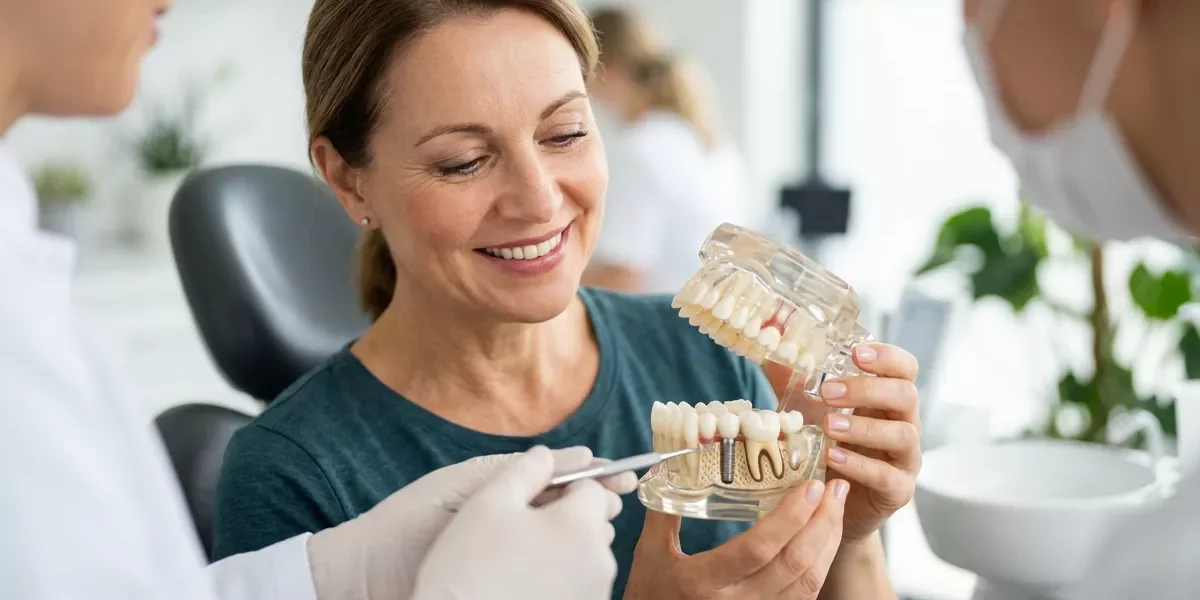
A single missing tooth may seem like a small problem compared with more advanced dental issues, but for many patients it is not small at all. A missing tooth can affect confidence, appearance, chewing comfort, and even the way the tongue and bite feel every day. That is why single tooth implant treatment is one of the most searched dental implant topics.
Patients often begin with a very direct question: if I am missing just one tooth, what is the best way to replace it? A single tooth implant is often one of the strongest options, but it is still not something that should be chosen automatically without evaluation. The condition of the neighboring teeth, the bone support in the area, and the patient’s general oral health all matter.
From the patient’s point of view, the idea is appealing because it sounds like replacing exactly what was lost without involving other teeth. In many cases, that independent logic is one of the biggest advantages. But like all implant treatment, it still depends on whether the site is suitable.
At Milim Dental, a single tooth implant is discussed not just as a missing-tooth replacement, but as a long-term functional and aesthetic decision. That makes the planning more meaningful and more honest for the patient.
**What is a single tooth implant?**
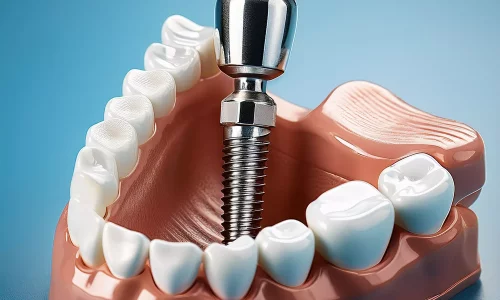
A single tooth implant is a treatment used to replace one missing tooth by placing an implant in the jawbone and attaching a crown on top. Unlike a bridge, this approach usually does not rely on the adjacent teeth for support. For many patients, that independence is a major reason why implants are so attractive.
This type of treatment can be used in both front and back areas, but the planning may differ depending on location. In front teeth, esthetics and gum appearance often matter more. In back teeth, bite force and support may become more dominant in the decision-making.
Patients sometimes think of a single tooth implant as a simple version of implant dentistry, but it still requires proper planning. The missing space may be small, but the success of the treatment still depends on bone, gum tissue, bite stability, and restoration design.
At Milim Dental, this is why even a one-tooth implant case is never treated casually. A single missing tooth still deserves a full treatment logic.
## **Why do patients choose implants for one missing tooth?**
One of the biggest reasons is the wish to replace the missing tooth without involving healthy neighboring teeth. Many patients do not like the idea of preparing adjacent teeth if those teeth are otherwise fine. A single tooth implant often feels like a more independent and more targeted solution.
Another reason is confidence. Even when only one tooth is missing, the gap can bother patients daily. Some become very aware of it in photos. Others feel uncomfortable when chewing or speaking. The psychological effect of one missing tooth is often much bigger than outsiders assume.
Single tooth implants may also appeal to patients who want a fixed solution instead of something removable or dependent on other teeth. In the right case, the result may feel more natural and more stable in everyday use.
At Milim Dental, this treatment is often attractive to patients who want a focused, long-term replacement option that makes sense biologically as well as visually.
**When is a single tooth implant a good option?**
A single tooth implant may be a very good option when the space has enough bone support, the gums are healthy enough to help protect the site, and the neighboring teeth do not need to be used for another reason. This is often the kind of case where implants shine, because they can solve a localized problem without extending treatment unnecessarily.
In front areas, the gum line and smile appearance need especially careful attention. In back areas, the biting load and bone condition may be more important in the plan. Either way, a good outcome depends on positioning the implant correctly and designing the crown in a way that works with the surrounding teeth.
Not every patient with one missing tooth is automatically ready for an implant. Bone loss, bite issues, oral hygiene problems, or systemic conditions may require more careful planning. But when the site is favorable, a single tooth implant can be one of the most elegant replacement solutions in dentistry.
At Milim Dental, the goal is to determine whether the case is truly ideal for an implant, not simply whether the patient wants one.
**How does it compare with a bridge?**
This is one of the most common patient questions. A bridge can also replace one missing tooth, but it usually relies on the teeth next to the gap for support. That means the surrounding teeth become part of the treatment. A single tooth implant, by contrast, often allows the replacement to stand more independently.
This difference can be important when the neighboring teeth are healthy. Many patients prefer the idea of replacing only the missing tooth rather than involving two others. However, if the adjacent teeth already need crowns or have large restorations, the conversation may be different. In those situations, a bridge may sometimes still be considered.
The correct choice depends on the actual condition of the mouth. A single tooth implant may be more conservative in one patient, while a bridge may be more practical in another. The treatment category is not the whole story. The surrounding teeth matter too.
At Milim Dental, the implant-versus-bridge discussion is based on what best serves the patient’s mouth over time, not on what sounds more modern.
**What is the treatment process like?**
The process usually begins with examination and imaging. The dentist looks at the gap, the bone support, the gum condition, the neighboring teeth, and the bite. If the site is suitable, the implant plan can be built around the exact position needed for both function and appearance.
Some single tooth implant cases are very straightforward. Others may need more careful timing, especially if the tooth has just been extracted or if the site has bone changes. That is why even a one-tooth case should not be reduced to a generic timeline without proper assessment.
After implant placement, the site needs time to heal and integrate before the final crown is completed. Some patients are surprised by this because they imagine the whole treatment happens immediately. In reality, the process usually involves stages designed to protect the long-term result.
At Milim Dental, the treatment is explained clearly because patients usually feel more confident when they understand not only what will be done, but why it will be done in that sequence.
**Why does long-term care still matter?**
Because a single tooth implant is still an implant. Even though it replaces only one tooth, it still depends on healthy surrounding tissue, good hygiene, and proper bite balance. Patients sometimes assume that caring for one implant is simpler than caring for a larger restoration, but it still needs attention.
Cleaning around the implant and keeping the gum tissue healthy are especially important. Patients should also attend regular reviews so that any early tissue changes or bite-related issues can be identified before they become larger problems. The implant may feel stable, but professional monitoring still matters.
Long-term success also depends on avoiding harmful habits like grinding or placing unusual force on the area. A beautifully restored single tooth can still be affected by function over time if it is not protected properly.
At Milim Dental, patients are reminded that replacing one missing tooth successfully is not only about placement day. It is also about preserving the result in daily life.
**Frequently Asked Questions**
### **Is a single tooth implant better than a bridge?**
Not always, but in many cases it may be. A single tooth implant can often replace the missing tooth without depending on the neighboring teeth, which is a major advantage when those teeth are healthy. However, the final decision depends on bone support, the condition of the adjacent teeth, and the overall treatment plan.
**Can one missing tooth really affect the bite?**
Yes, it can. Even one missing tooth may influence chewing balance, the way nearby teeth move over time, and how the mouth feels during function. Some patients also notice speech or confidence changes. A single missing tooth should not be dismissed as unimportant just because the rest of the mouth seems stable.
**Is a single tooth implant a simple treatment?**
It can be straightforward, but it still requires proper planning. The bone, gum tissue, bite, and final crown design all matter. A one-tooth case may look simple from the outside, but good results still depend on careful diagnosis and precise placement.
**How long does treatment usually take?**
The answer depends on the condition of the site. Some cases are more direct, while others require healing time or staged planning. The safest timeline is the one based on the patient’s actual bone and tissue condition rather than on a general promise. Proper evaluation always comes first.
**Does one implant need maintenance too?**
Yes. Even a single implant needs good oral hygiene, healthy gums, and regular follow-up. The implant may replace only one tooth, but it still depends on a stable biological environment. Long-term success is supported by good daily care and professional review.
If I get implants, will my teeth be fixed (non-removable)? Compare fixed solutions (crowns, bridges) against removable implant-supported dentures and discover which permanent, functional dental implant restoration is best suited for your needs.
Oral and dental health is a sensitive and essential topic for everyone. Protecting your oral health is not only important for your teeth but also for your overall well-being. Bacteria and plaque that accumulate on teeth can cause serious damage over time, leading to tooth deformation and gum disease. Proper tooth-brushing plays a crucial role in preventing these problems.

All-on-4 implants are ideal for those with extensive tooth loss, even with bone loss. Key factors include overall health, gum condition, lifestyle, and expectations. A consultation with an implant expert can determine your suitability for this life-changing procedure.
Milim Dental Hospital isn't just a clinic—it's where confident smiles begin. With a team of world-class specialists, advanced technology, and a patient-first approach, we turn dental care into a premium experience.
We prioritize hygiene, comfort, and tailor-made treatments designed just for you. Don’t just take our word for it—explore real stories from real patients.
Your perfect smile starts here. Join the Milim experience.

Milim Dental Hospital provides comprehensive dental services in a spacious 1,000 m² facility, supported by a wide team of dental professionals including specialists in Oral and Maxillofacial Surgery, Prosthodontics, Orthodontics, Pediatric Dentistry, and Periodontology.