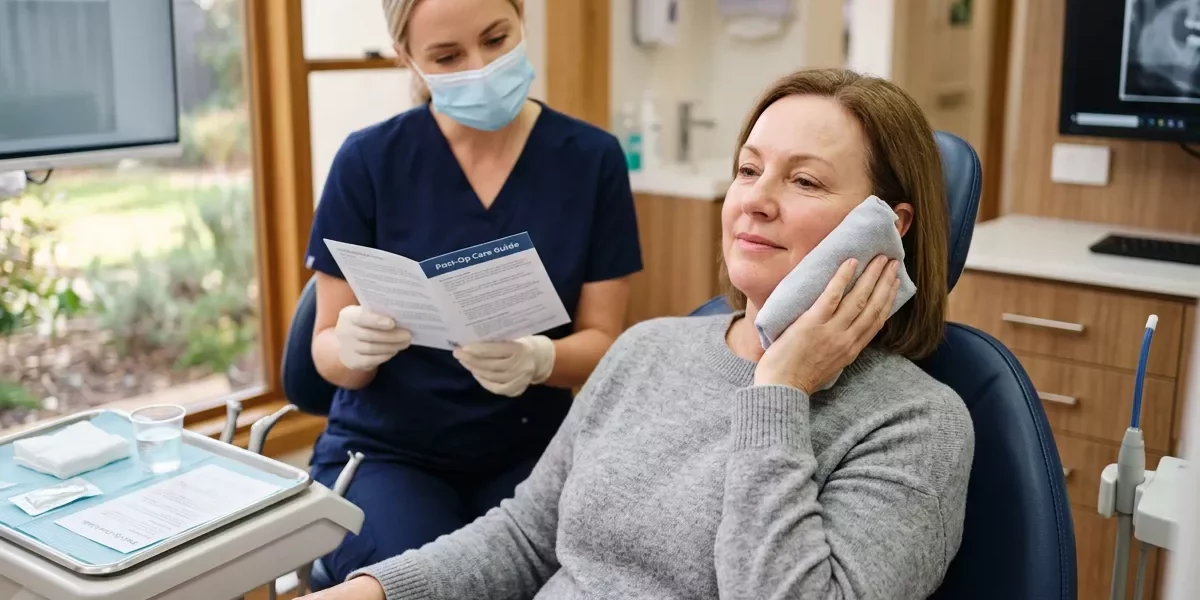
All-on-4 recovery is one of the most important concerns for patients considering full-arch implant treatment. Many people are excited about the idea of replacing failing teeth or unstable dentures with a fixed solution, but they are also nervous about what the days and weeks after surgery will feel like. They want to know whether the recovery will be painful, how long swelling will last, when they can eat more normally, and how quickly daily life will feel easier again.
This is completely understandable. All-on-4 treatment is not a small procedure from the patient’s perspective. Even when the result looks like a major step forward, the mouth still needs time to heal, the tissues need to stabilize, and the patient needs to adapt to a new way of biting, speaking, and cleaning. Recovery is part of the treatment, not something that happens outside it.
Patients often focus heavily on the idea of “new teeth,” but good results also depend on respecting the healing phase. The implants may be in place, but the body still needs time to integrate and adapt. This is why realistic expectations make such a big difference. People usually recover more calmly when they know what is normal and what deserves attention.
At Milim Dental, All-on-4 recovery is discussed before treatment, not only after surgery. That helps patients prepare mentally and physically for the healing process instead of being surprised by it.
**What makes All-on-4 recovery different from a single implant?**
A single implant usually affects one limited site. All-on-4 recovery is different because the treatment often involves an entire arch, multiple implants, and frequently the removal of compromised teeth at the same time. This creates a bigger surgical and emotional transition for the patient.
In many cases, temporary fixed teeth are placed early in the process. Patients are often grateful for this, but they may assume that having fixed teeth means the mouth is immediately “finished.” In reality, the implants and tissues still need protection while healing continues underneath.
This difference is important because patients sometimes underestimate how much change the mouth is going through. Recovery is not only about whether something hurts. It is also about swelling, pressure, speech adjustment, chewing changes, tissue adaptation, and learning how to live with a new full-arch situation.
At Milim Dental, this distinction is explained clearly because recovery becomes easier to manage when patients understand that All-on-4 is a full rehabilitation process, not just implant placement.
**What is usually normal in the first days?**
In the first days after All-on-4 treatment, swelling, soreness, bruising, and pressure are all common. Some patients also feel tired, emotionally sensitive, or generally more affected than they expected. This does not necessarily mean anything is wrong. It often reflects the fact that the body is responding to a more involved procedure.
The first days may also feel unfamiliar because the patient is adjusting to a new bite, new temporary teeth, or a different feeling in the mouth. Speaking can feel awkward at first. Eating usually feels limited. The gums and tissues may feel tight or sensitive. These changes are usually part of the early recovery phase.
Not every patient experiences recovery in the same way. Some feel better sooner than expected, while others need more time. The most important thing is not to compare yourself too strictly to other people. The better question is whether healing is gradually moving in the right direction.
At Milim Dental, these early changes are discussed beforehand because patients usually feel much calmer when they know that discomfort and adjustment are normal parts of the process.
**How long do swelling and soreness usually last?**
There is no single fixed timeline, but swelling and soreness are often most noticeable in the early recovery period and then gradually improve. Some tenderness may continue beyond the first few days, especially in more involved cases or in patients who had extractions at the same time.
Patients often become anxious if they are still swollen or uncomfortable after a few days, but what matters most is whether the overall trend is improving. If the mouth becomes gradually calmer, that is reassuring. If swelling increases, pain becomes stronger, or the area feels worse instead of better, the case should be reviewed.
This is one reason why follow-up matters so much in All-on-4 treatment. The patient may not always know what is within the expected range, and professional review helps separate ordinary healing from something that needs more attention.
At Milim Dental, recovery is treated as an active part of treatment quality. Monitoring healing is not a formality. It is part of protecting the result.
**What can patients eat during All-on-4 recovery?**
Food is one of the biggest practical concerns in recovery. Patients want to know when they can chew properly again, especially if they have been struggling to eat comfortably for a long time. The honest answer is that the healing phase usually requires a more careful diet, even if temporary fixed teeth are in place.
Soft, non-traumatic foods are often easier in the beginning. Hard, crunchy, sticky, or forceful chewing may not be appropriate early on, because the implants and tissues still need protection. Patients sometimes assume that fixed temporary teeth mean they can eat normally from the first day, but that is not always a safe interpretation.
This stage matters because bite pressure can influence healing. The implants may feel stable, but the biological integration process is still happening. Respecting that process helps protect the long-term success of the case.
At Milim Dental, dietary instructions are taken seriously because healing is not only about comfort. It is also about preserving stability while the mouth adapts.
**Why is cleaning so important after All-on-4 treatment?**
Patients are often so focused on surgery that they do not realize how important hygiene becomes during recovery. All-on-4 treatment still depends on healthy tissue around the implants. Even when the teeth feel secure, the surrounding gums must remain as calm and clean as possible.
Cleaning can feel unfamiliar at first, especially if the patient is adapting to temporary restorations or to a new full-arch structure. That is normal. Good guidance helps patients clean effectively without being overly aggressive or afraid of the area.
Poor hygiene can increase inflammation and discomfort. On the other hand, over-cleaning too soon or too forcefully can also create sensitivity. This is why clear instructions matter. Recovery is not only about rest. It is also about learning how to care for the area in a controlled way.
At Milim Dental, hygiene is explained as part of recovery from the start, because healthy tissues make the whole process smoother and more predictable.
**When do patients start feeling more normal?**
This varies a lot. Some patients feel emotionally better quite quickly because the mouth already feels more stable than before treatment. Others need more time to adapt physically and mentally. Feeling more “normal” usually involves more than pain reduction. It also includes speaking more easily, eating with more confidence, sleeping better, and becoming less aware of the mouth all the time.
Patients should not expect perfection immediately. All-on-4 treatment is a major transition, and adaptation usually happens in stages. Early recovery, functional adaptation, and long-term tissue stability are all part of the process.
It is also important not to judge the success of the treatment only by the first few days. Many patients feel significantly better once early swelling settles and daily routines become easier. The first stage is usually the most emotionally intense, but not the most meaningful in the long run.
At Milim Dental, this adjustment period is treated as normal and important. Recovery is not about looking perfect immediately. It is about moving steadily toward comfort, function, and stability.
**Frequently Asked Questions**
**Is All-on-4 recovery painful?**
There is usually some discomfort, swelling, and soreness after treatment, and this is normal. The experience varies depending on the complexity of the case, whether extractions were involved, and the patient’s healing pattern. What matters most is whether symptoms gradually improve instead of becoming worse. Patients should contact the clinic if they feel the recovery is moving in the wrong direction.
**How long does All-on-4 recovery usually take?**
There is no one answer that fits everyone. Early recovery happens over days and weeks, while deeper tissue adaptation and full functional confidence take longer. Some patients feel much better relatively quickly, while others need more time to adjust. Recovery should be understood as a process rather than a fixed date.
**Can patients eat normally right away?**
Usually not in the full sense. Even if temporary fixed teeth are placed, the mouth is still healing and often requires a softer diet at first. Hard or forceful chewing may not be appropriate during early healing. Protecting the implants during this phase is part of protecting the final result.
**Why is cleaning so important during recovery?**
Because implants still rely on healthy surrounding tissues. Good cleaning helps reduce inflammation and supports better healing, while poor hygiene can make recovery more difficult. Patients need clear guidance so they can clean the area safely and effectively without causing unnecessary irritation.
**When should patients worry during All-on-4 recovery?**
If pain, swelling, pressure, or discomfort clearly gets worse instead of better, or if there is persistent bad taste, unusual discharge, or anything that feels obviously wrong, the clinic should be contacted. It is always better to check early than to wait too long when recovery seems unusual.
A guide to orthodontic treatments at Nilüfer Ağız Diş Hastanesi, covering braces, aligners, and consultation process.

A guide to help you choose the right orthodontist for safe and effective treatment.

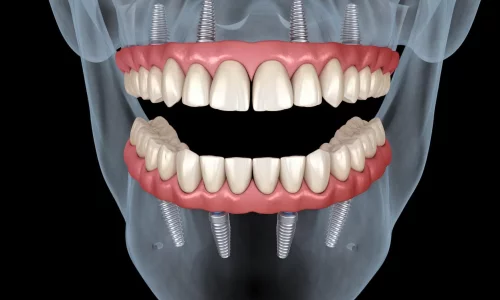
All-on-X offers unmatched flexibility in dental implant procedures, allowing for a customizable number of implants—ranging from 4 to 6 or more—based on individual needs. Ideal for complex cases, it provides enhanced stability, comfort, and a personalized treatment approach.
Milim Dental Hospital isn't just a clinic—it's where confident smiles begin. With a team of world-class specialists, advanced technology, and a patient-first approach, we turn dental care into a premium experience.
We prioritize hygiene, comfort, and tailor-made treatments designed just for you. Don’t just take our word for it—explore real stories from real patients.
Your perfect smile starts here. Join the Milim experience.

Milim Dental Hospital provides comprehensive dental services in a spacious 1,000 m² facility, supported by a wide team of dental professionals including specialists in Oral and Maxillofacial Surgery, Prosthodontics, Orthodontics, Pediatric Dentistry, and Periodontology.