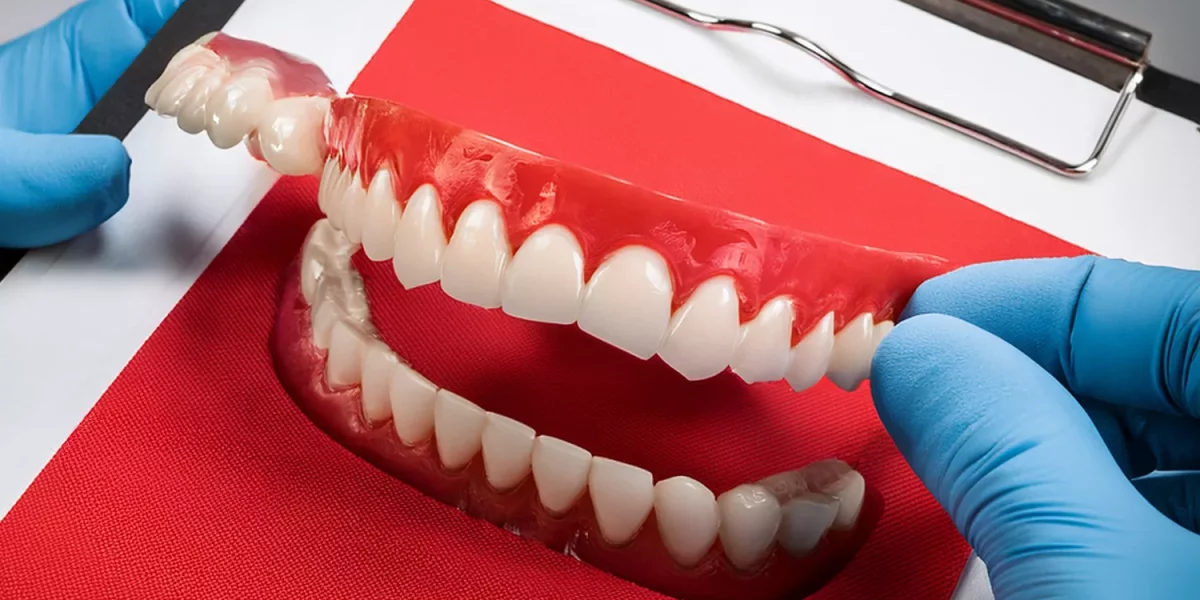
Corega, Fixodent, bone resorption, complete tooth loss and when to consider dental implants
If you are using denture adhesive (like Corega, Fixodent or similar products) every single day just to keep your dentures in place, you are not alone.
Many edentulous (toothless) patients tell us:
“My dentures only stay if I use a lot of Fixodent.”
“Without Corega I can’t eat properly.”
“If I forget the adhesive, I’m afraid my denture will drop when I talk.”
Denture adhesives can be helpful in certain situations.
But needing them constantly, in larger and larger amounts, is a warning sign that something deeper is wrong:
Ongoing bone resorption (bone loss under the denture)
Poor denture fit or worn-down acrylic teeth
Advanced edentulism with very thin ridges
A situation where dental implants or an implant-supported solution (like an overdenture or All-on-4) would dramatically improve stability and quality of life
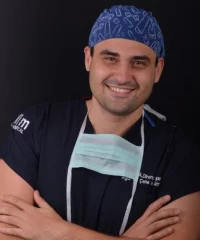
I’m Oral & Maxillofacial Surgeon Dr Ali Direnç Ulaşan, clinical director and owner of Milim Dental –
Turkey’s first Health Tourism Authorized boutique dental center, located about a 1-hour drive from Sabiha Gökçen Airport.
Every week we see patients who have lived for years with:
Loose full dentures
Continuous dependency on Corega, Fixodent and other denture adhesives
Progressive bone resorption that makes dentures even more unstable
This article will explain:
Why long-term, heavy use of denture adhesive is not a real solution
How bone resorption and edentulism make dentures increasingly unstable
When and why we start talking about dental implants, overdentures and All-on-4 / All-on-6
How a surgeon-led, implant-focused team can help you move beyond the adhesive tube
Denture adhesives like Corega and Fixodent are creams, powders or strips applied between a removable denture and the gum surface.
They are designed to:
Improve retention (reduce movement)
Create a seal against food particles
Provide some additional comfort for the patient
Used short term or in small amounts, denture adhesives can be perfectly reasonable:
After a new denture is made and your tissues are still adapting
After a reline (resurfacing of the inner part of the denture)
In patients with borderline retention who need a little extra security for social situations
The problem starts when adhesives become a permanent crutch:
If you cannot function without Corega or Fixodent every day,
and you feel your denture is useless without it,
something is not right.
This is not a criticism of you – it’s a sign that your bone and denture need to be re-evaluated.
When all teeth are lost, you don’t just lose the crowns you see in the mirror.
The jawbone that used to support the roots begins to shrink – this is called bone resorption.
After extractions:
The body “decides” that the bone around the empty sockets is less necessary
Over months and years, this bone becomes thinner and lower
The ridge that once held your teeth becomes flatter and less stable
In the upper jaw, the sinus cavities can also expand downwards, further reducing bone height.
In the lower jaw, the ridge can become knife-edge thin and difficult for a denture to grip.
At first, when the denture is new:
It fits the bone and soft tissues closely
Retention is acceptable, sometimes even good
As bone resorption continues:
The denture becomes loose and unstable
You start to feel movement when talking, laughing, chewing
You may develop sore spots as the denture tips and rocks
This is when many people start using Corega, Fixodent or other adhesives more aggressively:
First, a little bit occasionally
Then, every day
Then, several times per day
But note:
The denture adhesive is not stopping the bone resorption.
It is just trying to help a worn denture “hold on” to a shrinking foundation.
Using Corega or Fixodent once in a while is not a problem.
The concern is chronic, high-dependency use.
Here’s why:
Adhesive can hide the fact that:
Your denture no longer fits your current bone shape
Your jawbone has resorbed significantly
It may be time for a new denture, reline, or dental implant solution
Instead of going back to a dentist for diagnosis and planning, you just:
Add more and more adhesive
Accept sore spots and chewing difficulty as “normal”
This can delay appropriate treatment for years.
Overuse of denture adhesive can contribute to:
Food and adhesive accumulating under the denture
Poor cleaning habits (if dentures are not removed and cleaned thoroughly every day)
Local irritation of the mucosa (oral soft tissue)
The result can be:
Redness
Inflammation
Fungal overgrowth (denture stomatitis)
All of which make wearing the denture even less comfortable.
Long-term adhesive dependence often leads to:
Fear of going out without adhesive
Anxiety about laughing or eating in public
Social withdrawal
Many patients feel trapped:
“I hate this glue but I can’t live without it.”
For us, this is a signal that we need to start discussing more stable solutions like implant overdentures or fixed implant bridges.
If you are:
Edentulous (no teeth in one or both jaws)
Using Corega or Fixodent every day
Still struggling with chewing and speaking
Avoiding certain foods because your denture moves
then it’s time to consider whether dental implants could change your situation.
Implants can help in several ways:
Instead of your full denture floating only on the gum and bone, we can:
Place 2–4 dental implants in the jaw
Attach special connectors (locators, bars, etc.)
Make a removable overdenture that “snaps” onto these implants
Benefits:
Much improved stability – less rocking
Often little or no adhesive needed
Better chewing efficiency
Easier speech and more confidence
Corega and Fixodent move from being “daily survival” tools to rare back-ups.
For many edentulous patients, the most life-changing solution is a fixed full-arch bridge on implants – often using All-on-4 or All-on-6 concepts.
This involves:
Placing 4–6 implants per arch
Using them to support a fixed bridge of teeth
You cannot remove these teeth – only your dentist can unscrew them for maintenance
In this scenario:
You do not use Corega or Fixodent at all
Your chewing and speech can feel much closer to natural teeth
Bone around the implants is stimulated and preserved better than with conventional dentures
For patients with very advanced bone resorption, implant planning may include:
Longer tilted implants
Zygomatic implants (into the cheekbone) in special cases
Local or larger bone graft procedures
But the objective remains the same:
Move from unstable dentures and constant adhesive
to stable, implant-supported teeth with long-term function.
Not everyone is ready to jump immediately into implants, All-on-4 or All-on-6 – for medical, emotional or financial reasons.
In such cases, we still do more than “just use Corega forever”.
Options include:
Relining your existing denture – adding material inside to better fit your current bone shape
Remaking a new denture with better adaptation and proper bite
Planning a stepwise approach:
First, new denture
Then, later adding implants to convert it into an overdenture
Even if implants are not possible, a well-made, updated denture can significantly reduce the amount of Fixodent or Corega you need daily.
The key is:
don’t accept an old, loose denture + permanent adhesive as the only way to live.
At Milim Dental, many of our international patients arrive with:
A plastic bag containing Corega, Fixodent, brushes, creams
Old full dentures that no longer fit
Significant bone resorption evident on x-rays
A long history of coping rather than being treated
Our process is:
Full examination
Intraoral exam
Photos and functional assessment
X-rays and often CBCT to evaluate bone volume
Bone and edentulism analysis
How much bone is left?
Upper, lower or both jaws?
Is there room for implants?
Do we need bone graft or sinus lift?
Treatment options explained clearly
New conventional denture with or without adhesive
Implant overdenture (2–4 implants)
All-on-4 / All-on-6 fixed solutions for complete edentulism
Pros, cons, cost and maintenance of each
Personalised plan
Based on your health, expectations and budget
Always with a long-term vision:
reduce dependence on adhesives,
improve function,
protect remaining bone as much as possible.
Because our clinic is:
Surgeon-led (by an Oral & Maxillofacial Surgeon)
Multidisciplinary (surgery, prosthetics, periodontology, endodontics, orthodontics in one place)
Boutique (fewer patients per day, more time per patient)
Health Tourism Authorized in Turkey
we can manage complex edentulous, high-bone-resorption, implant and revision cases in a structured, safe way.
If denture adhesives like Corega or Fixodent are part of your daily survival kit, remember:
Denture adhesives are not the enemy – but they are not the final solution.
They are tools, not treatments.
Long-term, heavy dependence on adhesive is a warning sign.
It usually means your bone has resorbed and your denture no longer truly fits.
Bone resorption is a natural process in edentulism – but its impact can be reduced.
Implant-supported solutions help preserve bone and improve stability.
Dental implants (overdentures, All-on-4, All-on-6) can dramatically reduce or eliminate the need for adhesives.
They convert a “floating” denture into a stable, functional prosthesis.
If implants are not immediately possible, updating or relining dentures is still better than endless Corega/Fixodent use.
You deserve more than coping.
Being edentulous does not mean condemned to loose dentures forever.
Modern implant dentistry offers real alternatives – especially in a surgeon-led, implant-focused clinic.
If you recognise yourself in this article –
if you feel stuck between bone resorption, complete tooth loss, and a life controlled by denture adhesive –
the next step is not “more Fixodent”.
The next step is a proper evaluation of your bone, gums and implant possibilities
by a team whose goal is to free you from the adhesive tube,
and give you teeth – and confidence – you can truly rely on again.
A guide on long-term care and maintenance for veneers and crowns.
A guide explaining how expansion helps alleviate crowding and improve teeth alignment.
A guide explaining the effectiveness of Invisalign for complex teeth alignment and bite correction cases.
Milim Dental Hospital isn't just a clinic—it's where confident smiles begin. With a team of world-class specialists, advanced technology, and a patient-first approach, we turn dental care into a premium experience.
We prioritize hygiene, comfort, and tailor-made treatments designed just for you. Don’t just take our word for it—explore real stories from real patients.
Your perfect smile starts here. Join the Milim experience.

Milim Dental Hospital provides comprehensive dental services in a spacious 1,000 m² facility, supported by a wide team of dental professionals including specialists in Oral and Maxillofacial Surgery, Prosthodontics, Orthodontics, Pediatric Dentistry, and Periodontology.