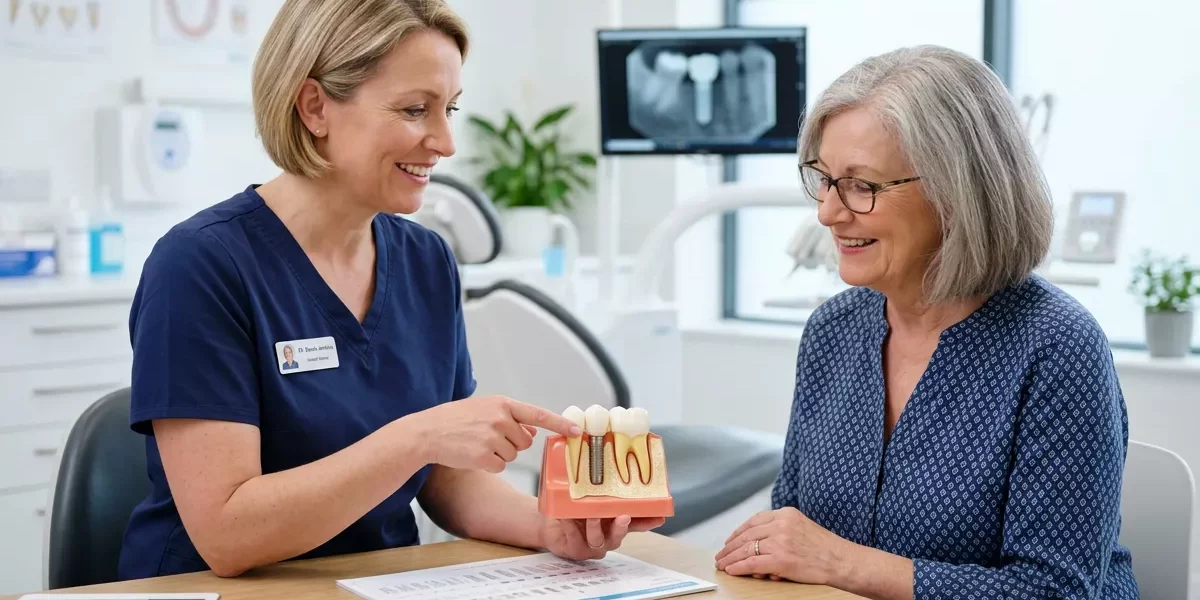
“Am I a good candidate for dental implants?” is one of the first questions patients ask when they lose a tooth or start thinking about replacing failing teeth. It is also one of the most important questions, because implant treatment should never begin with assumption. A patient may want implants, but suitability depends on much more than the desire to fill a gap.
This question matters because implants are not just cosmetic. They are planned within bone, supported by gum tissue, influenced by bite forces, and affected by overall health. Two patients with the same missing tooth may have completely different treatment options depending on their bone support, oral hygiene, medical history, and the condition of nearby teeth.
That is why good implant treatment starts with evaluation rather than enthusiasm. Some patients are ideal candidates and can move into planning quite smoothly. Others may still be candidates, but only after certain issues are addressed first. Some may need a different kind of treatment strategy than they originally expected.
At Milim Dental, implant suitability is not decided from a simple checklist or a photo alone. It is assessed through full clinical planning. That gives patients a more honest understanding of what is possible and what may need attention first.
## **What makes someone suitable for dental implants?**
A suitable implant candidate usually needs enough healthy bone to support the implant, gum tissue that is stable enough to help protect the area, and an oral environment that can maintain the implant long term. These are the biological foundations of implant treatment.
But suitability is not just about local anatomy. General health also matters. Conditions that affect healing, smoking, uncontrolled diabetes, oral hygiene habits, and bite-related factors such as heavy grinding can all influence treatment decisions. This does not automatically eliminate implants, but it may change how the case is planned.
Another important factor is motivation. Patients who are willing to keep good hygiene, return for follow-up, and understand that implants need maintenance usually do much better than those who think implants are a “fit and forget” solution. Long-term success always depends on more than the day of surgery.
That is why suitability is best understood as a combination of biology, habits, and planning. At Milim Dental, this broader perspective is considered essential.
## **Does age affect implant suitability?**
Many patients ask whether they are too young or too old for dental implants. In most cases, age alone is not the deciding factor. What matters more is whether jaw development is complete in younger patients and whether healing capacity and general health are acceptable in older ones.
A younger patient who has not finished skeletal growth may not yet be ready for implant treatment in certain areas. On the other hand, an older patient may still be a good implant candidate if the medical and oral conditions are favorable. This is why chronological age is less important than clinical condition.
Patients sometimes assume that implants are only for middle-aged adults or that older patients should avoid them. In reality, many different age groups may benefit from implants when the timing and planning are appropriate. The decision should always be based on examination, not stereotype.
At Milim Dental, age is considered in context. The real question is not “How old are you?” but “Is your mouth and health profile suitable for predictable treatment?”
## **How important are bone and gums?**
Bone and gums are central to implant suitability. The implant needs enough bone to be positioned safely and supported properly. The surrounding gum tissue must also be healthy, because gum inflammation can affect the long-term stability and appearance of the implant area.
Patients often think only about the missing tooth itself, but the supporting structures matter just as much. A site with reduced bone, previous infection, or unstable gum tissue may still be treatable, but it usually requires more thoughtful planning. That is why imaging and examination are so important before treatment decisions are made.
In visible smile areas, gum tissue quality also affects the final look of the implant restoration. In back areas, bone support and bite forces may play a more dominant role. This is another reason why suitability cannot be judged from a simple yes-or-no mindset.
At Milim Dental, implant planning begins with the support tissues, not just the gap. A tooth can only be replaced well if its foundation is understood properly.
## **What can make someone a more difficult implant candidate?**
Certain factors may make implant planning more difficult or more cautious. Advanced bone loss, active gum disease, poor oral hygiene, heavy smoking, uncontrolled medical conditions, and severe grinding habits are some of the most common examples. These do not always mean implants are impossible, but they often mean the case deserves more careful planning.
The important thing is not to label a patient as “good” or “bad.” The real goal is to understand what may need to be improved or addressed before treatment becomes more predictable. In some cases, the patient may need periodontal care first. In others, additional imaging or a staged plan may be necessary.
This is where honest communication becomes important. Patients usually feel better when they understand that a delay or a more complex plan is not a rejection. It is often an attempt to create a stronger foundation for a more reliable long-term result.
At Milim Dental, this more difficult category is handled with explanation rather than alarm. A more complex case simply means the planning needs to be better.
## **How is implant suitability evaluated?**
The evaluation process usually starts with clinical examination and imaging. The dentist looks at the missing tooth area, neighboring teeth, bite, gum condition, and overall oral health. Radiographs or three-dimensional imaging may be used depending on what needs to be assessed more precisely.
This stage helps answer the most important questions: Is there enough bone? Is there active disease that should be treated first? Are the surrounding teeth healthy? Is the bite stable? Are there oral habits that may affect long-term success? Only after these questions are answered does the actual implant plan begin to make sense.
Patients often want immediate answers, especially if they have been thinking about implants for a long time. But responsible treatment starts with understanding the mouth as it is today, not as the patient hopes it might be. That is why real suitability is based on diagnosis, not desire alone.
At Milim Dental, this evaluation phase is one of the most important parts of treatment. It protects both the patient and the long-term result.
## **Why does maintenance matter even before treatment begins?**
Many patients think about maintenance only after implants are placed, but suitability already includes the question of whether the patient can maintain the result later. Dental implants still need excellent hygiene, healthy gums, and regular review. They are not immune to neglect.
This means that a patient’s habits matter before treatment begins. Someone with poor plaque control or no interest in long-term maintenance may still want implants, but the treatment may carry more risk if that pattern does not change. By contrast, a patient who understands and accepts the maintenance side of implants often becomes a stronger candidate over time.
This is not meant to discourage treatment. It is meant to make it more realistic. Good candidates are not just people with bone. They are people whose biology and behavior can support the treatment well.
At Milim Dental, this is explained openly because long-term success depends on what happens after the excitement of treatment day has passed.
## **Frequently Asked Questions**
### **How do I know if I am a good candidate for dental implants?**
The only reliable way is through examination and imaging. A dentist needs to assess your bone support, gum condition, oral hygiene, bite, medical history, and the condition of surrounding teeth. Some patients are ideal candidates right away, while others may need preliminary treatment first. Suitability is always case-specific.
### **Can I still get implants if I have some bone loss?**
Possibly, yes. Bone loss does not automatically mean implants are impossible. However, it does mean the planning becomes more important. The amount and location of the bone loss must be evaluated carefully to understand what kind of implant strategy may still be realistic.
### **Do smoking and grinding affect implant suitability?**
Yes, they can. Smoking may negatively affect healing and gum stability, while heavy grinding can place additional force on implants and restorations. These factors do not always rule out treatment, but they may require more careful planning and stronger long-term maintenance.
### **Can older patients still be candidates for implants?**
Yes. Age alone usually does not decide suitability. What matters more is overall health, healing capacity, bone support, and oral condition. Many older patients can be good candidates if those factors are favorable. The final decision should always be based on examination.
### **Why can’t suitability be decided from photos alone?**
Because photos do not show enough of the bone, the bite, or the health of the supporting tissues. They may help as an early reference, but they cannot replace clinical examination and proper imaging. A responsible implant decision requires more information than appearance alone.
Discover how Digital Smile Design helps USA patients achieve a perfect, customized Hollywood Smile.
What is the difference between the "Turkey Teeth" trend and real, ethical dental treatment? Learn about the long-term risks of fast, radical aesthetic procedures and understand the importance of proper diagnosis and minimally invasive approaches in Turkish dentistry.
A simple travel guide explaining the timeline of Hollywood Smile treatment for patients coming from the USA.

Milim Dental Hospital isn't just a clinic—it's where confident smiles begin. With a team of world-class specialists, advanced technology, and a patient-first approach, we turn dental care into a premium experience.
We prioritize hygiene, comfort, and tailor-made treatments designed just for you. Don’t just take our word for it—explore real stories from real patients.
Your perfect smile starts here. Join the Milim experience.

Milim Dental Hospital provides comprehensive dental services in a spacious 1,000 m² facility, supported by a wide team of dental professionals including specialists in Oral and Maxillofacial Surgery, Prosthodontics, Orthodontics, Pediatric Dentistry, and Periodontology.