Patients who hear that an implant may have failed often feel disappointed, confused, and sometimes embarrassed. Many people choose implants because they want a long-term solution, so when something goes wrong, the first fear is often this: does this mean everything is over? The next question usually comes very quickly after that: can the failed dental implant be replaced?
In many cases, replacement may still be possible, but the answer is not automatic. Before talking about a new implant, the first step is understanding why the original one failed. Without that part of the discussion, simply placing another implant in the same area may not solve the underlying problem.
This is why failed implant replacement should never be treated as just repeating the same procedure. It is a new treatment decision, and often a more careful one. The site needs to be reassessed, the reason for failure needs to be identified, and the timing of any future step needs to make biological sense.
At Milim Dental, this conversation is handled with realism. Implant failure does not always mean the end of implant treatment, but it does mean that the next plan should be more thoughtful, not more rushed.
**What does it mean when an implant fails?**
When patients hear the words “implant failure,” they often imagine the implant immediately falling out or becoming completely unusable. In reality, implant failure can happen in different ways. Sometimes the implant never integrates properly during the healing phase. In other situations, it may function for a period of time and later develop problems with the surrounding tissue, bone support, or mechanical stability.
This distinction matters because the reason for failure influences the next step. A healing problem is different from a long-term overload issue. Tissue inflammation is different from restoration-related stress. The treatment response depends on understanding what type of failure occurred and why.
Patients should also know that not every problem around an implant means the implant is permanently lost. Sometimes the issue is with the crown, screw, or surrounding gum tissue rather than the implant body itself. That is why proper evaluation is so important before assuming the worst.
At Milim Dental, the first priority is not labeling the situation too quickly. The first priority is defining what actually happened.
**Why might an implant fail?**
There is no single cause. Implant failure can be related to poor healing, inflammation around the tissues, infection, overload from bite forces, smoking, general health factors, hygiene issues, or anatomical limitations that affected the original treatment. In some cases, multiple factors are involved rather than just one.
Patients often want a simple explanation, but biology is rarely that simple. Some failures occur early because the implant never becomes stable in the bone as expected. Others happen later because tissues break down gradually or because the restoration places stress on the implant in a way that becomes problematic over time.
This is why a replacement plan should begin with investigation rather than assumption. If the original failure came from an unresolved issue, that issue must be understood before deciding whether a new implant is wise.
At Milim Dental, this stage is treated seriously because the reason behind the failure is often the most important information in building a better second plan.
**Can the implant be replaced right away?**
Sometimes it may be possible, but not in every case. The timing depends on what the site looks like after the failed implant is removed, how much healthy bone remains, whether inflammation is present, and how stable the tissues are. In some cases, immediate replacement may be considered. In others, waiting is the safer and more predictable choice.
Patients often hope the problem can be corrected in one quick step. That is understandable, especially after disappointment. But biology does not always cooperate with urgency. If the bone or soft tissue needs time to recover, a staged approach may give the next implant a better chance.
Immediate replacement and delayed replacement are both possible pathways depending on the case. Neither option should be chosen because it sounds more convenient. The right choice is the one that gives the site the best chance of long-term stability.
At Milim Dental, timing is explained carefully because replacement is not only about putting another implant in. It is about deciding when the site is ready for a more reliable outcome.
**What needs to be checked before replacing an implant?**
Before replacing a failed implant, the bone, gums, bite, oral hygiene, and medical factors all need to be reviewed again. The site should be re-imaged when appropriate, especially if the original failure raises concerns about bone condition or anatomy. This step is essential because the mouth may be different now than it was before the first implant was placed.
The surrounding teeth and the restoration plan also matter. If the original case involved overload, poor access for cleaning, or an unstable bite design, those factors must be addressed before replacement is considered. Otherwise the second implant may face the same risks as the first.
Patients also need to reflect on daily factors such as smoking, grinding, and hygiene habits. A replacement implant is not only a clinical event. It is also a second chance that depends on long-term cooperation.
At Milim Dental, this reassessment phase is part of protecting the future result. The next step should never be based only on hope. It should be based on a better understanding of the site.
**Does a failed implant mean implants are no longer possible?**
Not necessarily. Many patients can still be candidates for another implant after a failed one, but the situation needs to be understood carefully. A failure does not automatically mean the patient’s body “rejects implants” in a general sense. It means that something in this specific implant story did not go as intended.
That said, some sites may become more complex after failure. Bone support may be reduced, tissues may need healing time, and the next plan may require more advanced thinking. This is why the replacement strategy must be individualized rather than assumed.
Patients often feel discouraged after a failed implant, but this is exactly the moment when thoughtful planning matters most. A second implant may still be possible, but it should be placed for better reasons and under better conditions.
At Milim Dental, patients are helped to understand that an implant problem does not always close the door. It may simply mean the next door needs to be opened more carefully.
**What should patients expect emotionally and practically?**
Failed implant replacement is not only a clinical matter. It can also be emotionally difficult. Patients may feel they did something wrong, may lose confidence in treatment, or may become afraid of trying again. Those feelings are completely understandable.
Practically, the patient should expect a more careful decision-making process than before. There may be more discussion, more evaluation, and sometimes more waiting. That is not a bad sign. In many cases, it is exactly what creates a safer replacement strategy.
Patients also need honest communication. They deserve to know why the problem may have happened, what the options are now, and whether the next step should be immediate, delayed, or different from another implant altogether. Trust is rebuilt through clarity.
At Milim Dental, this process is handled with transparency because a failed implant case needs more than technical correction. It needs confidence to be rebuilt in a realistic way.
**Frequently Asked Questions**
**Can a failed dental implant be replaced?**
Yes, in many cases it can. However, the decision depends on why the implant failed, what the site looks like now, and whether the surrounding bone and soft tissue are suitable for another implant. Replacement is possible in many patients, but it should always follow careful reassessment.
**Does the new implant have to be placed immediately?**
No. Sometimes immediate replacement may be possible, but in other cases the site needs time to heal first. The timing depends on bone condition, inflammation, tissue stability, and the specific reason for failure. A delayed plan is often chosen when it offers better predictability.
**Why did the first implant fail if implants are supposed to last?**
Implants can fail for different reasons, including healing problems, inflammation, overload, hygiene challenges, smoking, tissue instability, or anatomy-related issues. A failed implant does not always mean implants are unreliable in general. It means something in that specific situation needs to be understood.
**Can the second implant still be successful?**
Yes, it can be. In many cases, a replacement implant may work well if the reason for the first problem is properly identified and addressed. The key is not simply trying again, but planning better around the site and the patient’s specific risk factors.
**What should patients do after learning an implant may have failed?**
The most important step is to get a proper clinical assessment and not assume the situation is hopeless. Patients should ask what kind of failure occurred, what the likely causes are, and what the realistic options are now. A calm and well-explained plan is usually much more useful than rushing into the next step.
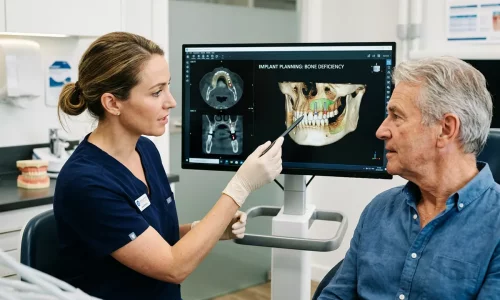
Explore how we plan implants for patients with bone loss, using advanced imaging and grafting for a successful outcome.
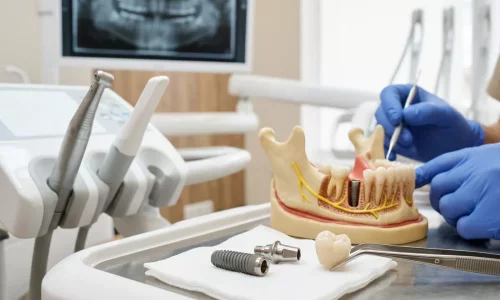
Explore the key factors behind dental implant pricing, from diagnostic 3D scans to necessary preparatory procedures.
Learn why USA patients travel to MilimDental in Turkey for Hollywood Smile treatments and premium dental care.
Milim Dental Hospital isn't just a clinic—it's where confident smiles begin. With a team of world-class specialists, advanced technology, and a patient-first approach, we turn dental care into a premium experience.
We prioritize hygiene, comfort, and tailor-made treatments designed just for you. Don’t just take our word for it—explore real stories from real patients.
Your perfect smile starts here. Join the Milim experience.

Milim Dental Hospital provides comprehensive dental services in a spacious 1,000 m² facility, supported by a wide team of dental professionals including specialists in Oral and Maxillofacial Surgery, Prosthodontics, Orthodontics, Pediatric Dentistry, and Periodontology.