English
Big Sale – Last Days for 20% Off!
341HOUR 47MINUTE 42SECOND
Can Aligners (Clear Trays) Do the Same Job as Braces?

Can Aligners (Clear Trays) Do the Same Job as Braces?

8 December Mon, 2025

Explanations from Dr. Begüm Ulaşan – Bursa Orthodontics

For many years, the only option when discussing orthodontics was classic braces (bracket and wire) treatment. However, in the last 10–15 years, aligner (clear tray) systems have entered our lives, and many patients have started asking:

  1. "Can aligners do the same job as braces?"
  2. "Are clear aligners really as effective as braces, or are they just an aesthetic solution?"
  3. "I am getting orthodontic treatment in Bursa; would Dr. Begüm Ulaşan recommend braces or clear aligners?"

In this article, we will detail and clarify, from the clinical perspective of Orthodontic Specialist Dr. Begüm Ulaşan in Bursa, how aligners and braces are similar and different, in which situations they can do the same job, and in which cases braces still hold an advantage.

Request a Free Treatment Plan from Our Expert Doctors

1. First, Establish the Basics: What are Braces, and What are Aligners?

1.1. What is Classic Braces (Bracket) Treatment?

In classic orthodontic treatment:

  1. Small brackets (which can be metal or ceramic) are bonded to the teeth.
  2. An orthodontic wire (archwire) passing through these brackets applies light and controlled forces to the teeth.
  3. The orthodontic specialist adjusts the wires and elastics at every check-up to change the teeth's position.

This system is a reliable and powerful method used for many years to correct both:

  1. The alignment of the teeth, and
  2. The bite relationship.

Dr. Begüm Ulaşan, who practices orthodontics in Bursa, still uses classic braces treatment as the first choice in many cases, emphasizing that braces still offer a great advantage, especially in complex cases.

1.2. What are Aligners (Clear Trays)?

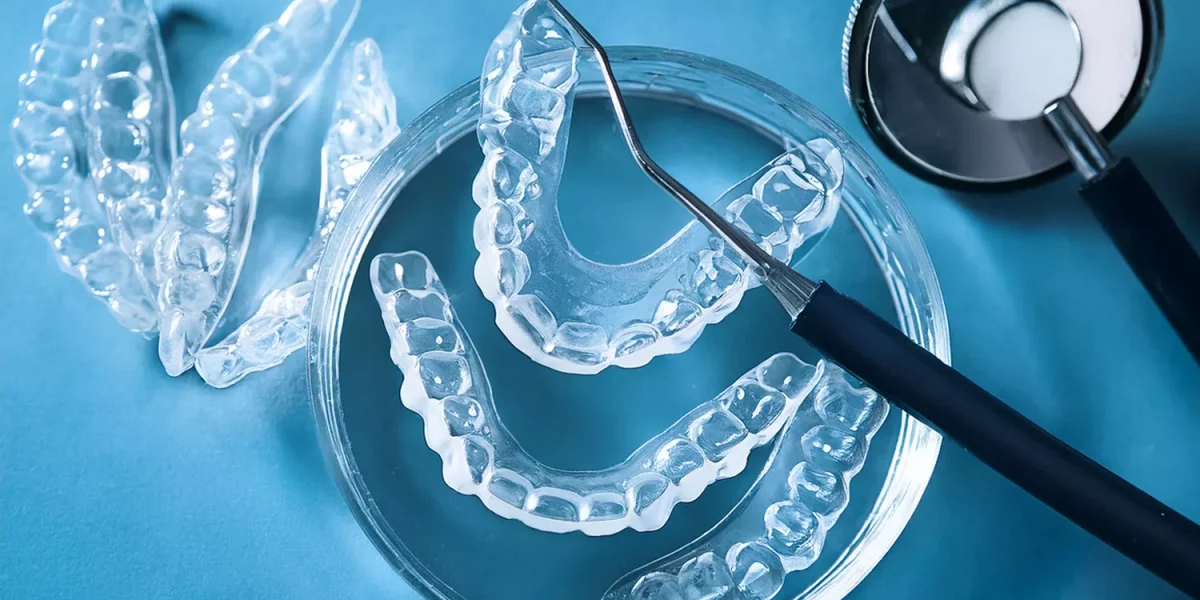
Aligners, or clear trays as they are commonly known, are orthodontic appliances custom-made for your teeth, which are:

  1. Clear,
  2. Thin,
  3. Hug your teeth,
  4. Removable.

In clear aligner treatment:

  1. Your teeth are scanned in 3D using a digital scanner.
  2. All movements of your teeth during the treatment process are planned in a computer environment.
  3. Clear trays are produced in a series according to this plan.
  4. You wear each set of aligners for 20–22 hours a day, and usually switch to the next aligner every 7–10 days.

Dr. Begüm Ulaşan in Bursa uses these clear aligner systems in suitable cases, offering a modern alternative to her patients who have high aesthetic concerns, a busy professional life, and request "braceless orthodontics."

2. The Logic is the Same: We Move the Tooth – The Tool is Different

The main goal of both braces treatment and aligner treatment is identical: to apply light, controlled, and continuous force to your teeth to enable the teeth to move to their new position within the bone.

Thus:

  1. In classic braces, the bracket + wire system provides this force.
  2. In aligner treatment, the aligners themselves provide the force.

Therefore, the first answer to the question, "Can aligners do the same job as braces?" is: Yes, in principle, they do the same job: they move the teeth.

However, whether they achieve the same effectiveness for every case depends entirely on the difficulty of the case, the planning, and the experience of the orthodontic specialist.

In her orthodontic practice in Bursa, Dr. Begüm Ulaşan achieves successful results with clear aligners, just like with braces, in many mild and moderate cases. Still, she emphasizes that traditional braces treatment is far more controlled in some advanced cases.

3. In Which Situations Can Aligners Do the Same Job as Braces?

The modern world of orthodontics has seen significant advancements in aligner systems, and they are no longer used only for "small aesthetic corrections." In appropriately selected cases, clear aligners can indeed be as effective as braces.

3.1. Mild and Moderate Crowding

In situations such as:

  1. Slight misalignment of the front teeth,
  2. Mild crowding or spacing,
  3. Minor rotation (turning) of the teeth,

aligners can achieve the same job as braces treatment:

  1. They straighten the teeth,
  2. Significantly improve smile aesthetics,
  3. Provide a more harmonious bite relationship between the upper and lower teeth.

Dr. Begüm Ulaşan in Bursa frequently prefers clear aligners in these types of cases, offering patients not only orthodontic success but also high aesthetics and comfort.

3.2. Gaps Between Teeth (Diastema) and Spaced Alignment

Spaces that are aesthetically bothersome between the front teeth (e.g., a gap between the two front teeth), or small gaps in areas further back, can usually be closed very successfully with clear aligners.

In such cases, the aligner:

  1. Slowly moves the teeth closer together in a controlled manner,
  2. Closes the gaps while considering the tooth width/length and bite relationship.

In this sense, aligners and braces often have similar success rates for spaced teeth.

3.3. Mild Malocclusions

In situations like:

  1. Mild Class II (upper teeth slightly forward relative to the lowers),
  2. Mild Class III (lower teeth slightly forward),
  3. Mild crossbites,

with a well-planned aligner treatment:

  1. Tooth positions can be changed,
  2. The bite can be greatly improved.

Of course, the critical factor here is that the planning is done by a clinician, like Orthodontic Specialist Dr. Begüm Ulaşan in Bursa, who knows the limits of clear aligner systems and can properly assess where to "draw the line" for any given case.

4. So, In Which Situations Are Braces Still More Advantageous?

Although aligner systems are highly advanced, the vast majority of orthodontic specialists still regard traditional braces as a more powerful tool in certain situations.

4.1. Severe Crowding and Constriction

In severe crowding cases where:

  1. Teeth are severely overlapped,
  2. The jaw bones are severely constricted,
  3. Teeth barely find any space in the mouth,

it may not always be possible to be as effective and controlled with clear aligners as with braces.

In such cases, treatment usually involves:

  1. Extraction orthodontics,
  2. Expansion appliances,
  3. Biomechanic supports such as mini-screws.

These can be applied more easily and safely with classic braces systems.

4.2. Advanced Skeletal (Bone-Related) Jaw Deformities

In situations where the upper or lower jaw is:

  1. Too far forward,
  2. Too far back,
  3. Too narrow or asymmetrical;

solving the issue by only moving the teeth (i.e., with orthodontics alone) is often impossible.

In these types of cases:

  1. A combination of orthodontics + orthognathic surgery,
  2. Complex, multi-directional movements with fixed appliances (braces),

come into play. Clear aligners are either not used here or have a limited supporting role.

4.3. Teeth with Very Difficult Rotations, Cases Requiring Critical Root Control

Some teeth may have:

  1. Excessive rotation,
  2. Very incorrect root positioning,
  3. Special conditions requiring an implant pathway to be opened.

In such sensitive cases, the direct and immediate control of forces provided by wires can give the orthodontic specialist more confidence.

So, for Dr. Begüm Ulaşan in her Bursa orthodontic practice:

Saying "Aligners can do everything" is as wrong as saying "Nothing can be done without braces"; the important thing is to direct the case to the right tool.

5. Aligner vs. Braces Comparison: Pros and Cons

5.1. Aesthetics

  1. Braces (especially metal brackets): Are very visible to most people when smiling. Although ceramic brackets are more aesthetic, they are still visible.
  2. Aligners (Clear Trays): They are clear; most people won't notice them from a distance. This is a significant advantage, especially for adults and those active in professional life.

Dr. Begüm Ulaşan, when discussing "Bursa orthodontics," often recommends clear aligners for adult patients with high aesthetic concerns, while utilizing the power of braces treatment for adolescents and more complex cases.

5.2. Comfort and Adjustment Period

  1. Braces: Can cause sores and sensitivity on the lips and cheeks in the first few days due to rubbing. There is a risk of bracket breakage while eating.
  2. Aligners: Their edges are smoother, causing less irritation to soft tissues. Since they are removed while eating, issues like broken brackets or snagging on wires do not occur.

In terms of comfort, aligners are significantly more comfortable for most adult patients.

5.3. Oral Hygiene

  1. Braces: Brushing becomes difficult; special brushes and techniques are needed for interdental cleaning. The risk of plaque buildup, gingivitis, and cavities can increase.
  2. Aligners: The trays are removed, and teeth are brushed normally. Using dental floss and interdental brushes is much easier.

Therefore, aligner treatment provides a major advantage for adults with gum problems, those planning implants/prosthetics, and those seeking to preserve their dental health long-term.

5.4. Compliance and Discipline

  1. Braces: They are fixed; the patient cannot remove them. This is an advantage for "forgetful" or discipline-challenged patients.
  2. Aligners: They must be worn for 20–22 hours a day. "Forgetting to wear" or "constantly removing" them severely reduces treatment success.

That's why Dr. Begüm Ulaşan in Bursa always asks every patient considering clear aligners this critical question: "Can you truly maintain the discipline of wearing the aligners throughout the day?" Because no matter how well it is planned, patient compliance in aligner treatment is as critical as "a car having gasoline."

6. Dr. Begüm Ulaşan's Approach in Orthodontics – Bursa Practice

Dr. Begüm Ulaşan, an orthodontic specialist in Bursa, approaches the question "Can aligners do the same job as braces?" in practice as follows:

  1. First, Diagnosis: Detailed examination, panoramic and cephalometric films, and 3D scanning if necessary, are used to examine the tooth-jaw relationship.
  2. Case Classification: Is it a mild/moderate case, or a difficult/advanced one? Is the goal solely aesthetic, or are there serious problems with chewing and the jaw joint?
  3. Treatment Options are Explained: Braces (metal/ceramic), aligners (clear trays, Invisalign, etc.), and if necessary, surgery + orthodontics combination.
  4. Which is More Ideal: Braces or Aligners?
  5. If the case is suitable for aligners (especially if it is mild-to-moderate difficulty, and the patient is a compliant adult), clear aligners can largely do the same job as braces and are usually preferred.
  6. If the case is very difficult, requires extractions, or has severe skeletal issues, braces treatment is often more controlled and safer.
  7. Decision is Made Together: Patient-doctor communication is important in Bursa. Dr. Begüm Ulaşan emphasizes making the decision together with the patient after explaining the pros and cons of the orthodontic options.

7. Conclusion: Can Aligners Do the Same Job as Braces?

If we summarize this long explanation in a single sentence: Yes, aligners can do the same job as braces in many cases, but not in every case and every situation.

  1. For mild and moderate crowding, spaced teeth, and some malocclusions; clear aligner treatments planned by Orthodontic Specialist Dr. Begüm Ulaşan in Bursa can yield results as effective as braces treatment.
  2. For very severe crowding, advanced jaw deformities, complex cases with extractions, and situations requiring sensitive root positioning; classic braces treatment is still a stronger and more controlled tool.

Therefore, the answer to the question, "Aligners or braces?" is not found in general articles online but in the examination by an orthodontic specialist who personally examines your teeth and jaw structure.

If you are thinking:

  1. "I want to have orthodontic treatment in Bursa,"
  2. "Will clear aligners be as effective as braces in my case?"
  3. "Which one would Dr. Begüm Ulaşan recommend for me?"

the most appropriate step is to schedule an orthodontic consultation for a personalized assessment.

This way, whether braces, aligners, or a combination of both is the right choice for you will be clarified within a scientific and realistic plan.


Category: Orthodontics

A Milim
Makes a Big Difference

Milim Dental Hospital is the first dental centre to receive the "Health Tourism Authorisation Certificate" issued by the Ministry of Health of the Republic of Turkey.
All Articles
What is All-on-X and How Does It Differ from All-on-4?
east

All-on-X is a customizable full-arch dental implant technique that uses more than four implants based on your individual jaw structure and needs. It offers greater stability and flexibility than All-on-4, making it ideal for complex cases with bone loss or bite challenges.

Zygomatic Implants: The Last Hope for Severe Bone Loss – Milim Dental’s Expertise in Turkey
east

For many patients suffering from severe upper jaw bone loss, traditional dental implants are no longer a viable option. Years of tooth loss, periodontal disease, or previous failed implants can result in such bone deterioration that conventional solutions simply don't work. That’s where Zygomatic Implants come in — and at Milim Dental, we specialize in delivering successful outcomes for even the most challenging cases.

Are Veneers Right for You? How to Determine If You’re a Candidate
east

Dental veneers can transform your smile, but they may not be for everyone. If you're considering veneers, it’s essential to know if you’re a good candidate. Learn about the ideal candidates, oral health requirements, and considerations to decide if veneers are right for you.

Why Patients
Choose Milim?

Milim Dental Hospital isn't just a clinic—it's where confident smiles begin. With a team of world-class specialists, advanced technology, and a patient-first approach, we turn dental care into a premium experience.
We prioritize hygiene, comfort, and tailor-made treatments designed just for you. Don’t just take our word for it—explore real stories from real patients.
Your perfect smile starts here. Join the Milim experience.

View All Experiences
play_arrow
Dt. İsmail Özkısaoğlu Dentist
Get a Free Consultation
play_arrow
Dr. Dt. Ali Direnç Ulaşan Oral, Dental, Maxillofacial Surgeon
Get a Free Consultation
play_arrow
Dr. Dt. Ali Direnç Ulaşan Oral, Dental, Maxillofacial Surgeon
Get a Free Consultation

Milim Dental Hospital provides comprehensive dental services in a spacious 1,000 m² facility, supported by a wide team of dental professionals including specialists in Oral and Maxillofacial Surgery, Prosthodontics, Orthodontics, Pediatric Dentistry, and Periodontology.

Our clinic is authorized by the Turkish Ministry of Health for International Health Tourism. This website is intended only for informing patients from abroad. It does not contain advertisements and complies with legal privacy regulations.
Milim Dental Hospital © 2025 - All rights reserved.

Have a Question on Your Mind?

At Milim Dental Hospital, we accept a maximum of 10 international patients per month. This allows us to provide each patient with personalized care and the highest quality of treatment. Let us know how we can help you!

Would you like to see real patient results? Feel free to explore our Case Gallery!

English
Big Sale – Last Days for 20% Off!