Sinus Lifting Bursa – Oral and Maxillofacial Surgeon Dr Ali Direnç Ulaşan
You want to have implants in the upper jaw, but after the x-ray you hear a sentence like this:
“There is upper jaw bone deficiency, we need to do a sinus lifting.”
So what exactly does upper jaw bone deficiency mean?
What kind of procedure is sinus lifting surgery?
What is the difference between open and closed sinus lifting?
Why is bone graft (bone powder) used, and what does the healing process look like before implants?
In Bursa, as oral and maxillofacial surgeon Dr Ali Direnç Ulaşan and the Milim Dental team,
we answer these questions every day for many patients who search for
“sinus lifting Bursa” and come to us for implant planning.
In this article, I will explain:
in clear, patient-friendly language while staying on solid scientific ground.
For implants to be stable for many years,
there must be enough bone height and thickness surrounding them.
Especially in the posterior upper jaw (premolars – molars):
over time the following situation develops:
On the x-ray or 3D CT scan, your dentist may show you something like this:
“Here is your sinus cavity, and here is a very thin strip of bone.
If we place an implant into such a thin bone,
the implant might end up in the sinus space; that would not be healthy.”
In that situation,
we need to raise the sinus floor and increase bone volume before implants.
This procedure is called sinus lifting surgery.
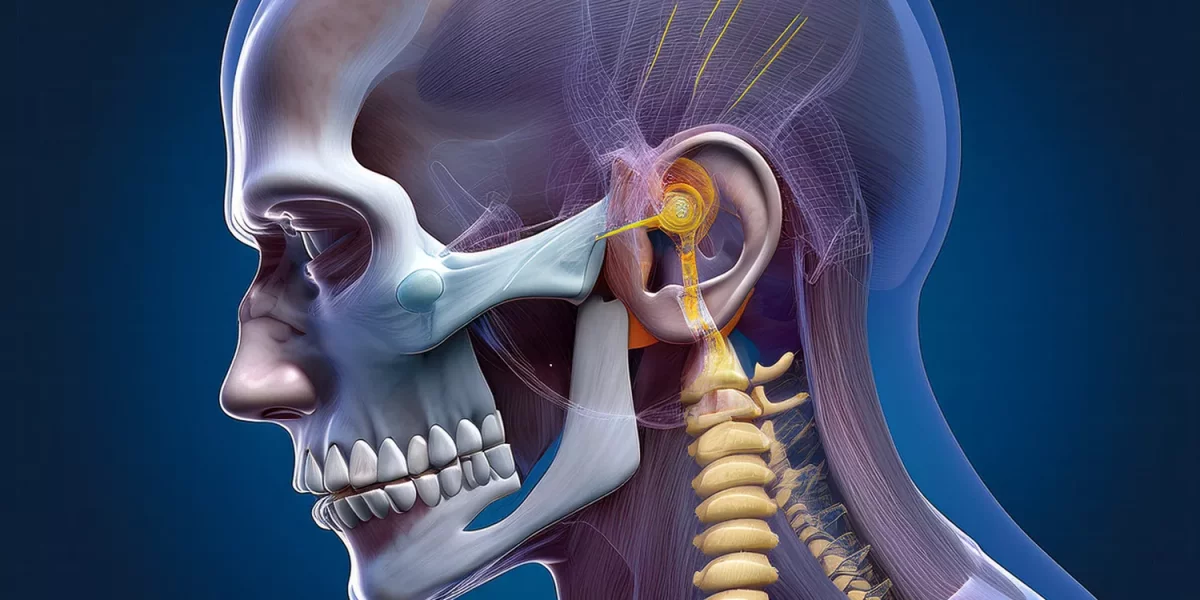
In the posterior upper jaw, above the premolars and molars,
there are air-filled spaces called the maxillary sinuses.
Sinus lifting is, simply:
Lifting the floor of the upper jaw sinus upwards
to create enough bone height for implants and
placing bone graft (bone powder) underneath.
The goals are:
Sinus lifting can be performed in two main ways:
Closed sinus lifting is used when we need a limited amount of bone height gain
and there is still a reasonable amount of existing bone.
In general, closed sinus lifting is considered when:
In such cases, closed sinus lifting can be a good option.
So, in closed sinus lifting,
sinus elevation and implant placement are often completed in one visit,
with a relatively small surgical intervention.
Open sinus lifting (lateral window technique) is used
when the existing bone height is far more deficient and
a closed technique will not provide enough bone volume.
Open sinus lifting is usually preferred when:
In these cases, open (lateral) sinus lifting is often the most reliable solution.
Open sinus lifting
is a longer and more extensive procedure compared to the closed technique,
but in cases of severe upper jaw bone deficiency
it is one of the safest and most predictable options.
Sinus lifting is essentially a “space-making” surgery.
When we lift the sinus membrane,
we create a space underneath that needs to be filled
so that new bone can form there.
To support and maintain this space, we use:
The aim is to provide:
In patients who come to us for sinus lifting Bursa
with upper jaw bone deficiency,
as oral and maxillofacial surgeon Dr Ali Direnç Ulaşan,
I SELECT the type of bone graft according to:
Sinus lifting is not a procedure that should be done “by guesswork.”
Thorough pre-operative planning is essential.
Today,3D CBCT is considered the gold standard
for planning sinus lifting and implants in the posterior upper jaw.
Based on these images,we decide:
At Milim Dental,using a fully digital workflow,
we simulate your sinus lifting and implant plan on the computer
and explain the process to you with visual support before surgery.
Healing time depends on:
In general:
In some suitable cases,
open sinus lifting and implant placement can also be done in a single session
if the existing bone height and quality allow.
This decision is made by your surgeon
after evaluating the CBCT and your individual risk factors.
Because sinus lifting surgery involves the maxillary sinus cavitythere are some specific post-operative rules that are very important.
These rules are designed to:
This is one of the most critical points after sinus lifting.
The sinus region is sensitive to changes in pressure.
Smoking:
Therefore:
you should avoid smoking as much as possible.
For advanced surgeries like implants and sinus lifting,
the ideal solution is to quit completely.
In the early days:
may increase blood pressure and sinus pressure,
and raise the risk of bleeding.
Generally we recommend:
Light walking is usually fine and even beneficial.
Post-op diet aims to:
Recommendations:
After sinus lifting, your oral and maxillofacial surgeon will usually prescribe:
Do not stop medications early
just because you “feel fine.”
Follow the protocol determined by your surgeon.
A clean oral environment helps:
1) Is sinus lifting a very painful surgery?
The procedure is done under local anesthesia.
You should not feel pain during surgery, only pressure or vibration.
Afterwards, mild to moderate pain and swelling for a few days is normal
and can be controlled with the prescribed painkillers.
2) Will I have permanent sinus problems after sinus lifting?
In a properly planned and correctly executed sinus lifting procedure,
sinus function is preserved.
Sinusitis or other complications are rare and,
when recognized early, can usually be managed
without permanent problems.
3) Is sinus lifting necessary for everyone who needs upper implants?
No.
Some patients have enough bone in the upper jaw,
so implants can be placed without sinus lifting.
In other patients with significant upper jaw bone deficiency,
sinus lifting may be the only realistic way
to achieve stable, fixed implant-supported teeth.
The decision is made after examination and CBCT imaging.
4) What happens if I don’t do sinus lifting?
If bone is insufficient and we try to “force” implants into too thin bone
with very short implants,
the risks of:
all increase.
In some cases, the only option left may be
a removable denture (a “plate”) instead of fixed teeth.
Sinus lifting gives many patients the chance of
fixed, screw-retained teeth instead of a removable denture.
5) For sinus lifting Bursa, why should I choose an oral and maxillofacial surgeon?
Sinus lifting is an advanced surgical procedure involving:
As oral and maxillofacial surgeon Dr Ali Direnç Ulaşan in Bursa,
in our daily practice we perform:
This multidisciplinary, experience-based approach
increases predictability and long-term success.
In summary:
If you:
we can create the most suitable sinus lifting and implant plan for you
after a detailed clinical examination and 3D CT scan.
With proper planning, correct surgical technique and good aftercare,
upper jaw bone deficiency is no longer a hopeless situation –
it can be the first step on your way to
stable, screw-retained fixed teeth.
Finished braces or Invisalign? Discover why smile design is the ultimate finishing touch to adjust tooth shape and color.

The Hollywood Smile is a stunning cosmetic makeover that combines teeth whitening, veneers, crowns, and bonding to create a bright, symmetrical, and flawless smile. This personalized procedure can enhance your appearance, making you look younger, more confident, and more attractive.
Discover the essential daily routine for cleaning your dental implants, ensuring long-term health and preventing peri-implantitis.

Milim Dental Hospital isn't just a clinic—it's where confident smiles begin. With a team of world-class specialists, advanced technology, and a patient-first approach, we turn dental care into a premium experience.
We prioritize hygiene, comfort, and tailor-made treatments designed just for you. Don’t just take our word for it—explore real stories from real patients.
Your perfect smile starts here. Join the Milim experience.

Milim Dental Hospital provides comprehensive dental services in a spacious 1,000 m² facility, supported by a wide team of dental professionals including specialists in Oral and Maxillofacial Surgery, Prosthodontics, Orthodontics, Pediatric Dentistry, and Periodontology.