Patients often search for “implant vs crown” when they are told they may need one of them but do not fully understand the difference. This confusion is very common because both treatments are related to restoring teeth, and both may involve something that looks like a tooth above the gum line. From the patient’s perspective, that can make them sound almost interchangeable.
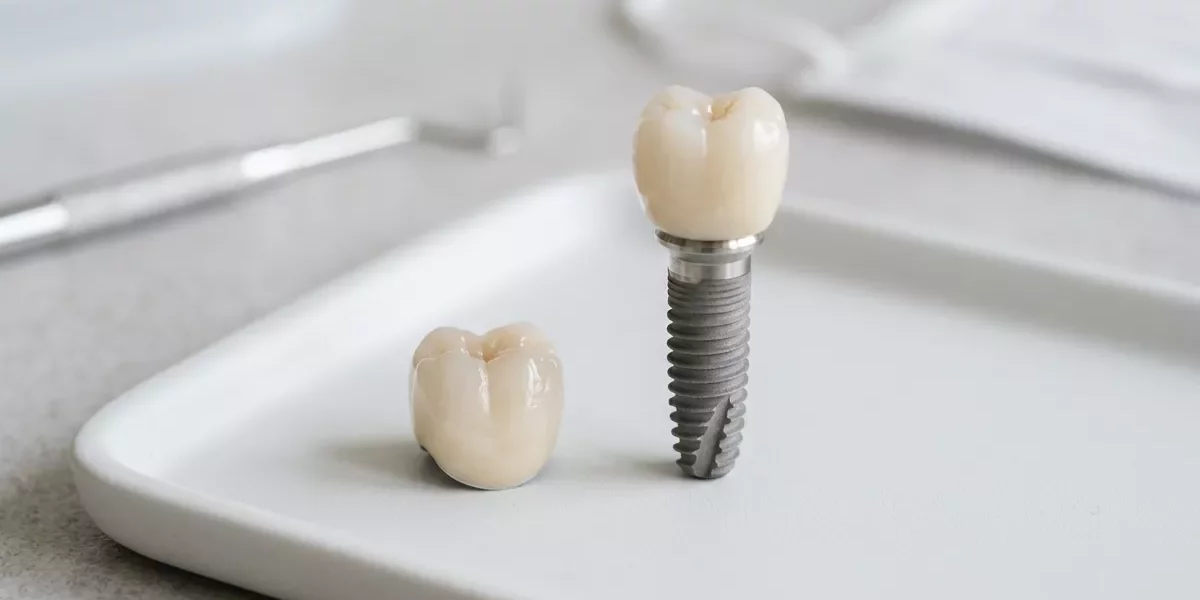
In reality, a dental implant and a crown are not the same kind of treatment. A crown is usually placed on a tooth that still has a root and enough structure to support restoration. A dental implant is used when the tooth is missing or can no longer be kept and needs to be replaced from below the gum line upward. One treatment restores an existing tooth. The other replaces a lost one.
This distinction matters because patients often ask, “Do I need an implant or just a crown?” The answer depends on whether the natural tooth can still function as a healthy long-term foundation. If the tooth can be predictably preserved, a crown may be enough. If the tooth is lost, fractured beyond repair, or no longer a reliable structure, an implant may become the more appropriate option.
At Milim Dental, this conversation is explained carefully because treatment decisions become much easier when the patient understands what each option is actually designed to do.
**What is a dental crown?**
A dental crown is a restoration that covers and protects a natural tooth that is still present in the mouth. It is often used when the tooth has been weakened by a large filling, root canal treatment, fracture, or structural loss, but still has enough remaining support to function if it is rebuilt properly.
Patients often think of a crown as “a new tooth,” but that is not quite accurate. A crown does not replace the root of the tooth. It uses the remaining natural tooth as the foundation. That is why a crown is only possible when the tooth itself is still worth saving in a predictable way.
Crowns may be used on front or back teeth, depending on the condition of the tooth. Some are placed mainly for protection and function. Others are also used to improve appearance, shape, or color. But no matter where the crown is placed, it still depends on the natural tooth underneath.
At Milim Dental, crowns are viewed as a way of preserving a tooth when that tooth still deserves to stay part of the mouth long term.
**What is a dental implant?**
A dental implant is used when a tooth is missing or can no longer be saved. Instead of covering an existing tooth, the implant acts as an artificial root placed in the jawbone. A restoration is then built on top of that implant to replace the missing tooth.
This means an implant is not just a visible tooth replacement. It is a whole support system built where the original tooth used to be. That is why implant treatment involves different planning from a crown. Bone support, gum condition, healing, and implant stability all become part of the discussion.
Patients often hear the word implant and imagine only the visible crown on top. But the implant itself is what makes the replacement possible when the natural tooth is gone. The final visible tooth is only one part of the overall implant treatment.
At Milim Dental, implants are discussed as replacement solutions for teeth that no longer provide a reliable foundation of their own.
**When is a crown the better option?**
A crown is usually the better option when the natural tooth can still be saved in a stable and predictable way. If the root is healthy enough, the surrounding tissues are supportive, and the remaining tooth structure can still hold a restoration properly, preserving the natural tooth is often worth considering.
This is especially true when the tooth has already had treatment, such as a root canal, but still remains restorable. In many cases, a crown protects the weakened tooth and helps it continue functioning well. Patients often prefer this route if the tooth can truly be kept, because it avoids extraction and replacement.
However, a crown should not be chosen just because saving the tooth sounds emotionally easier. The question is not only whether the tooth is still there, but whether it has a good long-term future. If the foundation is too weak, a crown may not be the smartest investment.
At Milim Dental, crowns are recommended when the tooth still deserves to be maintained, not simply because the patient wants to avoid hearing the word implant.
**When does an implant become the better choice?**
An implant becomes the better choice when the natural tooth can no longer serve as a predictable long-term foundation. This may happen if the tooth is missing, severely fractured, heavily damaged, repeatedly infected, or structurally too weak to support a crown reliably.
Patients often ask whether it is better to “save the tooth at all costs” or move to an implant. The answer depends on whether saving the tooth still makes biological and practical sense. Sometimes the more honest long-term option is to stop trying to preserve a failing structure and replace it properly.
This decision can be emotional, especially when the patient has already spent time and money trying to keep the tooth. But an implant is not a sign that treatment failed as a whole. It is often a new phase of treatment when the original tooth is no longer the best anchor for function and comfort.
At Milim Dental, an implant is recommended when replacement becomes stronger than repeated rescue.
**Can a crown and implant be part of the same treatment story?**
Yes, very often they are. A patient may first try to preserve a tooth with root canal treatment and a crown. If that tooth later becomes non-restorable, an implant may become the next step after extraction. In another patient, one tooth may need a crown while a neighboring missing tooth needs an implant.
This is why implant vs crown should not always be seen as two competing treatments. Sometimes they are simply used in different parts of the mouth for different reasons. One preserves a tooth. The other replaces a lost one.
Patients often feel more confident once they understand this. The real question is not which word sounds better. The real question is what the current tooth condition requires. Dentistry becomes much clearer when each treatment is understood in its proper role.
At Milim Dental, the goal is not to make the patient choose a label. It is to explain what kind of support the mouth truly needs.
**What should patients ask before deciding?**
Patients should ask whether the natural tooth still has a realistic long-term future. They should also ask what the condition of the root is, whether the tooth has enough remaining structure, whether the gums are healthy, and whether preserving the tooth is a strong or weak investment.
If implant treatment is being considered, they should ask about bone support, healing, timing, and what the full replacement process would involve. If crown treatment is being considered, they should ask whether the tooth is truly worth protecting and how predictable that protection is.
The best decision usually comes from clarity, not urgency. A patient does better when they understand whether the goal is preservation or replacement. Once that is clear, the choice between crown and implant becomes much more logical.
At Milim Dental, this discussion is part of good planning because a confident patient is usually a better-informed patient.
**Frequently Asked Questions**
**Is a dental crown the same as a dental implant?**
No. A dental crown restores a natural tooth that is still present and usable as a foundation. A dental implant replaces a tooth that is missing or cannot be kept. One treatment covers and protects an existing tooth, while the other replaces the missing root and supports a new restoration.
**Can a tooth with a root canal get a crown instead of an implant?**
Yes, if the tooth is still structurally and biologically restorable. Many root canal treated teeth are restored with crowns successfully. However, if the tooth is too weak, repeatedly infected, or fractured, an implant may become the more realistic long-term option.
**Is it better to save the tooth or replace it with an implant?**
If the tooth can be saved predictably, preserving it may be a good option. But if the tooth is no longer a strong foundation, replacing it may make more sense. The answer depends on the current condition of the tooth, not just the desire to keep it.
**Can a crown fail and later need an implant?**
Yes, that can happen. A tooth may be restored with a crown and function for years, but later become non-restorable because of fracture, infection, or loss of support. In those cases, implant treatment may become the next phase after extraction.
**How is the final decision made?**
The decision is based on examination, imaging, root condition, remaining tooth structure, gum health, and long-term predictability. The right choice is not based on which treatment sounds more advanced. It is based on whether the tooth should be preserved or replaced.
Caring for patients with disabilities in oral and maxillofacial surgery. Learn about anxiety management, anesthesia protocols, creating a comfortable surgical environment, and personalized treatment approaches for patients with intellectual, physical, or developmental disabilities.
What drives Hollywood Smile pricing? Explore the key factors, from veneer types to treatments, that affect your budget.
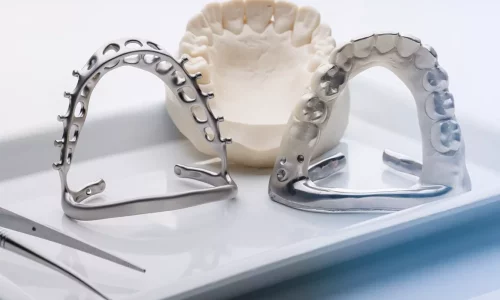
Discover the advancements that make modern subperiosteal implants more reliable than earlier versions.
Milim Dental Hospital isn't just a clinic—it's where confident smiles begin. With a team of world-class specialists, advanced technology, and a patient-first approach, we turn dental care into a premium experience.
We prioritize hygiene, comfort, and tailor-made treatments designed just for you. Don’t just take our word for it—explore real stories from real patients.
Your perfect smile starts here. Join the Milim experience.


Milim Dental Hospital provides comprehensive dental services in a spacious 1,000 m² facility, supported by a wide team of dental professionals including specialists in Oral and Maxillofacial Surgery, Prosthodontics, Orthodontics, Pediatric Dentistry, and Periodontology.