Step-by-Step Decision Guide with Orthodontic Specialist Dr. Begüm Ulaşan from Bursa
Almost everyone who is unhappy with their teeth has the same question spinning in their head:
- "Should I get veneers (laminate veneers, porcelain veneers) to fix my teeth?"
- "Or is orthodontics (braces, clear aligners, Invisalign, etc.) the better first step?"
- "Which treatment is healthier, and which is more permanent?"
- "I want an aesthetic result quickly, but I don't want to cut my teeth. What should I do?"
Orthodontic specialist Dr. Begüm Ulaşan, working in Bursa under the umbrella of Milim Dental, evaluates numerous patients who come with these exact questions. Some only want veneers on their front teeth, some are looking for a "shortcut" solution without wearing braces, and others simply can't decide which is the right path for them.
Request a Free Treatment Plan from Our Expert Doctors
In this comprehensive article, we will address the question, "Is treatment like Veneers or Orthodontics the right choice?" from the perspectives of aesthetics, health, and long-term durability. We will use an SEO-friendly language, focusing on Dr. Begüm Ulaşan and Bursa throughout the text.
1. Basic Definitions First: What is a Veneer? What is Orthodontics?
To make a healthy comparison, let's first clarify the two concepts.
1.1. What is a Veneer (Laminate Veneer / Porcelain Veneer)?
A veneer is an aesthetic restoration, typically made of porcelain, that is bonded to the front surface of the teeth.
The goal is to quickly camouflage:
- The tooth's shape,
- Its color,
- Mild misalignments and gaps,
- Chips and cracks.
When placing veneers:
- Most often, a very thin layer of the front surface is abraded (prepped).
- In some cases, "no-prep" methods, requiring almost no cutting, are possible, but this is not suitable for everyone.
Veneers are a powerful aesthetic solution, especially for smile design, discoloration, post-trauma chipped teeth, and minor shape irregularities. However, it should be remembered that:
Veneers change the shape and visible surface of the tooth; they do not correct skeletal/root-based alignment problems.
1.2. What is Orthodontics?
Orthodontics is a field of treatment that changes the actual position of the teeth and jaws.
The goal is to:
- Correct tooth alignment.
- Ensure harmonious closure between the upper and lower jaws.
- Establish a structure that is simultaneously aesthetic, functional, and healthy in the long term.
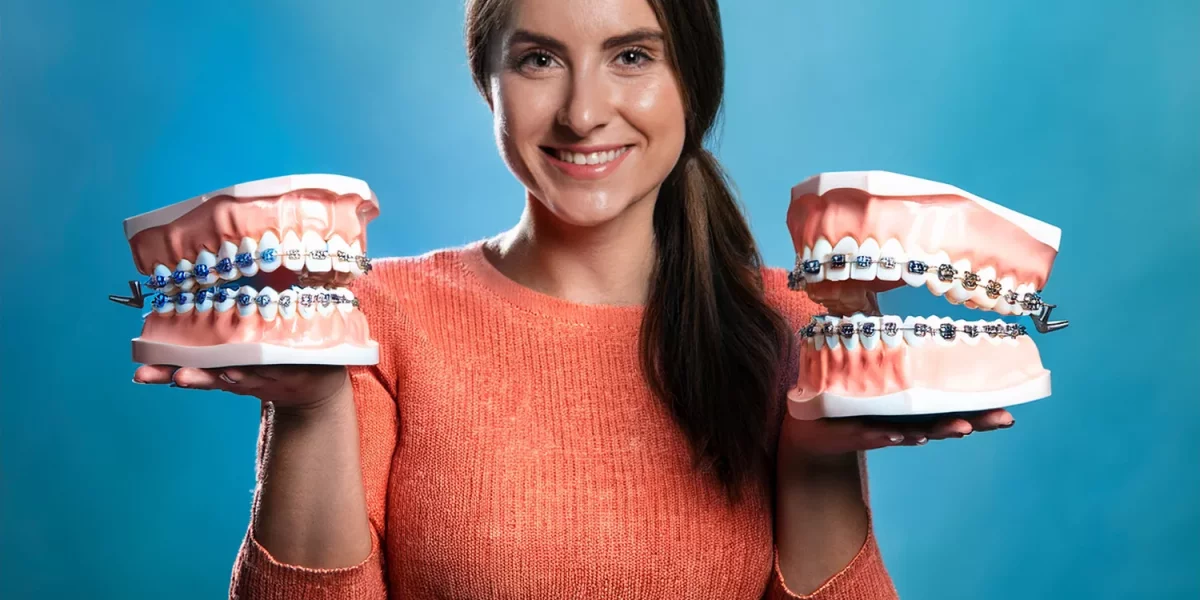
In orthodontic treatments, a specialist like Dr. Begüm Ulaşan in Bursa may use tools such as:
- Braces (bracket) treatments:
- Metal brackets
- Aesthetic/clear brackets
- Clear aligner treatments:
- Systems like Align, Invisalign
- Appliances that guide jaw development when necessary.
Thus, while veneers change the tooth's "mask," orthodontics changes the tooth's and jaw's actual position. This difference lies at the heart of the question, "Which is the right choice?"
2. Veneers or Orthodontics? The Real Answer: "What Do You Want It For?"
The question of "which is better" cannot be answered in isolation.
It is more accurate to ask: "Under what circumstances is a veneer the better choice, and when is orthodontics the better choice?"
Because:
- In one case, placing a veneer might be a disservice to the tooth,
- While in another, a very stylish and fast result can be achieved with a veneer without the need for orthodontics.
Therefore, for every patient who comes with this question, Dr. Begüm Ulaşan in Bursa first asks the following:
- What bothers you the most? Color? Shape? Alignment? All of them?
- What is your dental structure like? Do you have cavities, fillings, or fractures?
- Is there gum recession or bone loss?
- What is your age, profession, daily life, and time constraint?
- Do you need other treatments like implants, bridges, or major fillings?
These answers determine the direction for the Veneers vs. Orthodontics question.
3. Pros and Cons of Veneer (Porcelain Veneer) Treatment
3.1. Advantages of Veneer Treatment
- Fast Result: In suitable cases, your smile can be completely transformed in just a few weeks. This is appealing for people with time constraints (weddings, important business meetings, screen-facing professions, etc.).
- Major Change in Color and Shape: With veneers, it's possible to simultaneously fix the teeth's color, brightness, length, width, and even minor alignment issues. It is highly effective for advanced discolorations that do not improve with whitening.
- Aesthetic Control: The shape, contour, and smile line of the teeth can be designed collaboratively by the dentist and the patient. In the smile design process, the patient can see a simulation of the planned result.
- Limited Prepping (in the right case): If planned correctly, only a very thin preparation is made on the front surface. A "minimally invasive" approach is possible, especially in young individuals with healthy enamel.
3.2. Disadvantages of Veneer Treatment
- Irreversibility: Once the tooth is prepared, the tooth's surface cannot return to its complete original state. This is a point that needs careful consideration, especially for young and healthy teeth.
- May Require Tooth Cutting: If your teeth are very crowded, severely protruding, or bunched up, more cutting may be necessary to create enough space for the veneer. This means more loss of healthy tooth structure.
- Does Not Correct Skeletal Issues Fixed by Orthodontics: Conditions like a protruding/receding lower jaw, jaw asymmetry, or severe bite discrepancies cannot be corrected with veneers; they can only be lightly camouflaged, like makeup. This can leave joint and chewing problems unresolved in the long term.
- Risk of Wear and Fracture: Properly placed veneers can last for many years, but no restoration is guaranteed for life. Teeth grinding, trauma, and bad habits (nail biting, pen chewing, etc.) can shorten the lifespan of veneers.
4. Pros and Cons of Orthodontic Treatment
4.1. Advantages of Orthodontic Treatment
- Corrects by Preserving the Natural Tooth, Without Cutting: Orthodontics changes the position of the tooth, not its shape. Therefore, it is the gold standard for "natural tissue preservation." Dr. Begüm Ulaşan in Bursa prefers the approach of "orthodontics first, then minimal aesthetics if needed," especially for young adults.
- Corrects Bite and Chewing Function: Not only is the appearance of the front teeth improved, but contact points in the back teeth, jaw joint, and muscle balance are also enhanced. This can reduce long-term problems like tooth wear and joint pain.
- Corrects Skeletal and Root Positions: Tooth roots are properly positioned within the bone. This ensures that future treatments such as implants, bridges, or prosthetics are built on a more stable foundation.
- Can be Used as a Substructure Preparation Before Veneers: After the teeth are brought into the correct position with orthodontics, aesthetic veneers can be placed with much thinner, minimal preparation, if necessary. This both reduces tooth cutting and makes the veneers more natural and long-lasting.
- Various Aesthetic Options: Numerous options are available, such as metal brackets, aesthetic brackets, lingual brackets, and clear aligners (Align, Invisalign). Dr. Begüm Ulaşan in Bursa frequently uses clear aligner (Aligner, Invisalign) treatments for adults with busy social lives who do not want visible wires.
4.2. Disadvantages of Orthodontic Treatment
- Takes Longer: Even mild cases usually take between a few months and 1 year. Moderate and severe cases can take 1.5–2 years or more.
- Requires Regular Check-ups and Discipline: Patients need to:
- Go to monthly check-ups.
- Pay extra attention to oral hygiene.
- Maintain the discipline of wearing clear aligners for 20–22 hours a day.
- Aesthetic Process: Metal wires can be a source of discomfort for some professions or individuals with high aesthetic sensitivity. However, clear brackets, lingual systems, or clear aligners significantly mitigate this disadvantage.
5. In Which Case is a Veneer More Logical, and in Which Case is Orthodontics?
Now we come to the most critical part: Which treatment is the right choice for which patient?
5.1. Situations More Suitable for Veneers
Veneers (or Veneers + minimal orthodontics) may be more logical in the following scenarios:
- General alignment of the teeth is mostly straight, with only minor shape irregularities.
- The main problem is color and shape:
- Advanced discolorations that don't improve with whitening.
- Wide gaps (but the jaw relationship and bite are correct).
- Chipped front teeth following trauma.
- The patient has very limited time: If there is a wedding, special photoshoot, or major career change in the near future, and the issues are minor, veneers can offer a fast solution.
- The teeth already have large fillings or old crowns: If restoration is already needed, solutions like veneers/crowns may be unavoidable; in this case, direct aesthetic/prosthetic treatment may be planned instead of orthodontics.
5.2. Situations More Suitable for Orthodontics
In the following situations, doing orthodontics first is generally much healthier:
- There is significant crowding and overlapping of the teeth.
- The relationship between the upper and lower jaws is incorrect:
- Lower jaw too far forward/back.
- Open bite.
- Deep bite.
- Crossbite.
- Teeth are severely protruding and impairing lip closure.
- The amount of cutting required for a veneer is too much: Trying to solve the problem with just a veneer would require taking too much healthy tooth structure.
- A foundation needs to be prepared for more comprehensive future treatments like implants, bridges, or prosthetics.
In these cases, Dr. Begüm Ulaşan in Bursa mostly prefers the following approach:
"First, let's use orthodontics to bring the teeth and jaw into the correct position, then make minimal aesthetic adjustments if necessary."
This approach both preserves the natural tooth structure and reduces the necessity for more invasive treatments like veneers, or allows them to be applied more conservatively.
6. The Veneers + Orthodontics Combination: Combining the Best of Both Worlds
In reality, the answer to the question, "Veneers or Orthodontics?" doesn't have to be "either/or."
With proper planning, both can be used together.
For example:
- In very crowded and long-neglected teeth:
- First, the teeth are aligned, and the bite is corrected with orthodontics.
- Then, veneers are applied to a few teeth with color or shape defects to provide the final aesthetic touches to the smile.
- In patients with slightly protruding, gapped, and worn teeth:
- Clear aligners (Align/Invisalign) are used to move the teeth into the correct position.
- Finally, aesthetic perfection is achieved with minimal preparation for a few veneers or bonding.
In such combined cases, Dr. Begüm Ulaşan in Bursa:
- Plans collaboratively with other colleagues (restorative dentist, prosthodontist, etc.), if necessary,
- Aims for a more scientific and balanced result that considers the position, shape, and color of the tooth in the long term.
7. Comparison in Terms of Cost, Duration, and Permanence
7.1. Cost
- Veneers: Can result in a high one-time cost (priced per tooth). The total figure can be substantial when veneers are done on the front 6 or 8 teeth.
- Orthodontics: The process is longer, and the payment plan may be more spread out. Considering the correction of the entire mouth's alignment, it may even be more economical in the long run.
7.2. Duration
- Veneers: A few weeks to a few months in a suitable case.
- Orthodontics: Generally between 6 months and 2 years.
It is wrong to decide solely based on duration, believing that "whichever takes less time is the right choice." The correct approach is to consider it alongside long-term oral and dental health.
7.3. Permanence and Maintenance
- Veneers: Properly placed and well-maintained veneers can last many years. However, there is no lifetime guarantee; they may need replacement or repair.
- Orthodontics: If the teeth are preserved with fixed retainers or retention plates after being moved into the correct position, the achieved result can remain stable for a very long time. Neglecting the retention period can lead to relapse.
8. Dr. Begüm Ulaşan's Philosophy in Bursa: "Protect the Tooth First, Then Veneer If Necessary"
In light of all this information, the approach of orthodontic specialist Dr. Begüm Ulaşan in Bursa can be summarized as follows:
- She aims to protect the natural tooth first. She avoids unnecessary tooth cutting and fast but long-term risky aesthetic solutions.
- She brings the teeth and jaw into the correct position with orthodontics whenever possible. This simultaneously improves both function and aesthetics.
- She completes the smile with minimal aesthetic restorations, if necessary. Final touches can be done with solutions like bonding for minor color and shape defects, or minimally prepped veneers for advanced cases.
- She does not offer a one-size-fits-all solution for every patient. If two patients coming to Milim Dental in Bursa have different dental structures, ages, professions, and expectations, the treatments they receive will also differ.
- She makes the Veneers vs. Orthodontics comparison holistically, not just from one perspective: Tooth longevity, jaw joint, chewing function, smile aesthetics, the patient's lifestyle, and budget are all evaluated together.
9. Conclusion: Ask "What is Right for Me?" Instead of "Veneers or Orthodontics?"
The most important message at the end of this lengthy explanation is this: No single treatment is "definitely the best" on its own.
The best choice is the treatment that suits your dental structure, jaw structure, expectations, and age.
- If you are only unhappy with the color of your front teeth and your alignment is straight, a veneer may be logical for you.
- If there is significant crowding, jaw discrepancy, or a bite problem, orthodontics first is often the correct choice.
- For most adult patients, the Orthodontics + Minimal Aesthetics combination is the "golden middle path" that is both tooth-preserving and yields a very stylish result.
If you are in Bursa and still contemplating, "Are treatments like veneers or orthodontics the right choice?" the healthiest step is to schedule a consultation with the orthodontic specialist Dr. Begüm Ulaşan and her team.
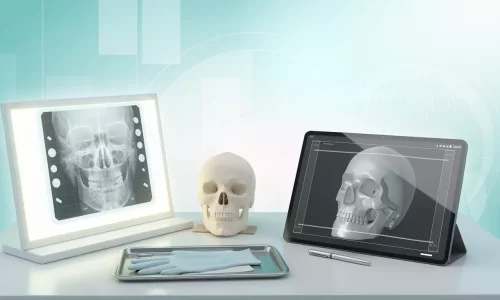
Following a panoramic X-ray, clinical examination, and digital analysis, a plan can be drawn up for you that involves:
- Only veneers,
- Only orthodontics,
- Or a combination of both.
This way, you can renew your smile with a conscious, balanced, and long-term treatment without sacrificing your tooth structure due to a "wrong decision."