
Almost everyone considering orthodontics (braces or clear aligner treatment) has this question in mind:
"Is it essential to finish procedures like treating cavities, fillings, and root canals before starting orthodontics?" or "Should I get the braces first and handle the others later?"
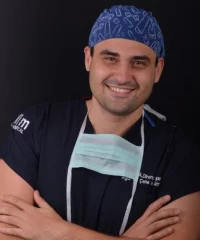
Dr. Begüm Ulaşan, an orthodontic specialist in Bursa, hears this question repeatedly from patients during initial examinations, and her answer is always based on the same fundamental principle:
Orthodontics is not built upon an unhealthy mouth. It is ideal to correct general oral health first, and only then proceed with orthodontic alignment.
In this article, especially for patients considering orthodontics in Bursa, we will provide detailed and SEO-friendly answers to all common questions, such as: "Why are procedures like fillings, root canal treatment, and scaling important before orthodontics, in what order should they be done, and is it absolutely impossible to put on braces before all of them are finished?"
First, let's clarify this point: Orthodontics is not just a cosmetic procedure done for teeth to "look straight."
It is a medical treatment that affects:
Dr. Begüm Ulaşan in Bursa proceeds with this principle in every orthodontic planning:
"Orthodontics is meaningful when built upon a healthy foundation. Applying braces or clear aligners while there are cavities, infection, or gum disease will cause long-term problems."
Therefore, before orthodontics, the following steps are the first stage that must be addressed in most cases:
After braces or clear aligners are placed:
If an undetected cavity exists before orthodontics:
In this situation, the orthodontic process is:
In Bursa, during the initial examination, Dr. Begüm Ulaşan always evaluates cavities, old fillings, and suspicious areas with a panoramic X-ray and clinical examination. Thus, "problematic teeth" are identified before starting orthodontics, and collaboration is planned with the relevant dentist (general dentist, endodontist, etc.).
Untreated deep cavities and insufficient root canal treatments can:
Since orthodontic forces affect the tooth root and the surrounding bone, moving an infected tooth is risky.
While active infection is present, severe problems may arise, such as:
Therefore, before starting orthodontic treatment in Bursa, root canal treatments and root-end treatments must be completed, especially for symptomatic teeth and teeth with problems visible on X-rays.
No one wants to deal with:
When cavity and root canal problems are resolved before orthodontics:
In Dr. Begüm Ulaşan's clinical approach in Bursa, identifying tooth problems waiting like a "hidden bomb" before starting orthodontics is a standard safety step.
At this point, a practical question arises: "Can I only start orthodontics after all my filling and root canal work is completed, or can some be done in parallel with the process?"
The answer to this question depends on the status of the case. However, general principles can be summarized as follows:
Must be addressed before orthodontics:
Can proceed in parallel with the orthodontic process:
Dr. Begüm Ulaşan in Bursa works as a team with general dentists and other specialties, providing the patient with a roadmap:
In this way:
Not only cavities and root canal treatments but also gum health must be evaluated before orthodontics.
can become even more problematic when braces are applied or clear aligners are used.
When gums are unhealthy:
Therefore, before orthodontic treatment in Bursa:
must be provided to prepare a healthy periodontal foundation for orthodontics.
This is also a frequently asked question by patients: "I have a tooth that has had a root canal treatment before; can I get braces?"
Answer: Yes, orthodontics can be applied to root canal treated teeth with correct planning.
The important points here are:
Dr. Begüm Ulaşan in Bursa checks the condition of root canal treated teeth with a panoramic X-ray taken before orthodontics and, if necessary, advanced imaging (periapical film, etc.).
If a suspicious root canal treatment exists:
Thus, the risk of experiencing problems during treatment is reduced.
Many adult patients view orthodontics not just as a standalone treatment but as part of a complete smile design process:
The sequencing here is crucial. The general principle is:
So, orthodontics is often not the "final touch" but an intermediate step that prepares the foundation for aesthetic restorations to sit upon.
Especially if you are an adult living in Bursa who has postponed dental treatments for a long time, it is natural to think: "Filling, root canal, scaling, then braces... How will I manage so many things?"
Right at this point, the correct first step is: Get examined by an orthodontic specialist or a clinic that works comprehensively.
Why?
Once this plan is made:
In other words, instead of waiting for "everything to be perfect before I go for orthodontics," sometimes the opposite is necessary: "First, let the orthodontist draw the general framework, and then let the other treatments be sequenced according to that plan."
Let's give the clear short answer to the question: Yes, before starting orthodontic treatment, cavities, teeth requiring root canal treatment, and gum problems must be addressed.
The reasons for this are:
The approach of Orthodontic Specialist Dr. Begüm Ulaşan in Bursa is to first conduct a general oral health assessment in every patient and then create a personalized "treatment sequence" plan.
If you are also thinking:
The healthiest step is to schedule an orthodontic examination in Bursa and get your own personalized roadmap.
Remember: Orthodontics shows its true value when it is based on a solid foundation. Correctly structuring the health part is your greatest investment in terms of both aesthetics and function.
Toothbrushes, toothpastes, tongue cleaning, and oil pulling: Which is most effective for daily oral hygiene? Get a comprehensive guide on how to keep your teeth, gums, and tongue healthy to effectively prevent bad breath (halitosis).

Learn how a better smile can influence confidence, communication, and daily experiences.
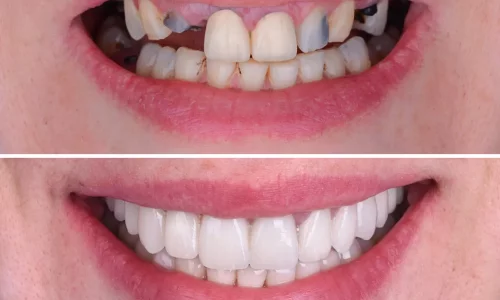
Dental veneers are custom-made shells that improve the appearance of chipped, cracked, discolored, or misaligned teeth. Made from porcelain or composite resin, veneers offer a natural, flawless smile with a simple, non-invasive procedure that boosts both aesthetics and confidence.
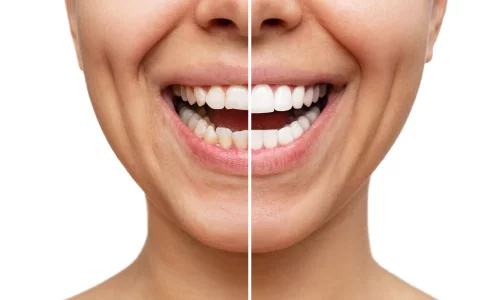
Milim Dental Hospital isn't just a clinic—it's where confident smiles begin. With a team of world-class specialists, advanced technology, and a patient-first approach, we turn dental care into a premium experience.
We prioritize hygiene, comfort, and tailor-made treatments designed just for you. Don’t just take our word for it—explore real stories from real patients.
Your perfect smile starts here. Join the Milim experience.

Milim Dental Hospital provides comprehensive dental services in a spacious 1,000 m² facility, supported by a wide team of dental professionals including specialists in Oral and Maxillofacial Surgery, Prosthodontics, Orthodontics, Pediatric Dentistry, and Periodontology.