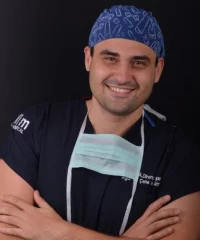
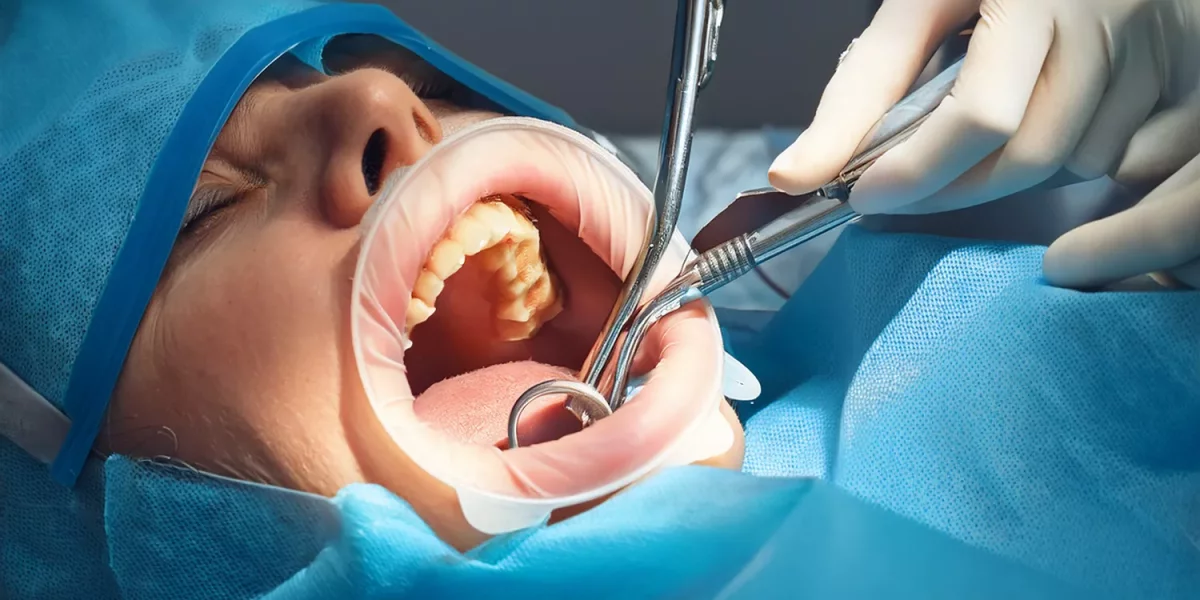
Compassionate, Safe Care with Oral and Maxillofacial Surgeon Dr Direnç Ulaşan – Bursa
Finding the right dentist for a loved one with an intellectual disability is not always easy. When a **tooth extraction** is needed, the challenge feels even bigger. Parents and caregivers often worry about:
* Will they feel **pain**?
* How will they react to the **needle**?
* Can they sit still for the procedure?
* What if there is an **infection** or **tooth fracture** during treatment?
The truth is: with the right specialist, environment and planning, tooth extraction for patients with intellectual disabilities can be **safe, predictable and as stress-free as possible**. In Bursa, oral and maxillofacial surgeon **Dr Direnç Ulaşan** and his team focus on combining surgical expertise with kindness, communication and respect for each patient’s unique needs.
This article explains how tooth extraction is approached in patients with intellectual disabilities, what families should expect, and how to choose a clinic that truly understands special needs dentistry.
---
1. Why Tooth Extraction Is More Complex in Intellectual Disabilities
A tooth extraction is a routine oral surgery procedure. What makes it more complex in patients with intellectual disabilities is not the tooth itself, but the **behavioural, sensory and medical context** of the patient.
1.1 Communication differences
Many patients with intellectual disabilities:
* Struggle to explain where they feel **pain**
* Cannot fully understand why they are in the dental chair
* May react strongly to unfamiliar people or situations
This can make simple steps – opening the mouth, tolerating a **needle**, or staying still during the tooth extraction – more challenging. A clinic that routinely treats special needs patients adapts its language, pace and approach to each individual.
1.2 Sensory sensitivity and anxiety
Patients may also have:
* Sensitivity to bright lights, noises and tastes
* Strong reactions to touch around the mouth or face
* Previous negative experiences with hospitals, medical staff or injections
A rushed, “standard” approach can easily overwhelm them. A specialist like **Dr Direnç Ulaşan** in Bursa works more slowly and predictably, explaining or signalling each step, and giving the patient and caregiver time to adjust.
1.3 Medical conditions and medication
Intellectual disability may coexist with:
* Epilepsy or seizure disorders
* Heart or lung conditions
* Behavioural disorders
* Medications that affect bleeding, healing or behaviour
Before any tooth extraction, a detailed medical history is essential. In more complex cases, **coordination with the patient’s physician** is part of safe planning. This reduces the risk of complications such as uncontrolled bleeding or unmanaged **infection**.
2. When Is Tooth Extraction Necessary in Special Needs Patients?
Dentists always prefer to save teeth when possible. But sometimes, **removing a tooth is the kindest, safest option** – especially for patients who struggle with long or complicated restorative treatments.
Tooth extraction may be recommended when there is:
* Deep decay that cannot be restored reliably
* A large **infection** at the root or around the tooth
* A severe **tooth fracture** after trauma or biting a hard object
* Advanced gum disease making the tooth loose and painful
* A tooth causing repeated abscesses or episodes of severe pain
* Teeth that interfere with chewing, swallowing or jaw function
For a patient who already has difficulty communicating or cooperating, leaving a badly damaged tooth can mean **constant pain, chronic infection and repeated emergencies**. A carefully planned extraction can actually remove suffering and improve quality of life.
3. How an Experienced Oral Surgeon in Bursa Plans Tooth Extraction
In Bursa, oral and maxillofacial surgeon **Dr Direnç Ulaşan** follows a structured, step-by-step approach for patients with intellectual disabilities to ensure both **medical safety and emotional comfort**.
3.1 Listening to caregivers and understanding the patient
The first step is not touching the tooth, but talking to the people who know the patient best. The team asks:
* How does the patient usually react in new places?
* What triggers anxiety, agitation or shutdown?
* How do they typically show **pain** or discomfort?
* Have there been bad experiences with a **needle**, hospital or previous dentist?
These details are used to design an **individual plan** for that specific patient – from appointment timing and duration to the need for sedation or hospital support.
3.2 Clinical examination and digital imaging
Next, the mouth is examined in short, gentle stages, with breaks if needed. Digital X-rays or 3D scans are taken to evaluate:
* Number, length and shape of the roots
* Bone level and density
* Presence and extent of any **infection**
* Risk of **tooth fracture** during removal
* Relationship to nerves, sinuses or adjacent teeth
This careful planning allows Dr Direnç Ulaşan to choose the **least traumatic technique** and anticipate difficulties before they happen.
3.3 Choosing the right environment: clinic vs hospital
Depending on the patient’s cooperation and medical status, extraction can be performed:
* Under local anesthesia in the dental chair
* With minimal or moderate sedation in the clinic
* Under general anesthesia in a hospital setting
For some patients, staying awake with gentle local anesthesia and a calm environment is enough. Others simply cannot tolerate the **needle**, the noise or the feeling of instruments in the mouth. For them, hospital-based treatment under general anesthesia may be the safest, most humane option.
4. Managing Pain and Needle Fear in Special Needs Dentistry
Fear of **pain** and the **needle** is universal – but in patients with intellectual disabilities, it can be harder to express and harder to manage without the right strategy.
4.1 Gentle anesthesia techniques
To make the anesthetic process as smooth as possible, a specialist team will:
* Use numbing gel before the injection
* Keep the needle out of the patient’s direct focus where appropriate
* Inject slowly and steadily to limit pressure and burning
* Use distraction (music, conversation, a favourite object)
* Allow a trusted caregiver to be present when safe and helpful
The aim is to turn the **needle** into a short, manageable moment rather than the central trauma of the visit.
4.2 Keeping pain under control during and after extraction
Once the area is numb, the tooth extraction should not cause sharp pain. The patient may feel:
* Pressure
* Movement
* Vibration
– but not cutting or stabbing sensations.
After the procedure, pain control is adapted to the patient’s age, body weight, medical conditions and ability to swallow or tolerate medicines. Caregivers receive clear, written instructions on:
* When to give pain medication
* How to recognise signs of **pain** in non-verbal patients
* When to call the clinic urgently
Good pain control is not a luxury; it is essential for reducing stress, preventing behavioural crises and supporting healing.
5. Reducing the Risk of Infection and Tooth Fracture
Preventing **infection** and uncontrolled **tooth fracture** is particularly important in special needs dentistry, because patients may not be able to report symptoms reliably.
5.1 Atraumatic extraction techniques
To minimise trauma, Dr Direnç Ulaşan uses atraumatic methods whenever possible:
* Gently separating the gum around the tooth
* Using fine instruments to loosen the tooth slowly
* Sectioning multi-rooted teeth into smaller pieces under control
* Preserving as much surrounding bone as possible
These techniques reduce the risk of unexpected **tooth fracture**, shorten healing time, and improve the possibility of future treatment such as implants or bridges.
5.2 Infection control and socket care
To lower the chance of an **infection** after tooth extraction:
* The socket is cleaned thoroughly
* All inflamed or infected tissue is removed
* The area is irrigated with appropriate solutions
* Sutures may be placed to protect the wound
* In selected cases, bone graft material is used to support healing
Families are instructed on:
* How to keep the area clean without causing trauma
* What foods and drinks to avoid
* Visible signs of infection such as swelling, fever, bad smell or increasing pain
Because some patients cannot clearly describe how they feel, caregivers are trained to **watch for changes** rather than rely only on verbal reports.
6. What Families Should Look For in a Clinic
When arranging tooth extraction for a loved one with an intellectual disability, the choice of clinic and surgeon matters as much as the procedure itself.
Key things to look for:
* **Experience with special needs patients** – ask how often the team treats people with intellectual disabilities
* **Presence of an oral and maxillofacial surgeon** – like **Dr Direnç Ulaşan** in Bursa, who is trained in complex extractions and hospital dentistry
* **Access to sedation and hospital facilities** – important for patients who cannot be safely treated awake in the chair
* **Clear, respectful communication** – with both patient and caregivers
* **Written, easy-to-follow instructions** for before and after the procedure
A clinic that welcomes questions, offers options and takes time to plan is far more likely to provide a positive experience.
7. Tooth Extraction Does Not Have to Be a Trauma
For patients with intellectual disabilities, any medical procedure can be overwhelming. A tooth extraction may sound frightening – but with:
* Careful assessment and planning
* Modern techniques to control pain, prevent infection and avoid uncontrolled tooth fracture
* Flexible options for local anesthesia, sedation or general anesthesia
* A specialist team led by an experienced oral and maxillofacial surgeon such as **Dr Direnç Ulaşan** in **Bursa**
…tooth extraction becomes a **controlled, humane step towards better health**, not a chaotic crisis.
If your loved one has an intellectual disability and needs a tooth removed, the most important decision is not “Which tooth?” but **“Which team?”**. The right surgeon and clinic will not only remove the problem tooth; they will protect the patient’s dignity, safety and comfort at every stage of the journey.
Oral and dental health is one of the most important areas that requires consistent care. Even a small problem can quickly turn into a serious condition. For this reason, issues related to oral and dental health should never be ignored, and routine check-ups and daily hygiene practices must be maintained.

Learn if veneers are right for you. A perfect option for enhancing aesthetics and correcting minor dental imperfections easily.

A guide for Dutch patients on the timeline of veneer treatments in Turkey.

Milim Dental Hospital isn't just a clinic—it's where confident smiles begin. With a team of world-class specialists, advanced technology, and a patient-first approach, we turn dental care into a premium experience.
We prioritize hygiene, comfort, and tailor-made treatments designed just for you. Don’t just take our word for it—explore real stories from real patients.
Your perfect smile starts here. Join the Milim experience.

Milim Dental Hospital provides comprehensive dental services in a spacious 1,000 m² facility, supported by a wide team of dental professionals including specialists in Oral and Maxillofacial Surgery, Prosthodontics, Orthodontics, Pediatric Dentistry, and Periodontology.