A failed root canal can be emotionally frustrating for patients. Many people go through root canal treatment because they hope to save the natural tooth and avoid extraction. So when that tooth continues to hurt, becomes infected again, or can no longer be restored properly, the next step often feels disappointing. This is why patients frequently start searching for one important question: do I need an implant after a failed root canal?
The answer is not always immediate, but in many cases a dental implant becomes one of the main treatment options after a tooth with a failed root canal is removed. Patients usually want to know whether the implant can be placed right away, whether the area is still safe after infection, and whether losing the tooth means the situation has become more complicated.
This is where clear explanation matters. A failed root canal does not automatically mean implant treatment will be difficult, but it does mean the site must be evaluated carefully. The condition of the remaining tooth, the surrounding bone, the presence of infection, and the timing of extraction all influence the next step.
At Milim Dental, implant planning after a failed root canal is treated as a new clinical decision, not just a continuation of the old treatment. That helps patients understand what is realistic and what needs to be assessed properly.
**What does it mean when a root canal has failed?**
Patients often use the phrase “failed root canal” when the treated tooth continues to hurt, becomes infected again, develops swelling, or no longer feels stable. In some cases, the root canal itself may not be the only issue. The tooth structure may also be too weak, too cracked, or too compromised to support long-term restoration.
This matters because the next decision is not based only on whether the root canal worked technically. It is based on whether the tooth can still be saved in a predictable way. Sometimes retreatment may still be considered. In other situations, the better long-term option is to remove the tooth and replace it.
For patients, this can be frustrating because they have often already invested time, effort, and emotion into trying to keep the tooth. But once the tooth is no longer a strong long-term candidate, the discussion has to shift from saving it to replacing it well.
At Milim Dental, this shift is explained carefully so that patients do not feel that extraction means failure of the whole treatment journey. It often means the treatment goal is changing.
**When does an implant become the best option?**
An implant may become the best option when the failed root canal tooth can no longer be restored predictably and the surrounding conditions support replacement after extraction. In many patients, implants are especially attractive at this stage because they offer a fixed solution that does not depend on the compromised tooth anymore.
This is often the case when the tooth has recurrent infection, structural damage, root fracture, or insufficient remaining healthy tooth structure. Even if the root canal could technically be retreated, that does not always mean it is the best long-term investment. The decision depends on whether the tooth is still worth saving or whether replacement would offer a stronger long-term plan.
Patients sometimes feel guilty about moving from a root canal to an implant, as if it means the original effort was wasted. That is not the right way to think about it. Dentistry often involves choosing the best option based on the current condition, not on the amount of effort already spent in the past.
At Milim Dental, the implant conversation begins when the tooth is no longer a reliable foundation, not simply because the patient is tired of dealing with it.
**Can the implant be placed right after the extraction?**
Sometimes yes, but not in every case. Patients often hope that once the failing tooth is removed, the implant can be placed immediately. In selected situations, that may be possible. But the decision depends on bone support, the extent of infection, the quality of the surrounding tissues, and whether stable implant placement can be achieved.
This is especially relevant after a failed root canal, because the site may have an inflammatory history. Some extraction areas still allow immediate implant placement. Others may benefit from a healing period before the implant is placed. The correct timing depends on biology, not convenience alone.
Patients should also understand that immediate implant placement and immediate final teeth are not the same thing. Even if the implant is placed at the time of extraction, the restorative process still needs to follow proper healing principles.
At Milim Dental, this timing decision is explained clearly because a smart sequence after a failed root canal often makes the implant treatment feel more predictable and less stressful.
**Does previous infection make implant treatment harder?**
Previous infection can influence planning, but it does not automatically make implant treatment impossible. What matters is the condition of the site at the time of evaluation, how much healthy bone remains, and whether the extraction area can be managed in a controlled way.
Patients are often afraid that because the tooth had infection, the implant area is automatically “bad.” That is not always true. Many implant cases are successfully treated after teeth with chronic infection are removed, provided the site is assessed properly and the timing is chosen wisely. The important point is not panic. It is careful diagnosis.
This is also why imaging and clinical evaluation matter so much. The previous history of the tooth gives useful information, but it does not decide the future by itself. The current anatomy and tissue condition are what guide the implant plan.
At Milim Dental, sites with endodontic history are not judged only by the fact that infection existed before. They are evaluated on what the tissues can support now.
**How should patients think about the transition from root canal to implant?**
For many patients, this transition feels emotional. They may feel disappointed that the natural tooth could not be kept. That response is completely normal. But from a clinical perspective, the important question is whether the next step gives the patient a healthier long-term future.
In many situations, moving to an implant after a failed root canal is not a step backward. It is a step into a more predictable replacement strategy when the original tooth is no longer dependable. That is especially true when the remaining tooth structure is weak or the infection pattern keeps returning.
Patients often feel better once they stop viewing the implant as a sign of defeat and start viewing it as a different phase of treatment. The goal remains the same: restore comfort, function, and stability. The route simply changes.
At Milim Dental, this part of the conversation is important because patients need not only a new treatment plan, but also a more reassuring way to understand why the plan has changed.
**What should patients expect from the evaluation?**
The evaluation usually includes examining the failing tooth, reviewing symptoms, assessing any imaging, and deciding whether the tooth has realistic long-term potential. If the answer is no, then the next focus becomes the extraction site and its suitability for implant placement.
This may involve deciding whether immediate placement is possible or whether staged healing would be safer. Bone condition, surrounding teeth, gum stability, and bite factors all matter in this plan. Patients should not expect a one-size-fits-all answer just because the tooth previously had a root canal.
The most important thing is clarity. Patients deserve to know why the tooth is no longer a good candidate, why an implant may now be appropriate, and what sequence makes the most sense. That kind of explanation usually turns a frustrating situation into a more manageable one.
At Milim Dental, this evaluation is treated as a turning point in planning. The goal is to help the patient move from uncertainty into a realistic and confident next step.
**Frequently Asked Questions**
**Do I always need an implant after a failed root canal?**
Not always. The first question is whether the tooth can still be predictably saved or retreated. If it cannot, then an implant may become one of the strongest replacement options after extraction. The decision depends on the condition of the tooth, the surrounding tissues, and the long-term outlook.
**Can infection from a failed root canal prevent implant treatment?**
Not automatically. A history of infection means the site needs careful evaluation, but many patients can still receive implant treatment once the tooth is removed and the area is properly assessed. What matters most is the current condition of the bone and tissues, not just the fact that infection existed before.
**Can the implant be placed the same day the tooth is removed?**
Sometimes it can, but not in every case. The decision depends on bone support, tissue condition, infection control, and whether the implant can achieve good stability. Some sites allow immediate placement, while others benefit from a staged approach.
**Is moving from a root canal to an implant a bad sign?**
It may feel disappointing, but it is not necessarily a bad sign. It usually means the tooth is no longer a reliable long-term structure and that replacement may now offer a stronger future. The treatment goal is still to restore health and function. The method simply changes.
**What is most important before choosing the implant route?**
The most important thing is a proper evaluation of whether the tooth still has real long-term potential and, if not, whether the site is suitable for implant planning. Patients should understand not only what the next step is, but why it is being recommended. That clarity helps make the transition much easier.
Learn how zygomatic implants help restore smiles in challenging dental situations.

Large Fillings vs. Zirconium Restorations: Which is the better long-term choice for extensive tooth decay? Compare the durability, aesthetics, and longevity of composite fillings against full or partial Zirconium crowns (onlays/inlays).
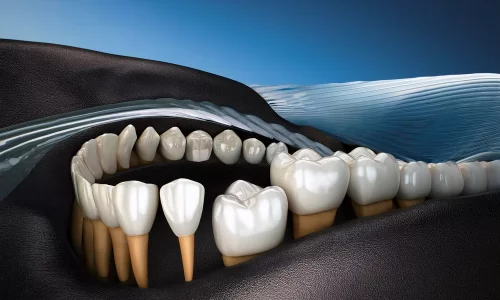
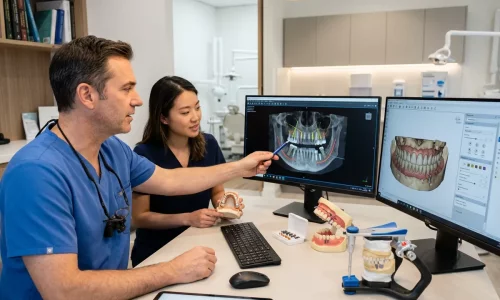
Explore how we plan full mouth implants, from bone assessment to the final bridge, for a life-changing dental restoration.
Milim Dental Hospital isn't just a clinic—it's where confident smiles begin. With a team of world-class specialists, advanced technology, and a patient-first approach, we turn dental care into a premium experience.
We prioritize hygiene, comfort, and tailor-made treatments designed just for you. Don’t just take our word for it—explore real stories from real patients.
Your perfect smile starts here. Join the Milim experience.

Milim Dental Hospital provides comprehensive dental services in a spacious 1,000 m² facility, supported by a wide team of dental professionals including specialists in Oral and Maxillofacial Surgery, Prosthodontics, Orthodontics, Pediatric Dentistry, and Periodontology.