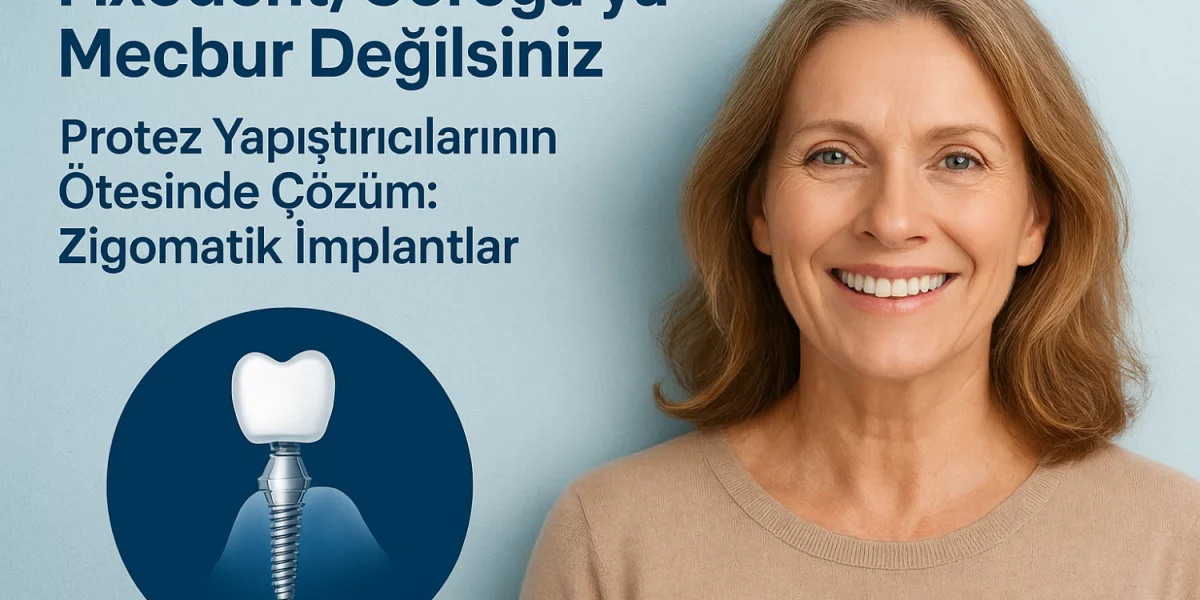
For years, you may have had to rely on denture adhesives such as Fixodent or Corega, feeling insecure while speaking, eating, or when your denture moved. Perhaps you were once told, “Implants are not possible,” or “Your bone loss is too severe.” Today, thanks to zygomatic implants, selected patients with advanced upper jaw bone loss can achieve a stable, adhesive-free, fixed solution. In this article, I explain — in patient-friendly language — the limitations of denture adhesives, who may benefit from zygomatic implants, the planning and healing process, our cost/ accessibility approach in Bursa, and answers to common questions.
Denture adhesives (Fixodent/Corega) provide only temporary retention, and:
If daily life revolves around “Did I apply the adhesive? Is it moving again?”, it may be time to consider an implant-supported fixed option.
Conventional implants require sufficient bone. In patients who have worn dentures for many years, especially in the upper jaw, bone resorption can progress significantly. The sinus cavity may also enlarge, reducing viable bone.
This is where zygomatic implants offer an alternative:
Not every patient is suitable. CBCT (3D tomography) and detailed surgical evaluation are mandatory. Correct indication can dramatically improve quality of life.
Clinical exam, panoramic X-ray and CBCT to assess bone volume, sinus anatomy, and proximity to vital structures.
We clearly explain indications, duration, number of visits, healing expectations, and maintenance.
Tissue-friendly approach (atraumatic technique, piezosurgery), possibility of an early temporary fixed prosthesis (load-limited), and early-phase diet/speech planning.
Swelling/pain management for the first week, suture checks, long-term hygiene training, prosthetic adjustments.
The idea of a fixed solution is often postponed due to cost anxiety. Our approach in Bursa:
Final pricing depends on the number/type of implants, additional surgical needs, and the material of the final prosthesis. After examination, we provide a transparent written plan.
Uncontrolled systemic diseases, heavy smoking/nicotine use, or poor oral hygiene compliance may affect indication. These are not absolute contraindications — but risk–benefit must be carefully evaluated, and preparatory improvement may be required.
“I can’t stop using Fixodent/Corega. Can I still be a candidate?”
Possibly yes. Long-term denture-related bone loss is exactly the group zygomatic implants aim to help. CBCT confirms suitability.
“Can everything be done in one surgery?”
Depending on complexity, treatment may be single-stage or two-stage. Some cases allow early temporary fixed teeth.
“Will it hurt a lot?”
No pain during the procedure. Mild–moderate postoperative sensitivity for 24–72 hours is normal and managed with medication.
“Is maintenance difficult?”
Fixed full-arch prostheses require hygiene training, interdental brushes/water irrigator, and periodic check-ups. Proper maintenance maximizes comfort and longevity.
Needing denture adhesive every day is not destiny. With proper evaluation and correct indication, zygomatic implants can offer a fixed smile and real chewing comfort — even for patients previously told “implants are impossible.” In Bursa, we provide transparent planning, safe surgery, and close follow-up to help you achieve an adhesive-free life.
For personalized assessment, contact our clinic and we will build your roadmap together.
Disclaimer: This content is for educational purposes only. Final diagnosis and treatment planning require clinical examination, CBCT imaging, and oral & maxillofacial surgeon evaluation.
A guide explaining how bite issues affect the difficulty and planning of Invisalign or braces treatment.
A guide for Dutch patients on caring for veneers and crowns to ensure durability and smile longevity.
Discover the importance of expert planning for effective and safe subperiosteal implant treatments.
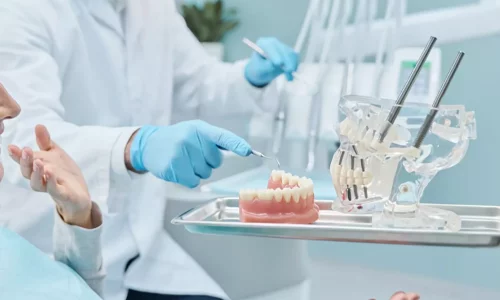
Milim Dental Hospital isn't just a clinic—it's where confident smiles begin. With a team of world-class specialists, advanced technology, and a patient-first approach, we turn dental care into a premium experience.
We prioritize hygiene, comfort, and tailor-made treatments designed just for you. Don’t just take our word for it—explore real stories from real patients.
Your perfect smile starts here. Join the Milim experience.

Milim Dental Hospital provides comprehensive dental services in a spacious 1,000 m² facility, supported by a wide team of dental professionals including specialists in Oral and Maxillofacial Surgery, Prosthodontics, Orthodontics, Pediatric Dentistry, and Periodontology.