
Does your child or do you sleep with your mouth open? Do you often breathe through your mouth during the day? When you look in the mirror, do you see noticeable crowding, protruding teeth, or a recessed jaw?
If the answer to these questions is yes, it is highly likely that the following concepts are interconnected:
In this comprehensive article, especially for children, adolescents, and adults considering orthodontic treatment in Bursa, we will address all of these questions one by one, based on the clinical perspective of orthodontic specialist Dr. Begüm Ulaşan:
Normally, the human body is designed to use the nose for breathing. The nose:
Mouth breathing is the condition where a person predominantly breathes with their mouth open, day or night, inhaling air through the mouth instead of the nose.
This condition:
Mouth breathing is not a disease in itself but is often a symptom of another underlying problem.
Common Causes:
The crucial point here is this: If a child or adult constantly breathes through their mouth, the question "Why can't they breathe through their nose?" must be investigated jointly by an ENT specialist and an orthodontic specialist.
Dr. Begüm Ulaşan, who specializes in orthodontics in Bursa, prefers to address this condition as a team effort (with an ENT, pediatrician, and, if necessary, an allergy or sleep specialist) rather than just straightening the teeth alone in patients with mouth breathing.
Mouth breathing can significantly alter jaw and facial development, especially in growing children. This is because the position of the tongue, lips, and cheek muscles is "re-adjusted" according to the breathing pattern.
Normally:
In Mouth Breathing:
This can lead to the following long-term consequences:
Because the upper jaw loses the support of the tongue, it can become narrow and have a high vault (high-arched palate). A narrow upper jaw does not leave enough space for the teeth, leading to orthodontic crowding and tightness.
In children with mouth breathing, the facial shape may gradually become longer and narrower. Imbalances can occur in the nose-lip-chin line, leading to aesthetic disruptions in the profile view.
Mouth breathing and the change in tongue position can cause the lower jaw to position itself functionally further back. This can set the stage for Class II malocclusion problems later on, where the upper teeth appear too far forward and the lower jaw looks recessed.
The upper and lower lips may struggle to close completely, and the child may often walk around with an "open mouth." This appearance can negatively affect both aesthetics and social self-confidence.
For this reason, mouth breathing should be viewed not just as a way of breathing but as a chronic condition that changes the "architecture" of a child's face. Dr. Begüm Ulaşan in Bursa always pays careful attention to:
Orthodontic crowding is the misalignment of teeth due to a lack of sufficient space in the bone and imbalanced force dynamics.
Mouth breathing contributes to this process in three ways:
When the tongue moves away from the palate, the upper jaw loses the "push-out" support from the inside. The cheek muscles exert pressure on the upper jaw from the outside. The result is a narrow, high-arched upper jaw.
In this narrow jaw, the teeth:
In children with mouth breathing, the lower jaw can be functionally positioned slightly behind. The upper incisor teeth angle forward and protrude, while the lower incisors remain more recessed.
In this situation:
Factors such as difficulty in lip closure, incorrect tongue position, and the tongue pushing against the teeth during swallowing and speaking (tongue thrust) can both increase orthodontic crowding and raise the risk of relapse (the teeth moving back) after treatment.
Therefore: Simply putting braces on the teeth, as long as mouth breathing continues, only means correcting the aesthetic part of the problem temporarily.
The main goal should be: to correct the tooth alignment and to find and manage the underlying causes of mouth breathing.
Especially families living in Bursa should consider consulting an orthodontic specialist (such as Dr. Begüm Ulaşan) and an ENT specialist if they notice the following signs in their children:
These symptoms are often indicators of the mouth breathing – jaw structure – orthodontic problem triangle.
Orthodontic specialist Dr. Begüm Ulaşan in Bursa prefers to follow these steps in patients suspected of having mouth breathing:
Facial profile, jaw relationship, and smile analysis are performed. The way the teeth close, the relationship between the incisors and molars, and jaw narrowness are evaluated. If necessary, panoramic and cephalometric X-rays are used to examine the jaws and tooth roots.
During the examination, the child's ability to keep their mouth closed is observed. Difficulty breathing through the nose is assessed. The tongue's position and its relationship with the teeth during speech and swallowing are checked.
If there are strong indications of mouth breathing:
With this approach, the mindset adopted is: "Let's address the breath, the jaw structure, and the tooth alignment together," instead of "Let's fix the teeth, and the rest doesn't matter."
Depending on the cause and age:
These options can be used alone or in combination. In younger age groups with jaw narrowness due to mouth breathing, Dr. Begüm Ulaşan in Bursa often focuses first on:
When planning treatment options, the following are taken into account: the child's age, growth potential, severity of mouth breathing, current condition of the teeth, and the family's expectations.
The answer to this question is largely yes. If:
The long-term success of the orthodontic treatment significantly increases.
In the opposite case:
Even if the teeth are straightened with orthodontics, the risk of relapse (moving back) over the years increases.
That is why Dr. Begüm Ulaşan emphasizes the following to patients with mouth breathing:
"Orthodontics is not just a wire placed on the teeth; it is a whole that must be addressed together with breathing, muscles, jaw structure, and function."
Let's return to the question at the beginning of this article: "Does mouth breathing affect jaw structure and orthodontic crowding?"
The Answer:
Therefore:
do not see this as a "minor detail."
If you live in Bursa or can travel to Bursa, you can schedule an appointment with orthodontic specialist Dr. Begüm Ulaşan to:
Remember: How you breathe shapes not just your lungs, but also your face, your jaw, your smile, and your long-term quality of life.
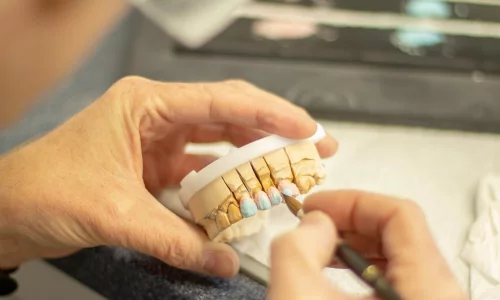
Dental prosthetics are an ideal solution for individuals who have lost some of their natural teeth. Today, prosthetic teeth are one of the most commonly preferred treatments in oral health. They are designed to protect your smile and oral aesthetics while restoring missing teeth to their natural function. When placed correctly, prosthetic teeth help rebuild the integrity of the mouth, bringing back both function and appearance.
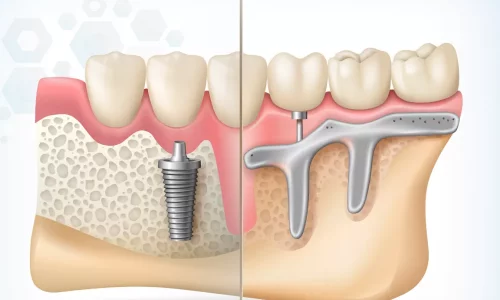
A simple comparison between subperiosteal implants and traditional dental implants.
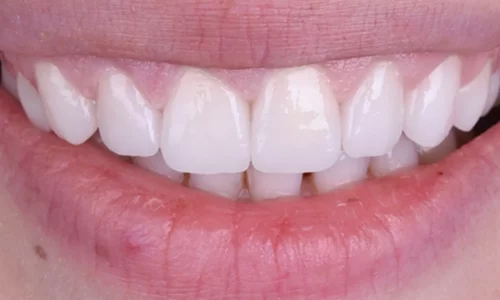
A guide for American patients on achieving a natural-looking Hollywood Smile with modern cosmetic dentistry.
Milim Dental Hospital isn't just a clinic—it's where confident smiles begin. With a team of world-class specialists, advanced technology, and a patient-first approach, we turn dental care into a premium experience.
We prioritize hygiene, comfort, and tailor-made treatments designed just for you. Don’t just take our word for it—explore real stories from real patients.
Your perfect smile starts here. Join the Milim experience.

Milim Dental Hospital provides comprehensive dental services in a spacious 1,000 m² facility, supported by a wide team of dental professionals including specialists in Oral and Maxillofacial Surgery, Prosthodontics, Orthodontics, Pediatric Dentistry, and Periodontology.