English
Big Sale – Last Days for 20% Off!
153HOUR 12MINUTE 59SECOND
I Have Impacted Canine Teeth That Haven't Erupted. Can We Bring Them Down with Orthodontics?

I Have Impacted Canine Teeth That Haven't Erupted. Can We Bring Them Down with Orthodontics?

8 December Mon, 2025

Bursa Orthodontic Specialist Dr. Begüm Ulaşan Explains

If you look in the mirror and notice "a gap," "incompatibility between the teeth," or "the space for my canine teeth is empty" in the upper front area, a frequently heard statement is:

"My canine tooth never came out; the X-ray showed it was impacted high up. Can we bring this tooth down with orthodontics, or will I have to have it extracted?"

Request a Free Treatment Plan from Our Expert Doctors

Impacted (unerupted) canine teeth are a very important and special topic in orthodontic treatment. This is because canine teeth play a critical role in both aesthetics and jaw function.

In this article, specifically for patients considering orthodontic treatment in Bursa who have the "impacted canine tooth" problem, we will provide detailed answers to the following questions, based on the clinical approach of Bursa orthodontic specialist Dr. Begüm Ulaşan:

  1. What is an impacted canine tooth, and why does it occur?
  2. Can an impacted canine tooth be brought down with orthodontics?
  3. In which situations is it better to extract the tooth, and when is it better to try to bring it down?
  4. How does the treatment process work—is it a difficult and painful journey?
  5. How does Dr. Begüm Ulaşan in Bursa approach these cases?

1. What is an Impacted Canine Tooth?

Under normal conditions:

  1. The upper canine teeth (upper canines) erupt around the age of 11–13.
  2. The lower canine teeth usually take their place in the mouth a little earlier, around the age of 9–11.

In some people, however:

  1. The canine tooth cannot find enough space where it should erupt.
  2. There is a tooth or bone obstruction on its path of eruption.
  3. It has shifted or changed direction.

and for this reason, it does not appear in the mouth and remains within the bone. This condition is called an impacted canine tooth (impacted canine).

The impacted canine tooth:

  1. Can sometimes be found inside the palate.
  2. Sometimes in an area very close to the roots of the adjacent teeth.
  3. Sometimes lying in a "horizontal" position.

Even if this tooth is not visible in the mouth, it is often clearly noticed on X-rays. Its position and structure are analyzed in detail, especially with a panoramic X-ray taken during an orthodontic examination in Bursa, and if necessary, with 3D imaging (CBCT).

2. Why Are Impacted Canine Teeth Important?

Thinking, "I don't have a canine tooth anyway, the gap will be closed, or an implant can be placed if necessary," might seem like an easy solution at first glance. However, canine teeth are special teeth from both an aesthetic and functional perspective.

2.1. Aesthetic Role

When you smile, the canine teeth are located right next to the upper front area. They harmonize with your facial features, smile line, and lip support. The absence of canine teeth can create an asymmetrical and "missing" appearance in the smile.

2.2. Functional Role

Canine teeth play an important role in the guidance of the upper and lower jaw during jaw movements. In lateral chewing and sliding movements, it is desired that the canine teeth contact each other (a condition we call "canine guidance").

This guidance:

  1. Prevents the jaw joint, chewing muscles, and other teeth from being overloaded.
  2. Plays a protective role in the long run.

For this reason, Bursa orthodontic specialist Dr. Begüm Ulaşan often finds that bringing an impacted canine tooth into the mouth is more valuable than options like implants or space closure, especially in young and suitable cases.

3. Can Impacted Canine Teeth Be Brought Down with Orthodontics?

Short Answer: Yes, in many cases, impacted canine teeth can be brought into the mouth and moved to their correct place with the help of orthodontics and minor surgical procedures.

However, this does not always mean it is 100% possible or the correct choice. Many factors influence this.

3.1. What Factors Determine the Chance of Bringing the Tooth Down?

  1. Tooth Position: Is the tooth close to the palate, adhered to the root of the lateral incisor, or very high up? What is the tooth's vertical, horizontal, or angled position on the jaw X-ray?
  2. Tooth Direction: The tooth root may be close to the ideal position, with only the crown in the wrong place. It may be completely horizontal, or even upside down. The more "favorable" the tooth's position, the higher the chance of bringing it down.
  3. Root Structure and Whether it is Ankylosed (Fused to the Bone): Some impacted teeth can become virtually "fused" with the surrounding bone (ankylosis). In this case, moving the tooth with orthodontic force is either impossible or very risky.
  4. Age: Bringing down an impacted tooth is generally easier at a young age (adolescence). As age advances, bone elasticity decreases, and changes may occur in the tissues surrounding the tooth.
  5. Status of Other Teeth and Space Shortage: Is there enough space in the area where the canine tooth should erupt? Can space be created with orthodontics if necessary? Is there an overlap with the roots of neighboring teeth?

These are the parameters that Dr. Begüm Ulaşan in Bursa first evaluates in cases of impacted canine teeth.

4. How Does the Treatment Process Proceed?

Bringing down impacted canine teeth with orthodontics usually requires a multi-stage treatment.

4.1. Orthodontic Evaluation and Planning

First, a detailed clinical examination and panoramic X-ray are taken. If necessary, 3D tomography (CBCT) is used to examine the exact location of the impacted tooth, its distance from adjacent teeth, and its root structure.

Based on this analysis, Bursa orthodontic specialist Dr. Begüm Ulaşan evaluates:

  1. Is the tooth suitable to be brought down?
  2. From which direction and with what force should it be pulled?
  3. Should braces be applied first to create space, or should the tooth be exposed immediately?

4.2. Creating Space (Orthodontic Preparation)

In most cases:

  1. There is not enough room in the area where the impacted canine tooth should erupt.
  2. First, the adjacent teeth are slightly moved with the help of braces (or clear aligner systems in some cases), and a "corridor" is opened for the canine tooth.

This stage:

  1. Can take a few months in some patients.
  2. But it is critical for the tooth to be able to settle into a straight position later on.

4.3. Surgical Exposure of the Tooth

In the next step, in cooperation with a maxillo-facial surgeon/periodontologist:

  1. The gum and some bone over the impacted canine tooth are removed, exposing the crown of the tooth.
  2. A small bracket or attachment is bonded to the exposed part of the tooth.
  3. A thin chain or wire is attached to this attachment.

In Bursa, this procedure is:

  1. Usually planned as a minor surgical intervention performed under local anesthesia.
  2. Short-lasting, allowing you to return home on the same day.

4.4. Orthodontic Eruption (Traction)

After the surgery:

  1. The chain/wire attached to the tooth is carefully activated via the orthodontic appliance (bracket or wire system).
  2. The goal is to slowly pull the impacted tooth into the mouth without damaging the surrounding tissues.

This process:

  1. Varies depending on the tooth's position and the distance it needs to travel.
  2. It is generally a controlled pulling process that takes months.

At every control appointment:

  1. The force applied to the tooth is adjusted.
  2. The tooth's position is monitored with X-rays and clinical examination.
  3. Any signs of root resorption or complications are watched for.

4.5. Alignment When the Tooth Becomes Visible in the Mouth

When the impacted canine tooth:

  1. Has erupted sufficiently and is visible in the mouth,
  2. A bracket can be placed on it like on the other teeth, and it becomes a part of the normal orthodontic treatment.

In the final stage:

  1. The tooth is moved into the correct position within the bone.
  2. The bite relationship is corrected.
  3. Smile aesthetics and chewing function are balanced.

5. Should Every Impacted Canine Tooth Be Brought Down?

Theoretically, "saving every natural tooth" sounds appealing. But in practice, some impacted canine teeth:

  1. May be in a highly risky position.
  2. May have a high potential to damage the roots of neighboring teeth.
  3. May be ankylosed (fused to the bone).
  4. May require a very long, painful, and uncertain process to bring down.

In such cases, orthodontic specialists like Dr. Begüm Ulaşan in Bursa may also consider decisions such as:

  1. Extracting the impacted tooth instead of bringing it down.
  2. Closing the gap orthodontically.
  3. Completing the space with an implant or bridge in the future, if necessary.

When making the decision, the following are all evaluated together:

  1. The patient's age.
  2. Aesthetic expectations.
  3. Bone status.
  4. Potential damage the impacted tooth is causing/may cause to adjacent teeth.
  5. Duration and difficulty of the treatment.

So the answer is: Yes, impacted canine teeth can be brought down and moved into place with orthodontics in most cases; however, this may not be the most logical and safest path in every case. The final decision should be made by the orthodontic specialist after detailed analysis.

6. Is the Treatment Difficult and Very Painful?

Bringing down an impacted canine tooth:

  1. Is a more complex process than standard orthodontic treatment.
  2. Requires patience and cooperation.

But this does not mean it is an "unbearably painful" treatment.

  1. The surgical phase is usually performed under local anesthesia without feeling pain; afterward, there may be slight soreness and swelling, which are controlled within a few days.
  2. During orthodontic traction, you may feel mild-to-moderate pressure and soreness, just like in classic wire tightening, but this is usually temporary and a manageable discomfort.

Dr. Begüm Ulaşan in Bursa prepares her patients for this process in detail beforehand:

  1. Explains what you might feel at each stage.
  2. Emphasizes the transparent and predictable progression of the process.
  3. Plans procedures to increase comfort by working in coordination with the oral surgeon when necessary.

7. Recommendations for Those with Impacted Canine Teeth

If:

  1. You have been told you have an impacted canine tooth on your X-ray.
  2. You have a tooth deficiency, crowding, or asymmetry in the upper front area.
  3. You are wondering, "Can we bring this tooth down, or do I have to have it extracted?"

You should definitely consider the following:

  1. Must be evaluated by an orthodontic specialist: An impacted canine tooth is not just a "lost tooth," but an important issue concerning the balance of the entire jaw. Seeing an experienced orthodontist in Bursa (such as Dr. Begüm Ulaşan) is the first step.
  2. 3D imaging may be necessary: A panoramic X-ray alone is sometimes not enough. CBCT may be requested to clearly see the root, direction, and relationship of the impacted tooth with neighboring teeth.
  3. Every case is unique: Comments you read online like "they brought down my tooth" or "mine was extracted" may not be exactly the same as your situation. The location, direction, age, bone structure, and neighboring teeth are different for everyone.
  4. Patience and cooperation are important: Bringing down an impacted canine tooth can be a slightly longer and more meticulous process than classic braces treatment. Regular controls, hygiene, and compliance with the doctor's recommendations are critically important.

Conclusion: Impacted Canine Teeth Can Often Be "Gained" with Orthodontics

To summarize the answer to the question, "I have impacted canine teeth that haven't erupted, can we bring them down with orthodontics?" from the perspective of Bursa and Dr. Begüm Ulaşan:

Yes, many impacted canine teeth can be brought into the mouth with orthodontics + surgical collaboration and moved to their original place, where they can function for years.

However, this is not a method to be "automatically" applied in every case. The tooth's location, direction, age, root structure, relationship with adjacent teeth, and your overall oral structure must be analyzed in detail.

The final decision—"Should this tooth be brought down, or should it be extracted and a different plan made?"—is given by the orthodontic specialist who examines you.

If you are thinking:

  1. "I live in Bursa or can travel to Bursa, I have an impacted canine tooth, what is the best solution?"

You can schedule an initial examination with Bursa orthodontic specialist Dr. Begüm Ulaşan to get clear information about a realistic roadmap and the chances of treatment specific to your teeth.

Remember: With the right timing, the correct diagnosis, and the proper planning, impacted canine teeth can often become a value to be gained, not a burden to be lost.


Category: Orthodontics

A Milim
Makes a Big Difference

Milim Dental Hospital is the first dental centre to receive the "Health Tourism Authorisation Certificate" issued by the Ministry of Health of the Republic of Turkey.
All Articles
Zygomatic Implants vs. Traditional Implants: Which is Best?
east

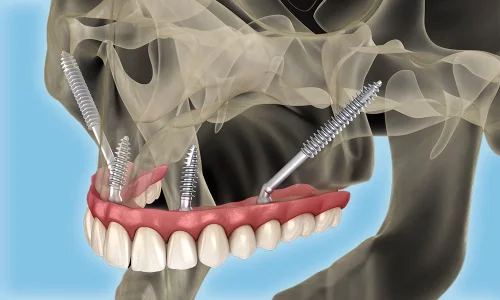
Choosing the right dental implant solution can be overwhelming—especially for patients with severe upper jaw bone loss. Many are offered bone grafting procedures, sinus lifts, or long treatment timelines. But an increasingly popular alternative, zygomatic implants, offers a faster, graft-free solution.

Shine Like a Star: Hollywood Smile with E-Max Veneers at Milim Dental in Bursa
east

A perfect smile isn’t just about white teeth — it’s about harmony, confidence, and individuality. At Milim Dental, located in the serene city of Bursa, Turkey, we create dazzling, natural-looking transformations with E-Max veneers, bringing you one step closer to the legendary Hollywood Smile.

Real Patient Stories: Life-Changing Results with Zygomatic Implants
east

Zygomatic dental implants have revolutionized treatment for patients who were once told they were not candidates for traditional implants. At Milim International, we’ve had the privilege of helping hundreds of international patients restore their smiles and lives through this advanced technique.

Why Patients
Choose Milim?

Milim Dental Hospital isn't just a clinic—it's where confident smiles begin. With a team of world-class specialists, advanced technology, and a patient-first approach, we turn dental care into a premium experience.
We prioritize hygiene, comfort, and tailor-made treatments designed just for you. Don’t just take our word for it—explore real stories from real patients.
Your perfect smile starts here. Join the Milim experience.
View All Experiences
play_arrow
Dt. İsmail Özkısaoğlu Dentist
Get a Free Consultation
play_arrow
Dr. Dt. Ali Direnç Ulaşan Oral, Dental, Maxillofacial Surgeon
Get a Free Consultation
play_arrow
Dr. Dt. Ali Direnç Ulaşan Oral, Dental, Maxillofacial Surgeon
Get a Free Consultation

Milim Dental Hospital provides comprehensive dental services in a spacious 1,000 m² facility, supported by a wide team of dental professionals including specialists in Oral and Maxillofacial Surgery, Prosthodontics, Orthodontics, Pediatric Dentistry, and Periodontology.

Our clinic is authorized by the Turkish Ministry of Health for International Health Tourism. This website is intended only for informing patients from abroad. It does not contain advertisements and complies with legal privacy regulations.
Milim Dental Hospital © 2025 - All rights reserved.

Have a Question on Your Mind?

At Milim Dental Hospital, we accept a maximum of 10 international patients per month. This allows us to provide each patient with personalized care and the highest quality of treatment. Let us know how we can help you!

Would you like to see real patient results? Feel free to explore our Case Gallery!

English
Big Sale – Last Days for 20% Off!