"Can I Get Braces If I Have Gum Recession?"
A Roadmap from Milim Dental Bursa and Dr. Begüm Ulaşan
Orthodontics is often associated with people who are "young, have healthy teeth, and have no gum problems."
However, in real life:
Request a Free Treatment Plan from Our Expert Doctors
- Patients aged 30–40–50 who have gum recession,
- Have experienced "Periodontitis" (advanced gum disease),
- And have lost teeth,
- also deserve to have their teeth straightened and achieve a better smile.
But is orthodontics (braces / clear aligners) possible for these patients?
In this article, from the perspective of Dr. Begüm Ulaşan, an orthodontic specialist at Milim Dental in Bursa, we will provide detailed answers to the following questions:
- What is gum disease, and how does it affect the teeth and bone?
- Is orthodontics risky for people with gum problems?
- Should periodontics come first, or orthodontics?
- How are such cases managed at Milim Dental in Bursa?
1. What is Gum Disease (Gingivitis – Periodontitis)?
Gum diseases are considered in two main groups:
- Gingivitis (Early-stage gum inflammation)
- Gums are red, swollen, and bleed when brushing.
- No bone loss yet.
- It can be reversed with proper brushing, professional cleaning, and regular care.
- Periodontitis (Advanced gum disease)
- The bone tissue beneath the gum has started to break down.
- Tooth roots may become exposed, and gaps between teeth increase.
- Teeth may become loose, shift position, or even need extraction.
- Periodontitis is one of the most important causes of adult tooth loss.
The periodontology and orthodontics teams at Milim Dental Bursa often work by evaluating many patients together.
2. Does a Gum Problem Prevent Orthodontics?
This is a very critical question.
The answer: If there is active, uncontrolled advanced gum disease, orthodontics is not appropriate.
Why?
- In orthodontics, forces are applied to the teeth, and the teeth move within the bone.
- Applying additional force to an already inflamed area with bone loss can:
- Cause teeth to lose bone more rapidly.
- Even lead to tooth loss.
But this does not mean that "no one with a gum problem can have orthodontics."
The correct statement is: Active gum disease is treated first, and then controlled orthodontics can be planned in suitable cases.
Dr. Begüm Ulaşan, when faced with patients in Bursa who have poor gum conditions, always works in collaboration with a periodontology specialist first.
3. What Should Be the Order of Gum Treatment and Orthodontics?
General Principle:
- Gum Treatment (Periodontal Treatment) First
- Cleaning of dental calculus (tartar).
- Deep root surface cleaning, curettage.
- Surgical procedures if necessary.
- Oral hygiene education.
- Then Orthodontic Evaluation
- Is the gum stable?
- Is bleeding, pocket depth, and bone destruction under control?
- Is the patient diligent about brushing?
- Controlled Orthodontics with Low Force in Suitable Cases
- Treatment is initiated by considering the tooth position, bite, aesthetics, and function.
This sequence is vital for reducing long-term tooth loss and creating a healthier oral environment. Milim Dental Bursa and Dr. Begüm Ulaşan meticulously apply this principle in "perio–ortho combinations."
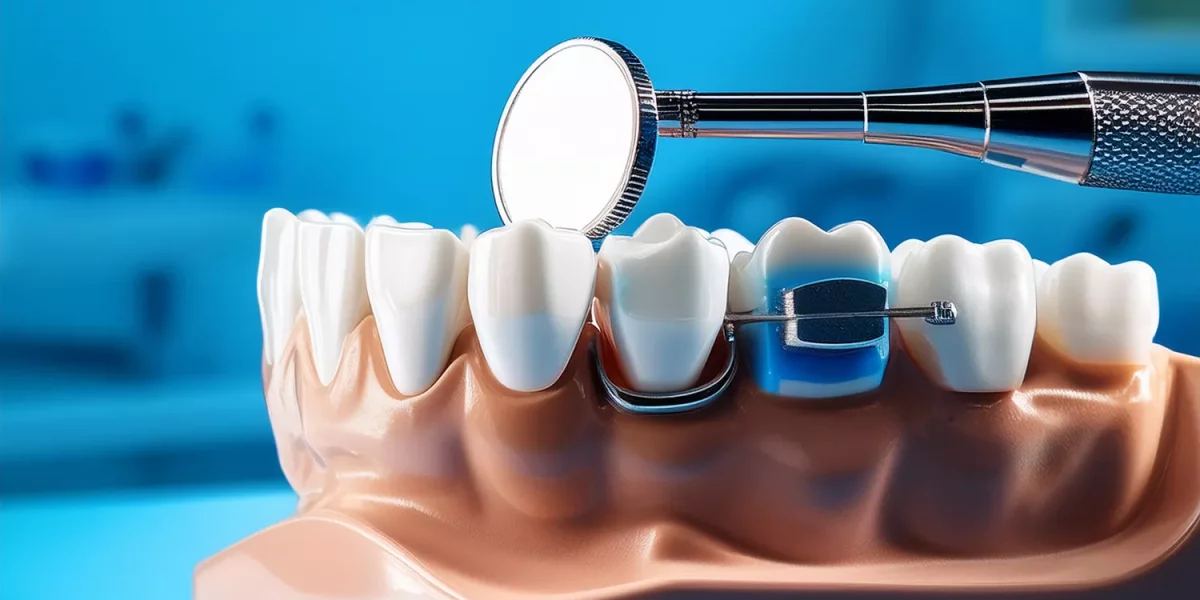
4. Can Braces Be Placed on Someone with Gum Recession?
Gum recession is:
- The exposure of a portion of the tooth root.
- The tooth appearing elongated.
- Increased sensitivity to hot and cold.
The causes of recession can be:
- Periodontitis,
- Very hard brushing,
- Thin bone structure,
- Orthodontic history, trauma, genetic factors.
Important points for orthodontics:
- If gum recession is accompanied by active inflammation, periodontitis must be treated first.
- If the recession is stable and controlled, orthodontics can be performed by planning tooth movements very carefully.
Dr. Begüm Ulaşan in Bursa, in such cases:
- Uses low force.
- Keeps the teeth within the bone boundaries.
- Plans for the support of the gum tissue with periodontal plastic surgery if needed.
The goal is: To both correct the position of the teeth and avoid worsening the gum recession.
5. Orthodontics Also Offers Advantages for Periodontal Patients
In correctly selected cases, controlled orthodontic treatment can even benefit gum health:
- Very crowded and overlapping teeth make brushing difficult → plaque accumulation increases → gum disease progresses easily.
- When this crowding is eliminated with orthodontics:
- Brushing and interdental cleaning become easier.
- Plaque control improves.
- Preserving gum health becomes more feasible.
Furthermore:
- The pathological position of some teeth (tilted, drifted) causes undue loading within the bone.
- When these teeth are brought into a more ideal position with orthodontics, the bone load in that area can be distributed more evenly.
Dr. Begüm Ulaşan at Milim Dental Bursa sees orthodontics not as a "risk" but as a serious "opportunity" when managed correctly, especially for adult patients with a periodontal history.
6. Clear Aligners or Braces for Patients with Gum Problems?
There is no single answer to this question; however, we can mention some differences.
6.1. Traditional Braces (Brackets)
- Brackets and wires can increase plaque accumulation.
- Since brushing is more difficult, the risk of gum disease is higher.
- Very good motivation and strict hygiene education are essential.
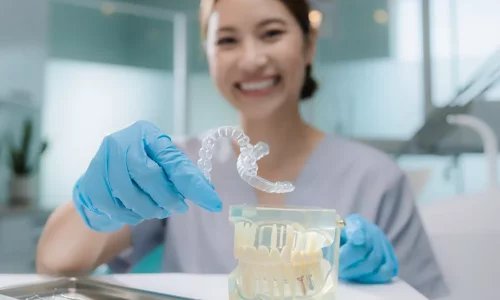
6.2. Clear Aligners
- Since the aligners can be removed, brushing is much easier.
- Interdental cleaning and gum massage can be done more easily.
- Aesthetics and comfort are also important advantages for adults.
For this reason, Milim Dental Bursa and Dr. Begüm Ulaşan often prefer clear aligner treatment (if the case is suitable) for many adult patients with high gum sensitivity and a periodontal history.
7. Conclusion: Don't Dismiss Orthodontics If You Have a Gum Problem; Plan It Correctly
In summary:
- It is not correct to perform orthodontics while there is active and uncontrolled gum disease.
- However, in a mouth that has been stabilized after gum treatment, controlled orthodontics is a very valuable tool for both aesthetics and function.
If:
- You have gum recession,
- You have previously had periodontitis,
- But you also want your teeth straightened,
A joint periodontics–orthodontics evaluation with Dr. Begüm Ulaşan, an orthodontic specialist at Milim Dental in Bursa, will be the healthiest start for you.
This way, you can move forward by both preserving your teeth and renewing your smile.
ORTHODONTICS AND SLEEP:
Mouth Breathing, Snoring, Sleep Apnea, and Jaw Structure
A Guide for Parents and Adults from Milim Dental Bursa and Dr. Begüm Ulaşan
Is your child's mouth constantly open while sleeping?
Do they complain of snoring, restless sleep, or waking up tired in the morning?
Do you yourself experience:
- Snoring,
- Daytime fatigue,
- Morning headaches?
And did you know that all of this could be linked to your jaw structure, palate narrowness, and orthodontics?
In this article, with the approach of Milim Dental Bursa and orthodontic specialist Dr. Begüm Ulaşan, we will detail the following questions:
- What is mouth breathing, and why is it important?
- What is the relationship between a narrow upper jaw, narrow palate, and snoring?
- How can orthodontics contribute to sleep quality?
- What are the different scenarios for children and adults?
1. What is Mouth Breathing, and Why is It Important?
Normally, humans should breathe through the nose, especially at rest and while sleeping.
The nose:
- Warms, humidifies, and filters the air.
- Makes the air entering the body healthier.
Mouth breathing, on the other hand, is:
- The habit of breathing through the mouth as an adult or child.
- The mouth remains constantly open during sleep at night.
Causes of mouth breathing:
- Nasal obstruction (allergies, adenoids, deviation, rhinitis),
- Allergic tendencies,
- Certain anatomical narrowings.
Prolonged mouth breathing can negatively affect:
- Craniofacial development,
- Tongue position,
- Dental alignment,
- Sleep quality.
Milim Dental Bursa and Dr. Begüm Ulaşan pay close attention to mouth breathing, especially in pediatric patients; they do not just look at the teeth but also investigate the airway.
2. Upper Jaw Narrowness, Narrow Palate, and Snoring Relationship
Upper jaw narrowness (narrow palate) is:
- The failure of the upper dental arch to develop laterally.
- The palatal vault being high and narrow.
In this condition:
- Teeth become crowded.
- The upper jaw cannot adequately enclose the lower jaw from the outside.
- Crossbites may occur.
At the same time:
- Since the narrow palate is adjacent to the floor of the nose, it can also affect the space above the nasal airway.
Especially in children, the triad of narrow upper jaw + mouth breathing + snoring is frequently observed.
In such cases:
- The child may snore.
- May wake up frequently at night.
- May be very restless in bed.
- May wake up tired in the morning.
- May experience daytime attention deficits.
Dr. Begüm Ulaşan in Bursa, in children with narrow palates and snoring complaints, works with an ENT specialist to address upper jaw expansion (palatal expansion) + airway assessment together.
3. What are Snoring and Sleep Apnea?
Snoring is:
- The sound produced by the vibration of the tissues in the upper airway.
- Although it may seem like just an aesthetic/social problem, it can sometimes be a sign of a more serious condition.
Sleep apnea is:
- The recurrent cessation of breathing during sleep.
- "Obstructive Sleep Apnea Syndrome (OSAS)" occurs due to the narrowing or blockage of the upper airway.
In children:
- Snoring + restless sleep + growth delay + behavioral/attention problems
- must be taken seriously when they occur together.
In adults:
- Severe snoring,
- Excessive daytime sleepiness,
- Morning headaches,
- Blood pressure problems
- can be related to sleep apnea.
Sleep apnea is diagnosed with a sleep test (polysomnography) and managed by an ENT/sleep center.
So, what is the role of orthodontics here?
4. How Can Orthodontics Help Sleep Quality?
In some cases, orthodontic treatment can improve the function of the upper airway by:
- Expanding the upper jaw,
- Correcting the position of the jaws,
- Bringing the teeth and tongue into the ideal position.
Especially in children:
- Palatal expansion appliances (RME),
- Jaw-guiding functional appliances,
- can lead to significant improvement in sleep quality in cases with upper jaw narrowness and mouth breathing.
Scientific studies show that, after palatal expansion in some children:
- Snoring decreases.
- Mouth breathing shifts to nasal breathing.
- Sleep quality and daytime attention increase (though not guaranteed in every child).
Dr. Begüm Ulaşan at Milim Dental Bursa, in such cases:
- Absolutely requires an ENT evaluation.
- Performs a detailed inquiry into sleep quality, snoring, and mouth breathing.
- Plans orthodontic treatment in light of this data.
5. The Relationship Between Orthodontics – Sleep – Behavior in Children
Many families may think, "My child sleeps with their mouth open and snores a little, but it will pass as they grow up."
However:
- Continuous mouth breathing,
- Narrow palate,
- Insufficient deep sleep
can, over time, contribute to:
- Growth and development problems,
- Lack of concentration,
- Behavioral problems,
- Decline in school performance.
For this reason, Milim Dental Bursa and Dr. Begüm Ulaşan, during the orthodontic examination of children in the mixed dentition period (6–12 years):
- Evaluate topics such as jaw narrowness,
- Mouth breathing,
- Snoring,
- Attention-behavior problems
- together.
When necessary, they collaborate with:
- ENT,
- Pediatrician,
- Sleep center.
6. Orthodontics, Snoring, and Apnea in Adults
In adults, too, the jaw and dental structure can affect sleep and snoring.
For example:
- Snoring and mild-to-moderate sleep apnea may be observed in patients with a narrow upper jaw, a retruded lower jaw, insufficient space for the tongue, and a narrow arch structure.
In these patients:
- Solving all apnea with orthodontics alone is not guaranteed.
- But bringing the jaw and dental structure to the ideal position can contribute to the function of the airway.
In some cases:
- Orthodontics is combined with solutions like orthognathic surgery (jaw surgery),
- Intraoral apnea appliances,
- Weight loss,
- CPAP devices.
Dr. Begüm Ulaşan at Milim Dental Bursa always positions orthodontics for adult snoring-apnea patients in coordination with an ENT and sleep specialist.
7. Which Symptoms Necessitate an Orthodontic Evaluation?
If your child has:
- Their mouth always open while sleeping,
- Frequent snoring,
- Restlessness at night,
- Waking up tired in the morning,
- Daytime attention deficits,
- A narrow smile and high palate visible,
If you, as an adult, have:
- Severe snoring,
- Morning fatigue,
- Headaches,
- Narrowness in your jaw structure or lower jaw retrusion,
It may be beneficial to consult with both a sleep specialist/ENT and an orthodontic specialist.
Milim Dental and Dr. Begüm Ulaşan in Bursa approach patients in this group with a focus on "breathing, sleep, and quality of life," not just "dental aesthetics."
8. Conclusion: Orthodontics is Not Just Aesthetics, But Also a Part of Breathing and Sleep Health
When most people think of orthodontics, they first think of "straighter and more beautiful teeth."
However:
- Upper jaw narrowness,
- Mouth breathing,
- Snoring and sleep quality,
- Tongue position and jaw relationship
When all are considered together, orthodontics emerges as an important component of breathing and sleep health.
If you or your child are complaining about both:
- Jaw–dental structure,
- And sleep quality,
A detailed examination with Dr. Begüm Ulaşan, an orthodontic specialist at Milim Dental in Bursa, can clarify many things for you.
Orthodontic treatment done at the right time with the right plan can change not only your smile but also your night's sleep and daytime energy. ?