You had a root canal treatment, and you felt better for a while...
But then if swelling, throbbing pain, occasional discharge, and bad odor started again, you are most likely asking yourself these questions:
As a surgeon specializing in oral and maxillofacial surgery in Bursa, I, Dr. Ali Direnç Ulaşan, and the Milim Dental team, frequently see patients coming to our clinic with the following complaint:
“Doctor, I don't want to give up on this tooth; is there one more chance to save it without extraction?”
In most cases, our answer is: Yes, we may have a chance to save the tooth without extraction through root end surgery (apical resection).
In this article, I will explain in a language the public can understand, yet within the correct medical framework:
The purpose of root canal treatment is to clean the nerve and blood vessel bundle (pulp) inside the tooth, thoroughly clear the canal of microbes as much as possible, and seal it with a special filling material to prevent leakage. Most of the time, this treatment is quite successful, and the tooth is used for years without problems.
However, in some situations:
In this situation, we see:
At this point, root end surgery (apical resection) offers the chance to surgically clean the problematic root tip without pulling the tooth.
Simply put:
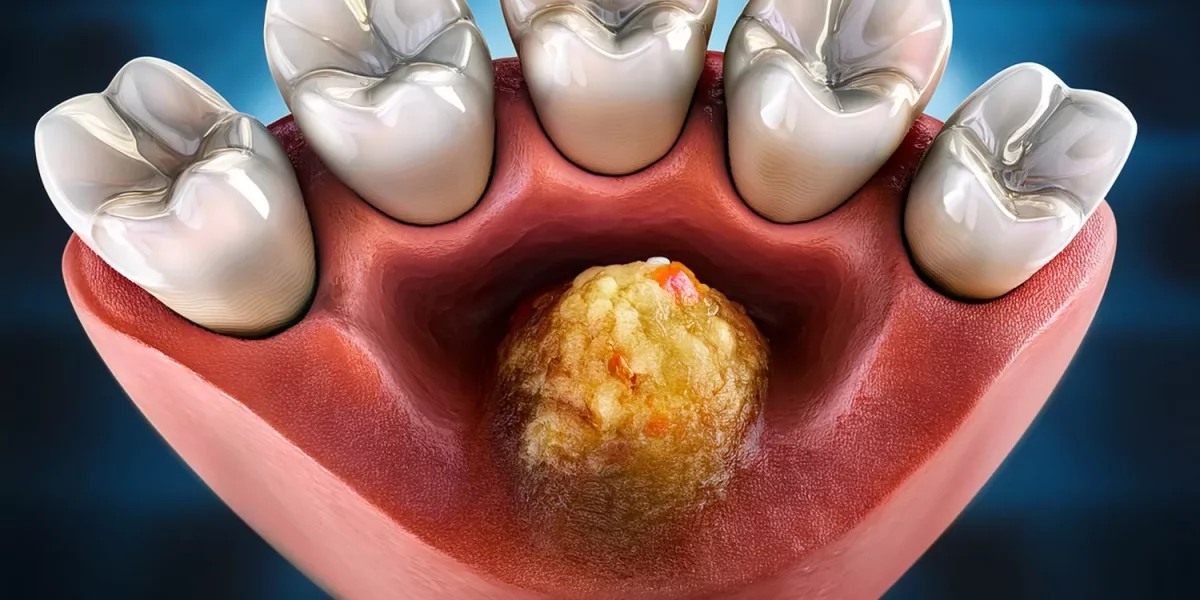
Root end surgery is the surgical cutting and removal of the root tip of a tooth that has had a root canal but still has inflammation/cyst at the root end, and the cleaning of the surrounding infected tissue.
In summary:
By doing this, we both eliminate the focus of infection and continue to keep the tooth functional in the mouth.
Root end surgery is not suitable for everyone or every tooth. First, a detailed examination and radiological evaluation are necessary.
As Dr. Ali Direnç Ulaşan in Bursa, we generally plan apical resection at Milim Dental in the following situations:
On the X-ray (especially periapical or CBCT – 3D tomography):
While repeating the root canal treatment is also an option, apical resection becomes the agenda if:
During root canal treatment in some teeth, a tiny metal file may break inside the canal, making it difficult to reach the last part. If a lesion has formed at the root tip beyond the broken instrument, root end surgery can surgically remove both the broken instrument and the infected root tip and surrounding tissues.
In some teeth, a cystic structure can develop over the years, growing within the jawbone. Apical resection is a good solution for both keeping the tooth in the mouth and completely cleaning the cystic tissue.
If the tooth has a valuable fixed restoration (Zirconium, porcelain crown, or is part of a bridge) and removing it risks breaking the tooth, there is a chance to resolve the issue by surgically accessing the root tip without compromising the superstructure, even if the root canal treatment is inadequate.
It is not correct to try to save every tooth at any cost. In some situations, tooth extraction may be more sensible and safer than root end surgery.
For example:
In these cases, pulling the tooth and considering solutions like an implant or a different prosthesis may be more appropriate. This decision is made through X-ray + clinical examination + your expectations + long-term planning.
Many patients ask: “Is root end surgery a difficult procedure with sutures, will it hurt much?”
The truth is, when properly planned, this procedure can be completed under local anesthesia, in a controlled and short time.
The stages are roughly as follows:
| Stage | Description |
| 5.1. Local Anesthesia | The area is numbed with local anesthesia, ensuring you feel no pain during the surgery, only pressure/touch. |
| 5.2. Gum Flap Opening | A small incision is made in the gum to create a surgical window to access the root tip. |
| 5.3. Removal of Root Tip & Infection | The infected final part of the root tip is cut off, and the surrounding inflamed/cystic tissues are cleaned. |
| 5.4. Retrograde Filling (if needed) | A sealed filling material is placed in the cut portion of the root tip to prevent internal leakage from reaching the area. |
| 5.5. Suturing | The surgical area is cleaned, the gum tissue is returned to its position, and closed with sutures. |
| 5.6. Duration | For a single-rooted front tooth, the procedure usually takes 20–40 minutes. It is a one-session, day-case procedure. |
Some discomfort after apical resection is normal.
| Post-Op Factor | Management/Expectation |
| 6.1. Pain | Mild-to-moderate pain may occur after the anesthesia wears off, usually controlled within the first 24–48 hours with prescribed painkillers. |
| 6.2. Swelling/Bruising | Slight swelling, especially in the upper jaw, and rarely small bruises may occur. Cold compresses (ice) externally for the first 24 hours help reduce this. |
| 6.3. Daily Life | Avoid hot food/drinks, chewing on the operated side, smoking, and heavy exercise on the first day. Most patients return to their routine within 1–2 days. |
| 6.4. Suture Removal | Stitches are usually removed at the control appointment within 7–10 days. |
The success rate of apical resection is high when combined with the correct indication, technique, and good root canal treatment, with studies reporting success rates in the 70–90% range.
Success is affected by:
In Bursa, at Milim Dental, Dr. Ali Direnç Ulaşan achieves long-lasting, problem-free teeth by using digital imaging (CBCT) for accurate planning, atraumatic surgical techniques, and careful post-op follow-up.
1) Root end surgery or tooth extraction—which is more sensible?
If the tooth's roots and gum support are solid, saving the tooth with apical resection is highly valuable. However, in cases of root cracks or advanced bone loss, extraction followed by a predictable solution like an implant may be more appropriate.
2) Is there a lot of pain during or after the procedure?
The procedure is pain-free during the surgery under local anesthesia. Post-op pain is typically mild-to-moderate and well-controlled with prescribed painkillers.
3) Can the same tooth undergo apical resection again?
In some exceptional cases, yes, but the success rate of secondary apical resection is lower. In recurring cases, extraction and alternative solutions are often more realistic.
4) If I have a cyst at the root tip, must I definitely have surgery?
The decision depends on the cyst's size, its effect on neighboring structures (nerve/sinus), and your symptoms. Cysts that cause chronic infection and enlarge the jawbone usually require surgery, often combined with apical resection.
5) Can I use my tooth immediately after apical resection?
Generally, yes, but we advise avoiding chewing hard foods on that side in the initial days. Complete "forgetting about the area" (internal bone healing) might take a few months, which we monitor during follow-up.
In summary:
If you are a patient who has:
Dr. Ali Direnç Ulaşan and the Milim Dental team in Bursa would be happy to perform a detailed examination and imaging to determine the most accurate, long-term healthy decision for your tooth.
Oral and dental health is one of the most important areas that requires consistent care. Even a small problem can quickly turn into a serious condition. For this reason, issues related to oral and dental health should never be ignored, and routine check-ups and daily hygiene practices must be maintained.

A guide explaining the link between gum recession, bad breath, and periodontal disease, with tips for early intervention.

A guide explaining post-Invisalign retention and the role of retainers in preserving teeth alignment.
Milim Dental Hospital isn't just a clinic—it's where confident smiles begin. With a team of world-class specialists, advanced technology, and a patient-first approach, we turn dental care into a premium experience.
We prioritize hygiene, comfort, and tailor-made treatments designed just for you. Don’t just take our word for it—explore real stories from real patients.
Your perfect smile starts here. Join the Milim experience.

Milim Dental Hospital provides comprehensive dental services in a spacious 1,000 m² facility, supported by a wide team of dental professionals including specialists in Oral and Maxillofacial Surgery, Prosthodontics, Orthodontics, Pediatric Dentistry, and Periodontology.