
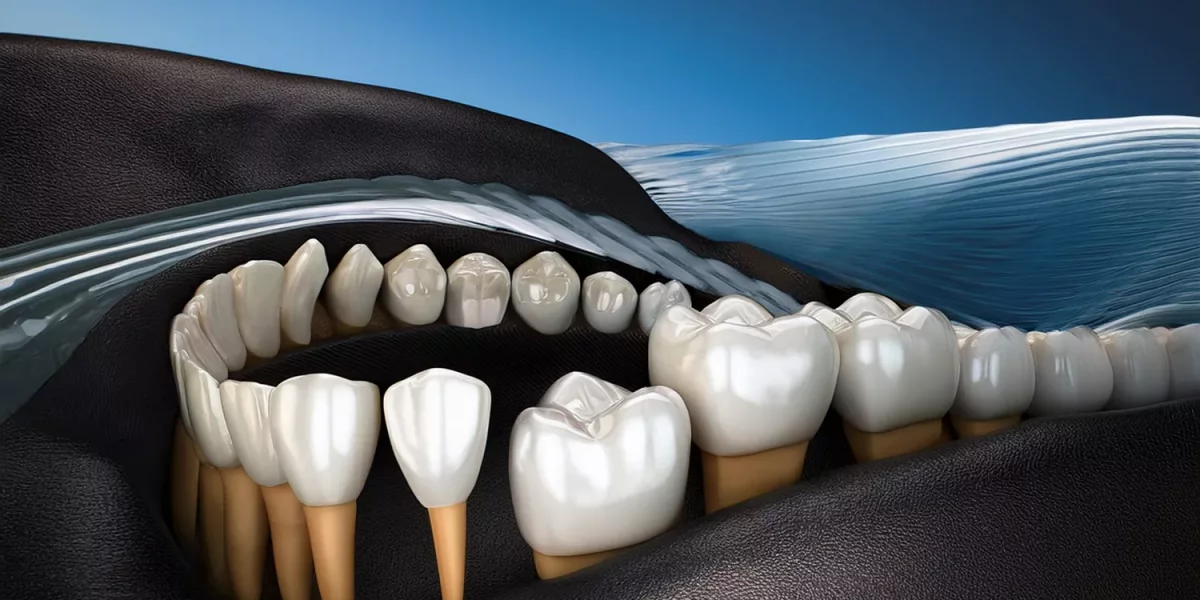
For many years, the standard solution for a decayed tooth was simple:
“Drill the cavity and place a filling.”
But when a tooth has a very large filling, especially one that covers most of the chewing surface, the story changes. Instead of protecting the tooth, a big filling can sometimes leave the tooth:
Thin
Weak
And more likely to crack or break
Modern dentistry now offers a safer alternative for these teeth:
zirconium (zirconia) overlays and crowns.
In this article, you will learn:
Why large fillings increase the risk of tooth fracture
The difference between a filling, an overlay and a crown
How zirconium overlays and crowns help protect weakened teeth
When each option is recommended
What to expect from treatment
A tooth is not just a piece of hard material. Its strength depends on its shape and internal structure.
When decay is small:
A simple composite filling can work very well
Most of the tooth’s natural structure remains intact
The tooth can handle normal chewing forces safely
When decay is large or has been treated several times:
Much more tooth structure has to be removed
The remaining walls become thin and unsupported
Chewing forces are no longer evenly distributed
Tiny cracks can start in the weakened enamel and dentine
Over time, this can lead to:
Cracks running along the tooth
Broken cusps (corners)
Sudden vertical fractures that may make the tooth unsalvageable
So even if the filling itself looks okay, the tooth around it may be at serious risk.
Common symptoms that a big filling and the tooth around it are failing:
Sharp pain when biting on hard food
Discomfort when releasing the bite (pain on “unloading”)
Sensitivity to cold or sweet foods
A visible crack line or a missing corner of the tooth
Food getting stuck more often in that area
If you ignore these signs, a small crack can suddenly turn into a big fracture, sometimes in one single bite.
To protect weakened teeth, your dentist can choose from three main options:
A composite filling:
Fills the hole where decay was removed
Bonds to the tooth structure
Can be done in a single visit
However, when too much tooth is missing:
The filling acts like a wedge inside the tooth
Chewing forces can flex the thin remaining walls
The risk of cracks and fracture increases over time
For small to medium cavities, composite is great.
For very large cavities, composite alone is often not enough support.
An overlay (also called an onlay or partial crown):
Covers and protects the chewing surface and one or more cusps
Removes less tooth structure than a full crown
Works like a “protective helmet” over the weak parts of the tooth
With a zirconium overlay:
The weak cusps are covered with a strong, custom-made zirconium cap
Chewing forces are redirected along the long axis of the tooth
The tooth becomes much more resistant to fracture
Overlays are ideal when:
A large filling is already present or needed
One or more cusps are thin or cracked
There is still enough healthy tooth to avoid a full crown
A crown:
Covers the entire visible part of the tooth above the gum
Requires more tooth reduction than an overlay
Provides maximum protection and reinforcement
Zirconium crowns:
Are very strong and fracture-resistant
Have good aesthetics (tooth-coloured)
Are metal-free, suitable for many patients who want a more “biocompatible” look
Crowns are recommended when:
The tooth is severely weakened
There is a high risk of fracture
Large parts of the tooth are missing
The tooth has had root canal treatment
In these cases, a zirconium crown can save the tooth from splitting under daily chewing forces.
Zirconium (more precisely zirconia) has become one of the most popular materials in modern restorative dentistry.
Key advantages:
High strength: zirconia is much stronger than composite fillings
Fracture resistance: ideal for molars and premolars exposed to heavy chewing
Metal-free: no grey lines near the gum as with some metal-ceramic crowns
Biocompatible: generally well accepted by gums and soft tissues
Aesthetic: can be layered or coloured to look very natural
When used as an overlay or crown, zirconium:
Wraps the tooth in a protective “shell”
Supports thin walls and weak cusps
Spreads chewing forces evenly
Greatly reduces the risk of the tooth breaking apart
In other words, instead of asking a large filling to hold a weak tooth together, we use a zirconium restoration to protect and reinforce the entire structure.
The decision between a zirconium overlay and a zirconium crown depends on:
How much healthy tooth is left
Where the cracks and weak points are
Whether the tooth has had a root canal treatment
Your bite and chewing forces (for example, if you grind your teeth)
There is still enough strong tooth structure
Only some cusps are damaged or thin
You and your dentist want to be as conservative as possible
The nerve is healthy and the tooth responds normally
In this case, the overlay:
Preserves more of your natural tooth
Protects the weak areas
Decreases fracture risk while being minimally invasive
Very little natural tooth remains
A large portion of the tooth has broken off
There are multiple cracks
The tooth has been root canal treated and needs extra protection
In this case, the crown:
Fully encases the tooth
Offers the highest level of mechanical protection
Is often the last step before extraction if the tooth is severely compromised
Your dentist will usually take X-rays, photos and clinical tests to decide which option is safer for the long term.
Although details vary, most overlay or crown treatments follow these steps:
Diagnosis and Planning
Clinical examination
X-rays to check root, bone and existing fillings
Evaluate cracks, sensitivity and bite
Tooth Preparation
Remove any old leaking filling and decay
Shape the tooth for an overlay or crown
Protect the nerve if it is close to the surface
Impressions or Digital Scan
Traditional moulds or an intraoral scanner
Precise capture of your tooth shape and bite
Temporary Protection
A temporary filling or temporary crown is placed
You wear this while the lab makes your zirconium restoration
Laboratory Fabrication
The dental laboratory designs and mills the zirconium overlay/crown
Colour and shape are adjusted for a natural look
Final Cementation
The zirconium restoration is tried in, adjusted and polished
It is bonded or cemented to your tooth
Bite is checked and fine-tuned
Once fitted, the zirconium overlay or crown works as a strong armour for your weakened tooth.
Compared with simply placing another large composite filling, zirconium overlays and crowns offer:
Much lower fracture risk for the remaining tooth
Better protection for thin cusps and walls
More predictable long-term performance
Stronger resistance to chewing forces
A more stable shape and bite over time
Improved aesthetics, especially with modern zirconium ceramics
Put simply:
A large filling fills a gap;
a zirconium overlay or crown reinforces the whole tooth.
Sometimes, a tooth with a large filling and cracks already has:
Persistent pain
Spontaneous aches
Prolonged sensitivity to hot or cold
In such cases, a root canal treatment may be needed before placing a zirconium overlay or crown.
The sequence is usually:
Root canal treatment
Core build-up (to replace missing internal tooth structure)
Zirconium crown or overlay to protect the tooth from breaking
Skipping the protective zirconium restoration after a root canal leaves the tooth fragile and at high risk of vertical fracture.
Lifespan depends on:
Your oral hygiene
Your bite and habits (grinding, clenching, nail-biting, etc.)
Regular check-ups and professional cleaning
With good care, zirconium overlays and crowns can last many years, often 10–15 years or more, while providing:
Ongoing protection
Stable aesthetics
Reliable chewing function
No dental restoration is completely indestructible, but zirconium is one of the most durable materials available today.
After treatment, you should:
Brush twice a day with a soft toothbrush
Clean between teeth with floss or interdental brushes
Use a night guard if you grind or clench your teeth
Visit your dentist regularly for check-ups and professional cleaning
Zirconium itself does not decay, but the tooth underneath and around it still can if plaque is not controlled.
Large fillings may look like they “fixed” the problem, but in many cases they leave the tooth mechanically vulnerable. The bigger the filling, the higher the risk that the tooth will eventually crack or break.
Zirconium overlays and crowns offer a smarter, safer solution:
They do not just fill a hole – they support and protect the entire tooth
They significantly reduce the risk of fracture in teeth with big fillings
They combine strength, aesthetics and long-term stability
If you have one or more teeth with very large fillings, especially in the back of your mouth, talk to your dentist about whether a zirconium overlay or crown would be a better long-term investment than simply placing “one more big filling”.
Discover the planning steps for zirconium treatment, from digital impressions to the final fit for a lasting, radiant smile.

Why is professional teeth cleaning and tartar removal essential? Discover how this procedure is the foundation of healthy gums, the risks of plaque and calculus buildup, and how often you need to see your dentist for optimal periodontal health.
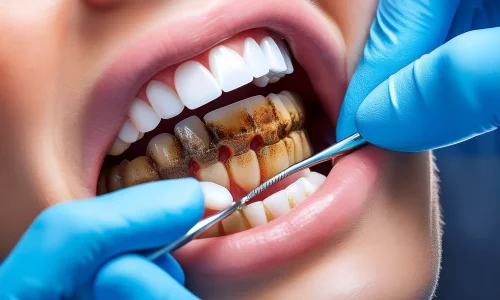
Is tartar cleaning (scaling) harmful? Dentists explain that routine professional cleaning does not damage enamel. Discover how it critically benefits oral health by preventing gum disease and get answers to common concerns about the procedure.
Milim Dental Hospital isn't just a clinic—it's where confident smiles begin. With a team of world-class specialists, advanced technology, and a patient-first approach, we turn dental care into a premium experience.
We prioritize hygiene, comfort, and tailor-made treatments designed just for you. Don’t just take our word for it—explore real stories from real patients.
Your perfect smile starts here. Join the Milim experience.


Milim Dental Hospital provides comprehensive dental services in a spacious 1,000 m² facility, supported by a wide team of dental professionals including specialists in Oral and Maxillofacial Surgery, Prosthodontics, Orthodontics, Pediatric Dentistry, and Periodontology.