This is one of the most common and understandable questions we hear at Milim Dental in Bursa:
“My gums are receding and my bone is melting away.
If my own tooth cannot stay, how will a dental implant hold?”
It sounds like a paradox:
Gum disease → bone loss → tooth becomes loose
And then we say: “We can place an implant into this jaw…”
In this article, we will explain in clear language:
The difference between gum disease around natural teeth and bone around implants
When implants are possible in patients with gum recession and bone loss
How we rebuild or augment bone when needed
What has to be done before and after implant placement to keep it stable
All explanations are based on the clinical approach used by the surgical team at Milim Dental, Bursa (Turkey).
First, let’s understand what is happening when you have:
Gum recession
Bone loss
Loose teeth
In periodontal disease (gum disease):
Bacteria and inflammation damage the supporting tissues of the tooth
Gums pull away from the tooth, forming pockets
The bone that holds the root is slowly resorbed (melted away)
A natural tooth is held in the jaw by:
Its root
Surrounded by a thin periodontal ligament
Embedded in bone
When gum disease is active and not controlled:
The ligament and bone are destroyed
The root has less and less support
Eventually the tooth begins to move and loosen
So the reason your tooth is loose is not that “your jaw is useless”; it is that infection and inflammation have eaten away the support around that particular tooth (and sometimes neighbouring teeth).
A dental implant is not held in place the same way as a natural tooth.
A tooth has a root + ligament + bone
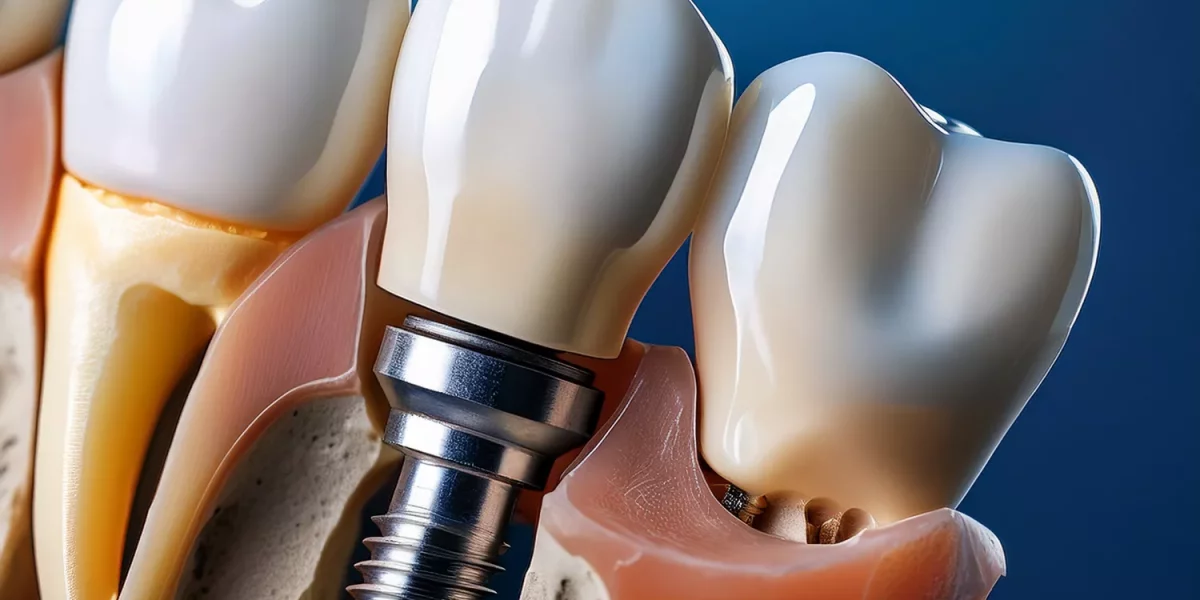
An implant is a titanium (or titanium–zirconium) screw that is placed directly into the bone
There is no periodontal ligament around an implant.
Instead, the bone heals directly onto the implant surface in a process called osseointegration.
If:
The bone is healthy and stable, and
The implant is placed in the correct position, and
The patient maintains good oral hygiene,
then the bone can hold the implant very firmly – often more rigidly than it held the original tooth.
So the real question is not:
“If my tooth fell out, how will an implant stay?”
but rather:
“Can we create enough healthy, stable bone to support an implant – and can we keep that bone healthy over time?”
At Milim Dental Bursa, that is exactly what we evaluate and plan.
If you currently have active gum disease, the first priority is:
Control the infection and inflammation before thinking about implants.
We never just “pull the tooth and put an implant into infected, unstable tissue”.
Typical first steps:
Detailed periodontal examination
X-rays and often a CBCT scan
Professional deep cleaning (scaling and root planing)
Improvement of home care (brushing technique, interdental cleaning)
Smoking reduction or cessation if possible
In some cases, teeth with advanced bone loss are not savable.
Then the plan becomes:
Treat and stabilise the gums
Remove hopeless teeth
Clean out infection and diseased tissue
Let the area heal and re-evaluate the bone
Only once the disease is under control do we move to the implant stage.
Good question – and this is where 3D imaging and bone regeneration come in.
At Milim Dental in Bursa, we use:
CBCT (Cone Beam CT) to see:
Exactly how much bone is left
The height and width of the ridge
The position of nerves, sinuses and anatomical structures
Based on this, there are several possibilities:
Sometimes, even with gum recession and some bone loss, there is still:
Sufficient bone in the right areas
Enough height and width for implants
In these cases we can:
Place implants directly into the remaining bone
Choose implant length and diameter to use the most stable regions
Use angulated implants or specific designs to optimise support
If the bone is not ideal but still workable, we may use bone augmentation, for example:
Local bone grafts (using your own bone or biomaterials)
Guided bone regeneration with special membranes
Sinus lifting in the upper jaw to gain vertical height
These procedures rebuild or add volume to the jaw so that:
A future implant has enough bone to integrate
The final tooth emerges from the gum in a natural position
In very advanced cases (for example after long-standing periodontitis, many years without teeth, or several failed treatments), conventional implants may not be enough.
Options can include:
Tilted implants that use remaining bone in the front or side areas
Short implants in selected situations
In extreme cases, zygomatic implants (anchored in the cheekbone) for full-arch rehabilitation
These are complex treatments that must be planned and performed by experienced surgeons.
This is exactly the type of work handled by the surgical team at Milim Dental Bursa.
This is another very important and honest worry.
Patients with a history of gum disease do have a higher risk of developing:
Peri-implant mucositis (inflammation in the gum around the implant)
Peri-implantitis (bone loss around an implant)
However, risk is not the same as destiny.
The main risk factors for future bone loss around implants are:
Poor plaque control (inadequate oral hygiene)
Uncontrolled diabetes
Heavy smoking
Uncontrolled biting forces (e.g., severe bruxism)
Lack of regular professional maintenance
So our approach at Milim Dental Bursa is:
We do not place implants unless we believe the disease can be controlled
We create a maintenance plan from day one
We educate you on cleaning around implants and prosthetics
We schedule regular check-ups and professional cleaning
Many patients with a past history of gum disease enjoy stable implants for years, provided they follow the maintenance programme.
Let’s imagine a patient in exactly your situation:
“My gums have receded, my bone is melting, some teeth are already loose.
I am afraid if you remove them, implants will also not hold.”
A typical treatment sequence at Milim Dental, Bursa might be:
Full Assessment
Medical history, medications, general health
Periodontal charting and photographs
Panoramic X-ray and CBCT scan
Periodontal Phase (Disease Control)
Deep cleaning and debridement
Oral hygiene coaching
Smoking reduction programme if needed
Re-evaluation after healing
Decision: Which Teeth Are Savable?
Teeth with too much bone loss, mobility or poor prognosis: extracted
Teeth with more favourable conditions: treated and kept, sometimes combined with implants
Bone Regeneration / Site Preparation (If Needed)
Bone grafting, sinus lifting, ridge augmentation
Healing time (often several months)
Implant Placement
Guided or freehand surgery depending on case
Possible immediate temporaries in selected situations
Healing / osseointegration phase
Final Restorations
Zirconia or other prosthetic solutions on implants
Optimised bite and smile design
Maintenance Programme
Regular professional cleaning around teeth and implants
Periodic X-rays to monitor bone levels
Night guard if you grind your teeth
This is not a “quick fix” – but it is a path from:
Active disease and bone loss
to
Controlled health and stable implants.
Part of being honest is also saying:
In some specific spots, even after treatment, an implant may not be the best option.
In those cases we might:
Combine implants with bridges
Use a removable overdenture on a limited number of implants
Or sometimes choose a non-implant solution for that particular area
The goal is not to place as many implants as possible.
The goal is to create a stable, healthy, functional mouth that you can maintain for many years.
Your part is just as important as the surgeon’s.
To give your future implants the best chance to stay strong, you can:
Stop or strongly reduce smoking
Control systemic diseases (especially diabetes) with your physician
Brush twice daily with proper technique
Clean between teeth and implants with floss, interdental brushes or special tools recommended by your dentist
Attend all scheduled check-up and hygiene visits
Inform the clinic early if you notice:
Bleeding around implants
Swelling
Bad taste or pain
Implants can last a long time, especially if you and your dental team work together.
Gum recession and bone loss do not automatically mean implants are impossible.
Implants are held in bone by osseointegration, not by the same ligament system as natural teeth.
The disease must be treated and stabilised first before placing implants.
When bone is insufficient, bone grafts, sinus lifts or special implant techniques can often rebuild support.
Patients with past gum disease need strict maintenance, but can still have successful, long-lasting implants.
At Milim Dental in Bursa, our job is to:
Analyse your bone and gum situation in detail
Be realistic – not overly optimistic, not overly pessimistic
Offer you the safest combination of disease control, bone regeneration and implant planning
So if you are thinking,
“My bone is melting – how will an implant ever hold?”
the answer is:
With the right diagnosis, the right surgery and the right maintenance, many patients with bone loss can still enjoy stable, functional implants for years.
Toothbrushes, toothpastes, tongue cleaning, and oil pulling: Which is most effective for daily oral hygiene? Get a comprehensive guide on how to keep your teeth, gums, and tongue healthy to effectively prevent bad breath (halitosis).

Learn how a better smile can influence confidence, communication, and daily experiences.
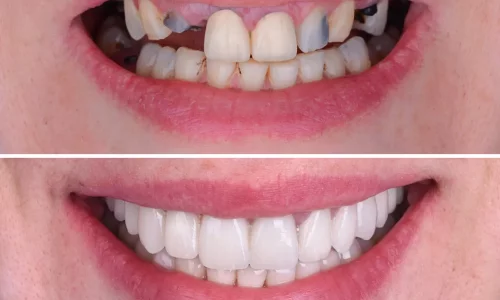
Dental veneers are custom-made shells that improve the appearance of chipped, cracked, discolored, or misaligned teeth. Made from porcelain or composite resin, veneers offer a natural, flawless smile with a simple, non-invasive procedure that boosts both aesthetics and confidence.
Milim Dental Hospital isn't just a clinic—it's where confident smiles begin. With a team of world-class specialists, advanced technology, and a patient-first approach, we turn dental care into a premium experience.
We prioritize hygiene, comfort, and tailor-made treatments designed just for you. Don’t just take our word for it—explore real stories from real patients.
Your perfect smile starts here. Join the Milim experience.

Milim Dental Hospital provides comprehensive dental services in a spacious 1,000 m² facility, supported by a wide team of dental professionals including specialists in Oral and Maxillofacial Surgery, Prosthodontics, Orthodontics, Pediatric Dentistry, and Periodontology.