English
Big Sale – Last Days for 20% Off!
513HOUR 41MINUTE 43SECOND
Should I Get My Wisdom Teeth Extracted Before or After Orthodontic Treatment?

Should I Get My Wisdom Teeth Extracted Before or After Orthodontic Treatment?

8 December Mon, 2025

A Comprehensive Guide Focused on Bursa from Orthodontist Dr. Begüm Ulaşan and Oral Surgeon Dr. Ali Direnç Ulaşan

One of the most frequently asked questions when planning orthodontic treatment (braces, clear aligners, Invisalign, etc.) is:

“Should I get my wisdom teeth extracted before or after my orthodontic treatment?”

Request a Free Treatment Plan from Our Expert Doctors

Many patients consult both the orthodontist and the oral surgeon with questions like:

  1. “My wisdom teeth ruined my alignment; should I have them removed first?”
  2. “Will wisdom teeth cause crowding again after orthodontics is finished?”
  3. “I have impacted wisdom teeth; must they be extracted before getting clear aligners (Invisalign)?”

In Bursa, orthodontist Dr. Begüm Ulaşan and Oral and Maxillofacial Surgeon Dr. Ali Direnç Ulaşan, working together under the same clinic, answer this question multiple times a day as a team dedicated to collaborative ortho-surgical patient management. In this article, based on their approach, we will prepare a detailed, understandable, and SEO-friendly answer to this highly sought-after question.

1. What is a Wisdom Tooth and Why Does It Cause Problems?

Wisdom teeth are our third molars. They typically:

  1. Attempt to erupt between the ages of 17 and 25.
  2. Can total 4 teeth, one on the right and left in both the upper and lower jaws.
  3. Some individuals may not develop them at all, or may be missing 1–2 of them.

As modern human jaw structure gradually shrinks due to genetic and environmental factors while our tooth count remains the same, it is very common for there to be insufficient space, especially for the wisdom teeth. This often results in:

  1. Impacted wisdom teeth (fully or partially impacted).
  2. Forward pushing of teeth.
  3. Crowded anterior teeth.
  4. Recurrent infections.
  5. Jaw pain, cheek biting, and chewing problems.

Oral Surgeon Dr. Ali Direnç Ulaşan in Bursa evaluates the wisdom teeth using panoramic X-rays and, if necessary, 3D tomography (CBCT) to determine:

  1. Their position within the bone.
  2. Their relationship with the nerve canal.
  3. The pressure they exert on adjacent teeth.
  4. The risk of cysts or infection.

...and then decides which wisdom teeth need extraction.

2. What is Orthodontic Treatment and Its Relationship with Wisdom Teeth?

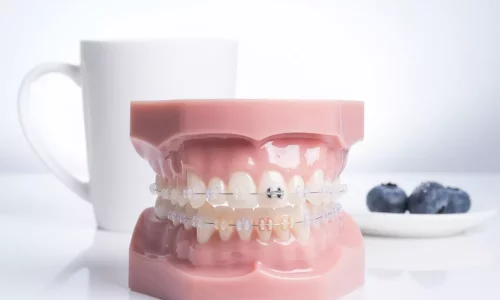
Orthodontic treatment aims to bring teeth and jaws into their ideal positions. Dr. Begüm Ulaşan, an orthodontist in Bursa, uses both traditional wires (braces) and clear aligners (Invisalign, clear aligner systems) to:

  1. Straighten crowded teeth.
  2. Correct bite irregularities (malocclusion).
  3. Improve smile aesthetics and chewing function.

The role of wisdom teeth in this process includes:

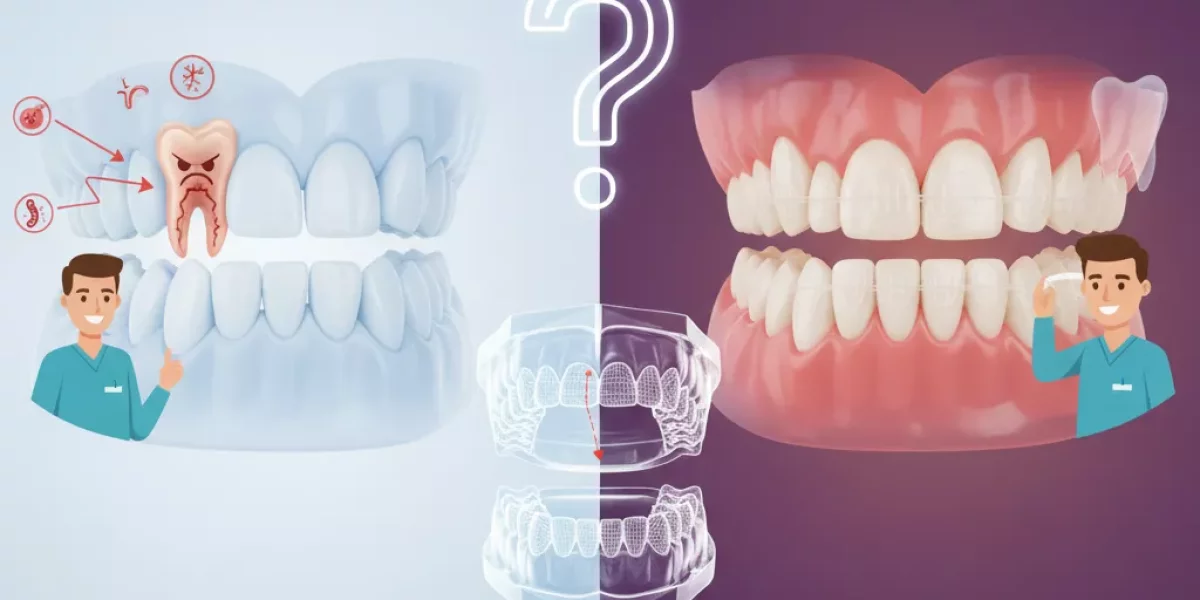
  1. The posterior wisdom tooth can crowd the more anterior teeth.
  2. An impacted wisdom tooth can create pressure on roots, making orthodontic movements difficult.
  3. An infected or frequently painful wisdom tooth can often disrupt the course of orthodontic treatment.
  4. After orthodontics is complete, impacted or partially erupted wisdom teeth can negatively affect the stability of the aligned teeth, increasing the risk of relapse (crowding recurrence).

Therefore, Orthodontist Dr. Begüm Ulaşan always examines the panoramic X-ray when creating a treatment plan and refers the patient's wisdom teeth for surgical evaluation by Dr. Ali Direnç Ulaşan.

3. The Main Question: Should Wisdom Teeth Be Extracted Before or After Orthodontics?

There is no single, one-sentence answer that fits every patient.

The correct answer is provided through personalized planning.

However, to understand the general principles, we can categorize wisdom teeth into three main scenarios:

  1. Wisdom teeth that absolutely need extraction.
  2. Wisdom teeth that can be monitored but may be advantageous to extract in the medium term.
  3. Wisdom teeth that cause no problems and show no radiological risk.

Based on these three main groups, the timing of extraction—whether before, during, or after orthodontics—is determined.

Let's detail this below, based on the combined approach of Dr. Begüm Ulaşan (Orthodontics) and Dr. Ali Direnç Ulaşan (Oral Surgery).

4. Situations Where Wisdom Teeth Must Be Extracted Before Orthodontics

In some cases, wisdom teeth are evaluated before starting orthodontic treatment and are most often recommended to be extracted first.

4.1. If there are frequent infections, pain, and abscess episodes

If your wisdom teeth:

  1. Swell up frequently.
  2. Cause pain when chewing or opening your mouth.
  3. Cause redness, increased warmth in the gums, and bad breath.
  4. You have had to use antibiotics several times due to pericoronitis (wisdom tooth gum infection).

...it is not healthy to start orthodontic treatment with this condition.

First:

  1. Oral Surgeon Dr. Ali Direnç Ulaşan controls the infection.
  2. He plans the extraction of the impacted or partially impacted wisdom teeth if necessary.
  3. Orthodontist Dr. Begüm Ulaşan recommends starting treatment after the surgical site has healed.

This way, you avoid needing to constantly use antibiotics or painkillers during orthodontic treatment, and you avoid undergoing difficult surgery while wearing braces.

4.2. If it mechanically obstructs orthodontic movement

Some impacted wisdom teeth are positioned:

  1. Very close to the tooth roots.
  2. Directly behind the tooth intended for orthodontic movement.
  3. In a forceful position, pushing the roots upward.

In this situation:

  1. The orthodontist may not be able to achieve the desired eruption or movement of the teeth.
  2. The risk of root resorption (erosion) in the teeth may increase.

In such cases, Dr. Begüm Ulaşan in Bursa views the wisdom tooth as a "mechanical obstacle" and refers the patient for extraction by Oral Surgeon Dr. Ali Direnç Ulaşan before orthodontics.

This approach increases both the speed and safety of the treatment.

4.3. If there is a cyst or serious radiological risk

If the panoramic X-ray or 3D tomography shows:

  1. A large radiolucent area around the impacted wisdom tooth (suspected cyst).
  2. Clear erosion on the adjacent tooth roots.
  3. Risk of pressure on the nerve canal.

...the issue is no longer just about orthodontics. For your general oral and maxillofacial health, it is essential to:

  1. Solve the surgical problem first.
  2. Clean the cyst or lesion.
  3. Remove the impacted wisdom tooth.

Dr. Ali Direnç Ulaşan resolves these risky cases with extraction and cyst operation. Dr. Begüm Ulaşan then revises the orthodontic plan accordingly.

In this scenario, the surgery first, then orthodontics approach applies.

5. Situations Where Wisdom Teeth Extraction is Appropriate During or After Orthodontics

Not every wisdom tooth must be extracted before orthodontics. In some situations, it may be more sensible to perform the extraction:

  1. While orthodontics is ongoing.
  2. Or even after orthodontics is completed.

5.1. Fully impacted wisdom teeth posing no immediate clinical risk

Some wisdom teeth:

  1. Are completely within the bone.
  2. Are a reasonable distance from the nerve.
  3. Are not pressing on an adjacent tooth.
  4. Appear "silent and stable" for the patient's age.

These are not teeth that need "urgent extraction" before orthodontics.

Orthodontist Dr. Begüm Ulaşan may do the following in such a situation:

  1. Prepare the orthodontic plan.
  2. Monitor these wisdom teeth with regular imaging during treatment.
  3. Refer to Dr. Ali Direnç Ulaşan if any risk or complaint arises.

Sometimes, these wisdom teeth may be extracted after orthodontics is completely finished, simply to "reduce long-term risks" and "increase the stability of the teeth."

5.2. Wisdom teeth threatening stability after orthodontics

Behind the question, "Will my teeth relapse after orthodontics?" there are two main factors:

  1. Natural physiological changes and muscle/tongue/lip force balance.
  2. The posterior pushing force of the wisdom teeth.

Although scientific studies show that wisdom teeth are not the sole culprit for anterior tooth crowding, clinical experience reveals the following:

  1. Wisdom teeth leaning on adjacent teeth.
  2. Teeth positioned at an anterior angle.
  3. Impacted teeth pressing on adjacent roots.

...can negatively affect the stability of the aligned teeth.

For this reason, orthodontists like Dr. Begüm Ulaşan may prefer to support the use of a retainer (plaque/bonding) with the extraction of risky wisdom teeth after treatment is finished.

In this scenario, the wisdom tooth extraction is most often planned by Dr. Ali Direnç Ulaşan after orthodontics.

5.3. If wisdom tooth root development is incomplete when orthodontics begins

In young patients:

  1. Orthodontic treatment often starts between 14–16 years old.
  2. The roots of the wisdom teeth may not be fully formed yet.

In this situation, trying to extract the wisdom tooth early may:

  1. Be challenging due to nerve and root development.
  2. Create unnecessary risk in some cases.

Dr. Begüm Ulaşan may follow this path in such cases:

  1. Start the orthodontic treatment.
  2. Monitor the wisdom teeth regularly with panoramic X-rays and, if necessary, CBCT.
  3. Refer to Dr. Ali Direnç Ulaşan for extraction when root development is complete and the wisdom tooth position is clear.

Here, the approach is orthodontics first (or monitoring during orthodontics), then extraction.

6. Dr. Begüm Ulaşan's Perspective on Orthodontic Planning

When making decisions regarding wisdom teeth, Dr. Begüm Ulaşan, an orthodontist in Bursa, seeks answers to these questions:

  1. Is this wisdom tooth currently causing an active problem?
  2. Pain, infection, swelling, bad breath, decay, adjacent tooth loss, etc.
  3. Does this wisdom tooth mechanically obstruct the orthodontic movements I plan?
  4. Plan to move teeth backward, extraction/non-extraction orthodontics, upper-lower jaw harmony, etc.
  5. Will this wisdom tooth threaten stability after treatment is finished?
  6. A wisdom tooth angled forward, an impacted tooth pressing on an adjacent root, etc.
  7. How suitable are the patient's age, jaw structure, and general condition for the timing of surgery?

Based on the answers to these questions, the options are laid out: extraction before orthodontics, during orthodontics, or after orthodontics.

In all cases, action is taken in coordination with Oral Surgeon Dr. Ali Direnç Ulaşan. This ensures the patient proceeds with a single, holistic plan, both orthodontically and surgically, avoiding surprise decisions later on.

7. Dr. Ali Direnç Ulaşan's Perspective on Oral Surgery

Oral Surgeon Dr. Ali Direnç Ulaşan bases the surgical decision regarding wisdom teeth on:

  1. The tooth's position within the bone.
  2. Its relationship with the nerve canal.
  3. Whether there is a cyst, infection, or root erosion around it.
  4. The patient's age and systemic condition.
  5. Their ongoing or planned orthodontic treatment.

With information received from Orthodontist Dr. Begüm Ulaşan, he clarifies these decisions:

  1. "This wisdom tooth must be removed before orthodontics because..."
  2. "Let's monitor this tooth during orthodontics; let it stay for now."
  3. "It is more advantageous for us to extract it after orthodontics is finished and the teeth are stabilized."

Points he pays particular attention to from a surgical perspective:

  1. Age: The 18–25 age range is often the ideal period for impacted wisdom tooth extraction.
  2. Nerve Proximity: In very close cases, he performs detailed planning with 3D tomography.
  3. Presence of Orthodontic Brackets or Aligners: Sutures, elastics, and oral hygiene need to be managed in a way that is compatible with these.
  4. Single session or both sides at once? Decided by considering patient comfort and the orthodontic plan.

8. Frequently Asked Practical Questions and Clear Answers

Let's summarize the common questions patients ask on this topic, tailored to the approach of Dr. Begüm Ulaşan and Dr. Ali Direnç Ulaşan in Bursa.

QuestionAnswer
Q1: Do I absolutely have to extract all my wisdom teeth before orthodontics?No. Not every wisdom tooth must be extracted before orthodontics. The decision is made by jointly evaluating the tooth's position, infection status, suspected cyst, whether it presses on an adjacent tooth, and your orthodontic plan.
Q2: Will my teeth become crooked again if I don't extract my wisdom teeth after orthodontics?Although it's not the only reason, wisdom teeth that are pushing, angled forward, or impacted and leaning on an adjacent root can play a role in the recurrence of crowding after orthodontics. Therefore, your orthodontist, Dr. Begüm Ulaşan, may request the removal of risky wisdom teeth by Dr. Ali Direnç Ulaşan in addition to using retainers.
Q3: I will be using clear aligners (Invisalign); should I still get my wisdom teeth removed?The principle is the same for clear aligner treatment. If your wisdom tooth carries a risk such as being a focus of infection, suspected cyst, pressure on an adjacent tooth, or obstructing orthodontic movements, extraction is planned. Otherwise, Dr. Begüm Ulaşan starts the aligner treatment and monitors your wisdom tooth with Dr. Ali Direnç Ulaşan, deciding on extraction at the appropriate time.
Q4: Can an impacted wisdom tooth be extracted while wearing orthodontic braces/wires?Yes, it can be extracted in most cases. It is not appropriate to wait, especially in urgent situations such as an infection episode, severe pain, cyst, or damage to an adjacent tooth. Dr. Ali Direnç Ulaşan can safely perform impacted tooth extraction during orthodontics without needing to remove the braces/wires, by giving more detailed oral hygiene instructions and using temporary protective measures if necessary. Having the surgeon and orthodontist on the same team in Bursa provides a major advantage for patients.
Q5: Am I required to extract my wisdom teeth?No, not every wisdom tooth must be extracted. However, teeth that cause frequent infections, carry a cyst risk, damage adjacent teeth, or negatively affect your orthodontic treatment are not teeth to be dismissed with "let them stay, nothing will happen." Therefore, an evaluation with a panoramic X-ray and, if necessary, 3D tomography is essential for your wisdom teeth.

9. Summary: Should I Get Them Extracted Before or After Orthodontics?

Let's return to the main question with a clear framework at the end of this long discussion: “Should I get my wisdom teeth extracted before or after my orthodontic treatment?”

In short:

  1. If your wisdom teeth are an active source of problems (infection, pain, cyst, adjacent tooth damage, obstruction to orthodontic movement)
  2. ➜ It is usually more appropriate for them to be extracted by Oral Surgeon Dr. Ali Direnç Ulaşan before orthodontics.
  3. If your wisdom teeth are silent for now but may pose a risk in the future
  4. ➜ Orthodontist Dr. Begüm Ulaşan creates the treatment plan; extraction is planned during or after treatment at the appropriate time.
  5. If your wisdom teeth are:
  6. Fully impacted, show no risk factors, and have a safe bone-nerve relationship,
  7. ➜ They may only be monitored during the orthodontic period and extracted later if necessary; in rare cases, they may not be extracted at all.

Thus, the answer is not singular; it is personalized.

The healthiest approach is:

  1. To have your orthodontic evaluation done by Orthodontist Dr. Begüm Ulaşan in Bursa.
  2. To have your wisdom teeth surgically analyzed by Oral Surgeon Dr. Ali Direnç Ulaşan within the same clinic.
  3. To combine your orthodontic and surgical plans into a single roadmap.

By doing so, you neither undergo "unnecessary extraction" nor face risks that would make you say, "I wish I had extracted it earlier."

Final Word

While wisdom teeth may seem like a minor detail on their own, they are a significant factor that directly influences the:

  1. Duration of orthodontic treatment.
  2. Difficulty of the treatment.
  3. Longevity (stability) and comfort after treatment.

Being evaluated by a team that works collaboratively, like Orthodontist Dr. Begüm Ulaşan and Oral Surgeon Dr. Ali Direnç Ulaşan in Bursa, means a treatment process that is both safer and more predictable for you.

If you still have the question, “Which path is right for my wisdom teeth?” the best way to get the most accurate answer is to schedule a personalized evaluation with such a team, bringing your panoramic X-ray with you.


Category: Orthodontics

A Milim
Makes a Big Difference

Milim Dental Hospital is the first dental centre to receive the "Health Tourism Authorisation Certificate" issued by the Ministry of Health of the Republic of Turkey.
All Articles
Discover the Perfect Smile with Milim Dental: A Tranquil Dental Journey in Bursa, Turkey
east

Health tourism in Turkey is booming — and for good reason. Patients from all over the world are drawn to the promise of high-quality dental treatments at affordable prices. But choosing the right clinic goes beyond the cost. You deserve expert care, transparent pricing, and an unforgettable experience. That’s where Milim Dental in Bursa stands out as your best option.

The Safety and Standards of Turkish Dental Clinics
east

Wondering if it's safe to get dental treatment in Turkey? The answer is yes! With certified, accredited clinics like Milim International, you can trust in top-quality care. From strict hygiene standards to internationally trained dentists, your safety and comfort are our top priority.

Requirements for a Beautiful Smile: Hollywood Smile
east

Cosmetic dentistry includes elective dental procedures designed to improve the appearance of stained, uneven, misshapen, or discolored teeth, helping you achieve the beautiful smile you deserve. With aesthetic dental treatments, you can enhance the appearance of your teeth and reach the most suitable treatment for your needs.

Why Patients
Choose Milim?

Milim Dental Hospital isn't just a clinic—it's where confident smiles begin. With a team of world-class specialists, advanced technology, and a patient-first approach, we turn dental care into a premium experience.
We prioritize hygiene, comfort, and tailor-made treatments designed just for you. Don’t just take our word for it—explore real stories from real patients.
Your perfect smile starts here. Join the Milim experience.
View All Experiences
play_arrow
Dt. İsmail Özkısaoğlu Dentist
Get a Free Consultation
play_arrow
Dr. Dt. Ali Direnç Ulaşan Oral, Dental, Maxillofacial Surgeon
Get a Free Consultation
play_arrow
Dr. Dt. Ali Direnç Ulaşan Oral, Dental, Maxillofacial Surgeon
Get a Free Consultation

Milim Dental Hospital provides comprehensive dental services in a spacious 1,000 m² facility, supported by a wide team of dental professionals including specialists in Oral and Maxillofacial Surgery, Prosthodontics, Orthodontics, Pediatric Dentistry, and Periodontology.

Our clinic is authorized by the Turkish Ministry of Health for International Health Tourism. This website is intended only for informing patients from abroad. It does not contain advertisements and complies with legal privacy regulations.
Milim Dental Hospital © 2025 - All rights reserved.

Have a Question on Your Mind?

At Milim Dental Hospital, we accept a maximum of 10 international patients per month. This allows us to provide each patient with personalized care and the highest quality of treatment. Let us know how we can help you!

Would you like to see real patient results? Feel free to explore our Case Gallery!

Change Site Language

English
Big Sale – Last Days for 20% Off!