If you have many missing teeth or very weak teeth and you are researching full-mouth implants, you will see terms like:
All-on-4
All-on-6
Full arch on implants
Angled implants or tilted implants
It is normal to feel confused and ask:
“What does All-on-4 actually mean?”
“What are these angled implants – are they safe?”
“When is All-on-4 enough, and when should I have more implants?”
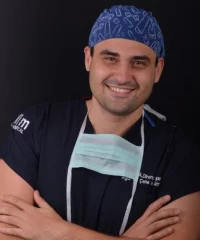
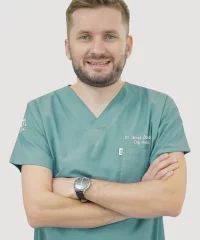
As an oral & maxillofacial surgeon at Milim Dental in Bursa, Turkey,
Dr Ali Direnç Ulaşan plans and performs both All-on-4 and “more than four” (All-on-6 / All-on-X) treatments for local and international patients.
This article will explain in clear language:
What All-on-4 is and how angled implants work
Why tilting implants is often an advantage, not a problem
When All-on-4 is a good choice for a full arch
When we recommend more than 4 implants instead
How we decide which concept is most suitable for you
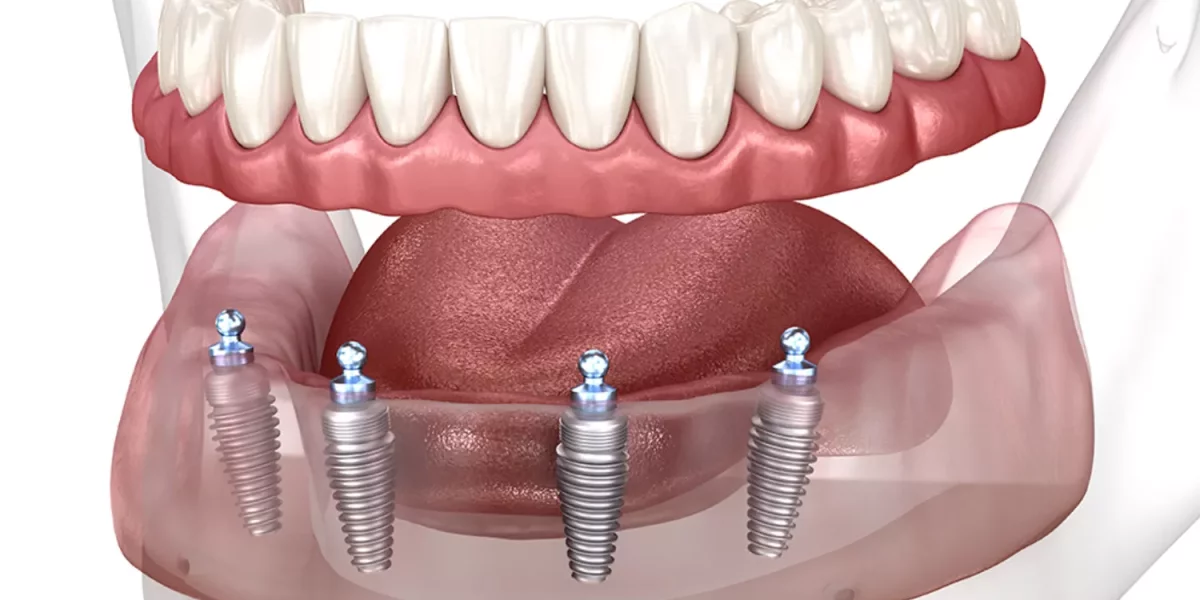
All-on-4 is a full-arch implant concept where:
4 dental implants are placed in one jaw (upper or lower)
A fixed bridge with usually 10–12 teeth is attached to these implants
Two implants are placed near the front (usually straight)
Two implants are placed further back and tilted (angled) to use available bone
The goal is to:
Give you fixed teeth (not removable like classic dentures)
Use a limited number of implants
Avoid big bone grafts in many cases
Often allow immediate loading (a fixed temporary bridge soon after surgery, in selected cases)
It is a smart way to rehabilitate patients who have:
Many missing teeth
Poor remaining teeth that must be extracted
Bone loss in the back of the jaws
A strong wish for fixed teeth as quickly as safely possible
The phrase “angled implants” can sound worrying at first. Many patients think:
“A straight implant must be stronger… if it is tilted, won’t it be weaker?”
In reality, tilted implants are part of the design, not a mistake.
In the upper jaw, the back areas are often close to the maxillary sinus.
In the lower jaw, the back areas are close to the inferior alveolar nerve.
If we tried to place long, straight implants vertically in these areas:
We could touch the sinus or nerve (not acceptable)
Or we would have to use very short implants in shallow bone
Instead, in the All-on-4 concept, we:
Place the back implants at an angle, usually 30–45 degrees
Anchor them in better quality bone towards the front or side
Keep a safe distance from sinus and nerve
Support a long bridge using fewer implants
Imagine putting the legs of a table slightly angled outwards –
the table can be very stable if the angles are designed on purpose.
When planned correctly by an implant team and placed by an experienced oral & maxillofacial surgeon like Dr Ali Direnç Ulaşan, angled implants:
Are not weaker than straight implants
Can actually increase the distance between front and back support (better distribution of chewing forces)
Help avoid extensive bone grafting or sinus lifting in many cases
The key is:
Proper 3D planning (CBCT scans, digital software)
Correct implant length, diameter and angulation
Correct design of the metal framework or zirconia bridge that connects the implants
Angled implants are a tool in advanced implantology – not a compromise.
All-on-4 is not a “magic solution for everyone”, but it is an excellent choice in many situations.
At Milim Dental Bursa, we often recommend All-on-4 (or a very similar 4-implant concept) when:
You have lost bone in the back part of the jaw (near molars)
There are sinuses (upper jaw) or nerves (lower jaw) close by
Bone grafting or sinus lifting would be possible but you prefer to avoid big surgeries
By tilting the back implants, we can:
Use the available front and side bone
Avoid grafts in many cases
Still place a full-length bridge from front to molar region
Some patients:
Are tired of removable dentures
Want fixed teeth but also want to limit cost and surgical complexity
All-on-4:
Uses 4 implants instead of 6–8
Can be more cost-effective
Can be completed in fewer surgical steps in suitable cases
All-on-4 is ideal for:
Patients who already have no teeth in an arch
Patients whose remaining teeth are so damaged (decay, gum disease, fractures) that they must all be removed
In these cases, we can often:
Extract the remaining teeth
Place 4 implants
Fix a temporary bridge onto those implants (immediate loading), when stability and conditions allow
Later, after healing, this temporary bridge is replaced with a definitive zirconia or hybrid bridge.
All-on-4 has been studied for many years and, when done correctly, shows:
High success rates
Good long-term stability
Efficient use of available bone
For many full-arch cases, it is a well-balanced compromise between:
Biology (bone, gum health)
Mechanics (force distribution)
Cost and complexity
Now the other side of your question:
“When is All-on-4 enough, and when do we prefer more implants?”
At Milim Dental Bursa, we move towards All-on-6 or more in several situations.
If you are relatively young
You have strong bone and a very powerful bite
Or you have a history of bruxism (teeth grinding / clenching)
then spreading the load over more implants can:
Reduce stress on each implant
Decrease the risk of mechanical complications (screw loosening, fractures)
Provide greater redundancy if one implant has a problem in the future
In these cases, All-on-6 or even more implants may be recommended, especially in the upper jaw.
If CBCT shows that:
You have enough height and width of bone in several regions
There is space to safely place more implants without complicated grafting
then adding implants can give:
More stability for the bridge
Better support for long spans
Possible segmentation of the prosthesis for easier repair
There is no rule that says “4 is always best”.
In some jaws, 5, 6 or more implants provide a more comfortable margin of safety.
When we plan:
Full arch rehabilitation with posterior molars included
Wide arches with a large distance from left to right
having more than 4 implants may improve:
Distribution of forces
Support under the back teeth
Long-term function, especially for heavier patients or those who eat very hard foods
In extremely resorbed upper jaws, we sometimes combine regular implants with:
Zygomatic implants (anchored in the cheekbone)
Or pterygoid implants (towards the back of the maxilla)
These advanced techniques naturally involve more than 4 total anchorage points, even though the philosophy is still “All-on-X” – a fixed full arch on a limited number of strategically placed implants.
This level of treatment absolutely requires an experienced oral & maxillofacial surgeon like Dr Ali Direnç Ulaşan and a clinic equipped with full 3D planning and surgical infrastructure.
There is no universal rule like “All-on-4 is always enough” or “All-on-6 is always better”.
At Milim Dental in Bursa, we make this decision individually using a structured approach.
We start with:
Full medical and dental history
Examination of existing teeth, gums, bite, jaw joints
Panoramic X-ray and CBCT (3D scan)
We evaluate:
Bone volume (height, width, density) in each region
Sinus and nerve positions
Smile line and aesthetic demands
Space for prosthetic materials (zirconia, hybrid, etc.)
We consider:
Age
Smoking
Diabetes and other systemic conditions
History of gum disease
Bruxism (night grinding)
More risk factors may push us to increase the number of implants and to design the prosthesis in a way that is easier to clean and maintain.
We also listen to you:
Do you strongly prefer fixed teeth only, no removable options?
Are you okay with a semi-fixed overdenture if it is very stable?
What is your budget range?
Sometimes:
For one patient, the perfect compromise is a fixed All-on-4.
For another, it is safer and smarter to plan All-on-6.
For a third, health or finances indicate implant overdentures instead.
The important point is that the choice is not random; it is based on:
Anatomy
Biology
Mechanics
And your personal situation
It might sound logical that:
“If 4 implants are good, 6 or 8 must always be better.”
But this is not always true. There is a balance.
Too many implants placed too close together in limited bone can:
Compromise blood supply between implants
Increase the risk of hygiene problems (too many small gaps to clean)
Make surgery and prosthetics more complex than necessary
All-on-4 is successful because:
The implants are placed in strategic positions
The distal implants are angled to maximise support
The prosthetic framework is designed to bridge these supports efficiently
The goal is not to place “as many implants as possible”, but to place the right number in the right positions, and then design a bridge that works harmoniously with your bone, muscles, joints and lifestyle.
Let’s summarise your original questions:
They are intentionally tilted implants at the back of the jaw.
They avoid sinuses and nerves by anchoring in better anterior or lateral bone.
When planned properly, they are strong and safe, not a compromise.
All-on-4 is often ideal when:
You have significant bone loss at the back of the jaws
You want fixed teeth with fewer implants and often fewer surgeries
You are edentulous or have hopeless teeth in one arch
You want an efficient, proven full-arch solution without extensive grafting
We recommend more implants when:
You are young with strong chewing forces or bruxism
You have good bone volume that can safely accept extra implants
The arch is wide and we want even more support under back teeth
We are combining standard implants with zygomatic or pterygoid implants in extreme bone loss cases
If you are thinking about:
All-on-4, All-on-6 or another full-arch implant concept
Fixed teeth instead of removable dentures
Getting treatment in Bursa, Turkey
the most important step is a full, honest evaluation.
At Milim Dental, oral & maxillofacial surgeon Dr Ali Direnç Ulaşan and the team will:
Analyse your bone and health in 3D
Explain All-on-4 vs more implants in your specific case
Show you what is possible for function and aesthetics
Help you choose a plan that is safe, realistic and long-term
So instead of trying to decide alone “Is All-on-4 enough for me, or do I need more implants?”, let a specialist team look at your jaws, your health and your expectations – and build a treatment plan made exactly for you.
Fluoride is an essential element for the human body. Because of its tendency to bind with calcium, it plays an important role in the skeletal system as well as in the enamel and dentin layers of the teeth. Today, fluoride is considered one of the most effective materials for preventing tooth decay. For this reason, both individual and professional fluoride applications are extremely important.

Orthodontic treatment, commonly known as braces treatment, is a specialized field within dentistry. Dentists who perform this treatment are called orthodontists. Orthodontics focuses on diagnosing and treating oral and facial irregularities caused by the teeth and surrounding tissues.
A guide for American patients on achieving a natural-looking Hollywood Smile with modern cosmetic dentistry.
Milim Dental Hospital isn't just a clinic—it's where confident smiles begin. With a team of world-class specialists, advanced technology, and a patient-first approach, we turn dental care into a premium experience.
We prioritize hygiene, comfort, and tailor-made treatments designed just for you. Don’t just take our word for it—explore real stories from real patients.
Your perfect smile starts here. Join the Milim experience.

Milim Dental Hospital provides comprehensive dental services in a spacious 1,000 m² facility, supported by a wide team of dental professionals including specialists in Oral and Maxillofacial Surgery, Prosthodontics, Orthodontics, Pediatric Dentistry, and Periodontology.